

Finally we came to the section which was the most interesting part of the history and the period we most recognised Mongolia with – Genghis Khan and Kublai Khan. The truth about the Mongolian Empire will blow your mind.
“There came into the world a blue-gray wolf whose destiny was Heaven’s will. His wife was a fallow deer. They traveled across the inland sea and when they were camped near the source of the Onon River in sight of Burkhan Khaldun their first son was born, named Batachihan.”
The Secret History of The Mongols
Hall 4 of the National Museum of Mongolia is the Mongolian Empire hall. The Mongolian Empire at that time consisted of five main components that united more than 50 countries and ethnic groups. These are known as Golden Hordes State (northwest), Chagatai Kingdom (Central Asia), Ilkhanate State (southwest), and Yuan dynasty (east). The Mongolian Empire Hall tells the story of the Mongol Khanli states before Genghis Khan, Great Mongolia and the successors of Genghis Khan’s Empire.
Table of Contents
For the purpose of this post, the romanised names of the historical figures like Genghis Khan and Kublai Khan will be used; the titles like Qaghan / Khagan / Khaan are used interchangeably with romanised Khan unless the emphasis on the title “Great Khan”. The focus is mainly on Mongolia and China histories, so we will not be looking at the influence of Mongolians in Europe and Middle East. Mongol is used to describe the Mongol Empire people, Mongolians for the modern Mongolia people.
Just for the records… – Official History
No contemporaneous portrait of Genghis Khan has survived to this day. The painting shown below is a much later imagining during the Yuan dynasty of what the warrior/ruler might have looked like.

More has been written about Genghis Khan than perhaps any figure in Asian history, but much of this has been misleading, inaccurate, or prejudicial. Many Westerners accept the stereotype of Genghis Khan as a barbaric plunderer intent on maiming, slaughtering, and destroying other peoples and civilisations. To the Mongols, however, Genghis Khan is a great national hero who united all the Mongol tribes and carved out the largest contiguous land empire in world history.
Secret History of the Mongols
Ink on paper | Mongolian Empire (14th Century)
The most important source for the history of Činggis Qaɣan is the “Secret History of the Mongols” (in Mongolian Mongɣol-un niɣuča tobčiyan, or in Chinese 蒙古秘史), written in Mongol language, but noted down phonetically with Chinese characters.

This is the first literary document concerning the Mongols. It is an invaluable treasure for historians, linguists, ethnographers and ethnologists engaged in the field of oriental studies.
It is believed to have been written in the year 1252. The identity of the author still remains unknown. The copy of the Secret History of the Mongols, which has survived to modern times, was transcribed in Chinese characters from some original manuscript in one of the Mongolian scripts. Some scholars believe it to have been in the Uyghur script, others proposed Pags-pa script.
This copy was written in about the 14th century and contained Mongolian text (in Chinese phonetic transcription) and the Chinese translation.
Other Accounts of the History of Mongol Empire
Often based on secondary accounts and myths that cannot be attested, these divergent views usually bear scant relation to what we find in the limited primary sources on Chinggis Khan that have survived to this day.
The History of the World Conqueror or Tārīkh-i Jahāngushāy
Tārīkh-i Jahāngushāy (Persian: تاریخ جهانگشای “The History of The World Conqueror”) is a detailed historical account written by the Persian Ata-Malik Juvayni describing the Mongol, Hulegu Khan, and Ilkhanid conquest of Persia as well as the history of Isma’ilis. It is considered an invaluable work of Persian literature.
It is written in Persian, and is one of the earliest known examples of Persian miniature and the “Metropolitan style” of the Mongol Ilkhanid court, together with the 1297-1299 manuscript Manafi’ al-hayawan (Ms M. 500) commissioned by Mongol ruler Ghazan. These are no earlier known Persian illustrated manuscripts from before the Mongol conquest (with the possible exception of Varka and Golshah, which however was created in Konya, modern Turkey, at the time of the Sultanate of Rum sometime in the 13th century), although miniatures are known from Mina’i ceramics.
This account of the Mongol invasions of his homeland Iran, written based on survivor accounts, is one of the main sources on the rapid sweep of Genghis Khan’s armies through the nomadic tribes of Tajikistan and the established cities of the Silk Road including Otrar, Bukhara, and Samarkand in 1219, and successive campaigns until Genghis Khan’s death in 1227 and beyond.
Compendium of Chronicles or Jāmiʿ al-tawārīkh by Rashid al-Din
Jāmiʿ al-tawārīkh (Persian/Arabic: مجموعه تاريخ/جامع التواريخ, lit. ’Compendium of Chronicles‘) is a work of literature and history, produced in the Mongol Ilkhanate. Written by Rashid al-Din Hamadani (1247–1318 AD) at the start of the 14th century, the breadth of coverage of the work has caused it to be called “the first world history”. It was in three volumes and published in Arabic and Persian versions.
The surviving portions total approximately 400 pages of the original work. The work describes cultures and major events in world history from China to Europe; in addition, it covers Mongol history, as a way of establishing their cultural legacy. The lavish illustrations and calligraphy required the efforts of hundreds of scribes and artists, with the intent that two new copies (one in Persian, and one in Arabic) would be created each year and distributed to schools and cities around the Ilkhanate, in the Middle East, Central Asia, Anatolia, and the Indian subcontinent.
Approximately 20 illustrated copies were made of the work during Rashid al-Din’s lifetime, but only a few portions remain, and the complete text has not survived. The oldest known copy is an Arabic version, of which half has been lost, but one set of pages is currently in the Khalili Collection of Islamic Art, comprising 59 folios from the second volume of the work. Another set of pages, with 151 folios from the same volume, is owned by the Edinburgh University Library. Two Persian copies from the first generation of manuscripts survive in the Topkapı Palace Library in Istanbul. The early illustrated manuscripts together represent “one of the most important surviving examples of Ilkhanid art in any medium”, and are the largest surviving body of early examples of the Persian miniature.
Rashid-al-Din Hamadani was born in 1247 at Hamadan, Iran into a Jewish family. The son of an apothecary, he studied medicine and joined the court of the Ilkhan emperor, Abaqa Khan, in that capacity. He converted to Islam around the age of thirty. He rapidly gained political importance, and in 1304 became the vizier of emperor and Muslim convert Ghazan. He retained his position until 1316, experiencing three successive reigns, but, convicted of having poisoned the second of these three Khans, Öljaitü, he was executed on July 13, 1318.
Conversations with the Khagan or 玄風慶會錄 by Qiu Chuji
Qiu Chuji 丘處機 (1148-1227), also known by his Taoist name Master Changchun 長春子, was a renowned Taoist master from late Southern Song/Jin dynasty and a famous disciple of Wang Chongyang 王重陽, the founder of Quanzhen Sect 全真派 of Taoism. He is known for being invited by Genghis Khan to a personal meeting near the Hindu Kush, who also respected and honored him as an Immortal.
In 1219 Genghis Khan invited Changchun to visit him in a letter dated 15 May 1219 by present reckoning. Changchun, had been invited to satisfy the interest of Genghis Khan in “the philosopher’s stone” and the secret medicine of immortality. He explained the Taoist philosophy and the many ways to prolong life and was honest in saying there was no secret medicine of immortality. The two had 12 in-depth conversations. Genghis Khan honoured him with the title Spirit Immortal 仙. Genghis also made Changchun in charge of all religious persons in the empire 國師. Their conversations were recorded in the book The Chronicles of the Conversations or 玄風慶會錄.
The Rise of the Mongol Empire (1206)
According to the Secret History of the Mongols, the ancestors of the Mongol people were Börte-Čino “Blue-Gray Wolf” and his spouse Qo’ai-Maral “Fallow Doe”. Their descendant Yisügei Baɣatur was the head of the Borjigid family. He was married to Ögelen from the Olqonoɣud family. And through this Borjigid lineage, a boy was born that would change the history of the Mongols forever.
Genghis Khan – The Khan of All Khans

Temüjin was born in 1155, 1162 or 1167 somewhere in the grazing grounds of the Mongɣol between the rivers Onon and Kerülen (northeast of today’s Mongolia). At that time, the Mongɣol were part of a federation with the Kereyid (Kelie 克烈, living in what is today southern Mongolia) and the Tatar which had been created by Qabul Qan in the early 12th century.

Before Genghis Khan, the Mongol nomads followed a typical pattern of nomadic tribes, alternating between vast empires and small-scale tribal organisation. When Genghis Khan took power in 1206, Mongol tribes lived in ger tents, which they moved while migrating across the grasslands with their livestock.

Elsewhere in the south of Cathay (what they referred to as North China), the Song dynasty was losing influence and powers to the rising Jin and Xixia dynasties. The Tibetans and Uyghurs had risen in the northwest and controlled the Hexi corridor. The Turks had retreated to mainly the Central Steppes. The Europeans signed the Magna Carta and brought down the influence of the Monarchy and Church.

At the turn of the century, the Mongolian steppes were still overrun by tribes fighting each other for grazing grounds and water sources. It was in this background that one of the greatest conquerors of the world had ever seen came on the stage.
The Qaghans of Mongolian Empire
Qaghans/Khagans (in Mongolian Qaɣan) of the Mongolian Empire were all appointed by the quriltai councils (military council of the tribal leaders).

The First Khagan of Mongol Empire – Činggis Qaɣan (r. 1206-1227, romanised as Genghis Khan)
In 1206, at the source of the Onon River, Temüjin was conferred the title of Činggis Qaɣan (r. 1206-1227, romanised as Genghis Khan).

In 1206, Temüjin invited the tribesleaders to convene to the military council called kurultai 忽里勒台 at the source of River Onon and adopted the title of Khagan (qaɣan) or The Great Khan. What exactly the word Činggis means, is still debated. His “capital” was Qara Qorum on River Orkhon (Karakorum in present-day Övörkhangai Province in the centre of Mongolia)
When Kublai Khan established the Yuan dynasty Ancestral Temple 太廟 in 1266, he had Genghis Khan placed on the official record as Taizu (太祖) or “The One that Started It All”.
Many believe that his unification of the Mongols — rather than the conquests that he initiated once he had unified the Mongols — was Temujin’s biggest accomplishment. Economically the tribal unit was optimal for a pastoral-nomadic group, but Temujin brought all the tribes together into one confederation, with all its loyalty placed in himself. Because of this achievement, the kurultai conferred him the title of Činggis Qaɣan or the “King of all Kings between the oceans”.
Model of Tomb of Jöchi Khan in Kazakhstan


How Genghis Khan divide and conquer among his sons, Jöchi, Chagatai, Ögedei and Tolui
Genghis Khan had divided his empire into khanates among his four surviving sons during his lifetime. His eldest son Jöchi Khan (?-1227) was entrusted with the western most part of the empire which became the Golden Horde Khanate. In 1269, according to the results of Talas kurultai, Golden Horde gained full independence from the rest. Chagatai Khan (1183-1242) was given the five Central Asia states and was the executioner of the Yassa (Mogol laws). Tolui (c. 1191–1232), the youngest son, was the fiercest warrior among the sons of Genghis Khan and Börte, and stayed by his father side and protected his brother Ögedei, who inherited the throne to the Empire. However, his sons would become Khagans for Ilkhanate (inherited by Hulagu Khan) and the Mongol Empire (by Möngke and then Kublai Khan)
After the death of Genghis Khan in 1227, the resulting empire extended from the China’s Pacific coast to Eastern Europe. This meant that the Silk Road network, which had been dangerous to travel due to the warring kingdoms along the route, fell completely under Mongol control in a period known as “Pax Mongolica“. His tomb was never found.
Second Khagan of Mongol Empire – Ögedei Qaɣan (r. 1229-1241)
In 1229, in Avarga (in modern day Khentil aimag), Ögedei the third son of Genghis Khan, was conferred Ögedei Qaɣan (r. 1229-1241), the second Khagan of the empire.

After a series of successful campaigns, Ogödei Khan withdrew to Karakorum. Here, Ögödei established the capital of the empire and built a permanent palace, something unusual for a nomadic nation. The city soon became an international political and trade centre. The Mongols, however, continued their nomadic lifestyle, following their herds and living in gers.
Ogedei himself never lived at Karakorum, preferring instead to roam his empire and stay in the traditional camps of ger tents. The Khan did visit occasionally and even had a great silver drinking fountain set up in his palace there that served all manner of alcoholic beverages from spouts shaped into snakes and lions.
When Kublai Khan established the Yuan dynasty Ancestral Temple 太廟, he had Ogödei Khan placed on the official record as Taizhong (太宗) or “The One that the Lineage Came From”.
Ögödei’s internal policy differed remarkably from that of his father. From the beginning he made use of advisors that had already worked for the Jin empire, like Yelü Chucai 耶律楚材 (1190-1244), who suggested to create a Central Secretariat (中書省) in the new capital Karakorum. The supreme judge Šigi Qutuqu 失吉忽禿忽 (d. 1250) initiated the first population census in the north China domains in order to have a base for tax registers. In 1234, Ögödei promulgated a series of civilian and military laws, and in 1236 decreed the issuing of paper money. The large empire was administered with the help of a network of courier stations (jamči, Chinese yizhan 驛站).


Gerege
Bronze | Mongol Empire (13th-14th century) | 20×13 cm
A gerege (or Paiza in Persian or 牌子) was a tablet carried by Mongol officials and envoys to signify certain privileges and authority. They enabled Mongol nobles and officials to demand goods and services from civilian populations.
Bronze Passport
Bronze | Mongol Empire (13th-14th century)
Official pass with Mongolian inscription in Phags-pa script reading “By the power of eternal heaven, [this is] an order of the Emperor. Whoever does not show respect [to the bearer] will be guilty of an offence.”
Ögödei’s courier stations were an important instrument for the cultural and diplomatic traffic that flourished during the 13th century on the Eurasian continent. Having conquered an enormous territory in Asia, the Mongols were able to guarantee the security and safety of travellers. There were some conflicts among the various Mongol Khanates, but recognition that trade and travel were important for all the Mongol domains meant that traders were generally not in danger during the 100 years or so of Mongol domination and rule over Eurasia. Pax Mongolica had arrived!
Third Khagan of Mongol Empire - Güyük Qaɣan (r. 1246-1248)
Although the reign was very short, the death of Güyük had a profound effect on world history.

Güyük interrogates Djamâl al-Dîn Mahmûd Hudjandî (left), depicted in the history book “Tarikh-i Jahangushay” (The History of the World Conqueror), commissioned by Ghazan Khan in 1297-1299.
Güyük wanted to turn the Mongol power against Europe, but his premature death prevented Mongol forces from trying to move further west into Europe.
Subsequent to Güyük’s death, Mongol family politics caused the Mongol efforts to be instead directed against southern China, which was eventually conquered during the rule of Kublai Khan.
When Kublai Khan established the Yuan dynasty Ancestral Temple 太廟 in 1266, he had Güyük Khan placed on the official record as Dingzong (定宗), which stood for “The Decisive One”.
Güyük Khan’s Letter to Pope Innocent IV (Copy)
Paper, ink | 1246 | The Vatican Secret Archive, Rome

Güyük Khan wrote a letter to Pope Innocent IV on the relations between the Church and the Mongols. “You must say with a sincere heart: ‘We will be your subjects; we will give you our strength’. You must in person come with your kings, all together, without exception, to render us service and pay us homage. Only then will we acknowledge your submission. And if you do not follow the order of God, and go against our orders, we will know you as our enemy.”
Fourth Khagan of Mongol Empire – Möngke Qaɣan (r. 1251-1259)
In 1251, in Avarga, Möngke, grandson of Genghis Khan from the Toluid line, was conferred Möngke Qaɣan (r. 1251-1259), the fourth Khagan of the empire.

Möngke and his court (left), depicted in the history book “Tarikh-i Jahangushay” (The History of the World Conqueror), commissioned by Ghazan Khan in 1297-1299.
Möngke was the first Khagan from the Toluid line, and made significant reforms to improve the administration of the Mongol Empire during his reign. Under Möngke, the Mongols conquered Iraq and Syria as well as the Kingdom of Dali (modern-day Yunnan).
When Kublai Khan established the Yuan dynasty Ancestral Temple 太廟 in 1266, he had Möngke Khan placed on the official record as Xianzhong (宪宗) or “The Hardworking One”.
Coins from All Corners of the Mongol Empire
Silver, copper | Mongol Empire (13th-14th century)

In 1253, Möngke established the Department of Monetary Affairs to regulate the issuance of paper money and curb the excessive printing of currency by Mongol and non-Mongol nobles since the time of Ögedei Khan. The authority implemented a unified standard based on the sukhe or silver ingot, while allowing foreign subjects to mint coins according to their traditional denominations and weights. Under the reigns of Ögedei, Güyük, and Möngke, Mongol coinage expanded to include gold and silver coins in Central Asia, as well as copper and silver coins in the Caucasus, Iran, and Bolghar.
Fifth Khagan of Mongol Empire – Sečen Qaɣan (r. 1264-1294, romanised as Kublai Khan)
In 1260, in Karakorum, Ariq Böke (1219?–1266), brother of Mönkge and Kublai, was conferred as Ariq Böke Qaɣan (r. 1260-1264). At the same time, in Kaiping (known to the Western world as Xanadu), Kublai was declared as Sečen Qaɣan (r. 1264-1294, Setsen Khan), the fifth Khagan of the empire. In 1271, he declared himself as Emperor Zhiyuan of Yuan dynasty (1271-1368).
Kublai Khan and His Empress Enthroned
Opaque watercolour, ink, and gold on paper | Mughal dynasty, Reign of Akbar, 1596 | Mughal Court, India.

After the death of his brother Möngke Khan, Ariq Böke claimed the title of the Khagan of the Mongol Empire and briefly took power while his brothers Kublai and Hulagu were absent from the Mongolian Plateau. When Kublai returned for an election, rival factions could not agree and elected both claimants to the throne, resulting in the Toluid Civil War that fragmented the Mongol Empire. Ariq Böke was supported by the traditionalists of the Mongol Empire, while his brother Kublai was supported by the senior princes of North China and Manchuria.
The illustration from Jami al-Twarikh showed Kublai Khan was chosen by his many supporters to become the next Khagan at the Grand Kurultai in the year 1260.
The civil war between Kublai and Ariq Böke resulted in the destruction of the Mongol capital at Karakoram. Kublai’s real power was limited to the Yuan Empire, even though as Khagan he still had influence in the Ilkhanate and, to a significantly lesser degree, in the Golden Horde. If one considers the Mongol Empire at that time as a whole, his realm reached from the Pacific Ocean to the Black Sea, from Siberia to what is now Afghanistan.
Liu Guandao 劉貫道 : Kublai Khan on the Hunt (Copy)
Paint and ink on silk | 1280 | National Palace Museum, Taipei (original)

In August 1260, Kublai created the first unified paper currency called Jiaochao; bills were circulated throughout the Yuan domain with no expiration date. To guard against devaluation, the currency was convertible with silver and gold, and the government accepted tax payments in paper currency. In 1273, Kublai issued a new series of state sponsored bills to finance his conquest of the Song, although eventually a lack of fiscal discipline and inflation turned this move into an economic disaster. To ensure its use, Kublai’s government confiscated gold and silver from private citizens and foreign merchants, but traders received government-issued notes in exchange.
Paper Banknote “至元通行寶鈔” Zhi Yuan Tong Xing Bao Chao
Paper, ink | 1287

More about Zhiyuan Chao 至元通行寶鈔
Made out of tree bark and leaves of several different plants, this paper banknote has the highest nomination of er guan (贰贯) or two strings. The word “string” 贯 refers to 100 coins bundied up in one string, hence “1 string” 一贯 equates to 100 coins 100 钱. For the most part the writing on this paper money is in Chinese “Valid throughout the entire region” is written using Mongolian square script (Phags-Pha) and stamped by the Great Khan’s financial seal. The writing on the bottom part of the banknote reads: Forgery of this banknote is punishable by death. A person reporting the criminal shall be rewarded with silver. This paper money bears high privilege approved by the Khan’s decree and is valid throughout the empire without time limitation.
In 1287, Kublai’s minister Sangha created a new currency, Zhiyuan Chao, to deal with a budget shortfall. It was non-convertible and denominated in copper cash. Kublai Khan is considered to be the first fiat money maker. The paper bills made collecting taxes and administering the empire much easier and reduced the cost of transporting coins.
Later Gaykhatu (1259-1295), fifth ruler of Ilkhanate, attempted to adopt the system in Iran and the Middle East, which was a complete failure. He had no choice but to withdraw the use of paper money, and shortly afterwards he was killed in battle for it.
Famous Khatuns (Consorts of the Khagan)
Alan Goa – widow of Dobu Mergen, matriarch of the Borjigin lineage
Dobu Mergen was 11th generation descendant of Börte-Čino “Blue-Gray Wolf” and his spouse Qo’ai-Maral “Fallow Doe”. His widow Alan Goa the Fair (aka Alan-qo’a) was impregnated by a ray of light. Her youngest son, Bodonchar Munkhag, became the ancestor of the Borjigid. He along with his brothers sired the entire Mongol nation.
Alan Goa was the mythical mother of the Mongol peoples who was said to have taught her five sons that in order to thrive they must always stick together and support each other. To get this message across, she gave them a lesson in unity known as the Parable of the Arrows. Alan Goa gave each son an arrow and told him to break it; each son did so easily. She then presented a bundle of five arrows and not one son could break them. Sadly, the descendants of Genghis Khan (r. 1206-1227) would not remember this story when they broke up the Mongol Empire into various independent khanates.
Hoelun – Mother of Genghis Khan
Although she was not a khatun, it is still worth mentioning the woman who would be the mother of the greatest conqueror and Khan of the Mongols. Hoelun (aka Hoelun-Eke or Hoelun-Ujin) was the mother of Genghis Khan who fled with her son into the steppe wilderness after her husband Yisugei, chieftain of the Borjigin clan, was poisoned by a rival. Genghis, then called Temujin, was still only nine or twelve years old at the time and so he could not maintain the loyalty of his father’s followers. As a consequence, he and his mother were abandoned on the Asian steppe, left to die. However, the outcast family managed to forage and live off the land as best they could. The Secret History of the Mongols portrays Hoelun as a strong woman able to gather her children together and make a new life for themselves, her son, of course, going on to create one of the world’s greatest ever empires.
Börte– wife of Genghis Khan, mother of Ögedei Khan
Börte (also Börte Üjin; Mongolian: ᠪᠥᠷᠲᠡ ᠦᠵᠢᠨ; Cyrillic: Бөртэ үжин; c. 1161–1230) was the first wife of Temüjin, who became Genghis Khan, the founder of the Mongol Empire. Börte became the head of the first Court of Genghis Khan, and Grand Empress of his Empire. Little is known about the details of her early life, but she was betrothed to Genghis at a young age, married at seventeen, and then kidnapped by a rival tribe. Her husband’s daring rescue of her may have been one of the key events that started him on his path to becoming a conqueror. She gave birth to four sons (Jöchi, Chagatai, Ögedei and Tolui) and five daughters, who, along with their own descendants, were the key Borjigin bloodline (referred to as the Golden Lineage 黃金家族) that further expanded the Mongol Empire.
Toregene – wife of Ögedei Khan and Regent (r. 1241-1246), mother of Güyük Khan
Toregene Khatun (aka Doregene-Qatun, r. 1241-1246), the former wife of the Merkit prince Qudu, reigned as regent after her husband Ögedei Khan‘s death in 1241. She held power until a kurultai elected Ögedei’s successor and Toregene’s son, Güyük Khan in 1246. Toregene’s reign is not looked on favourably by contemporary sources, but these are Chinese and so, in effect, written by the enemies or conquered subjects of the Mongols.
Although she is credited with having great intelligence, shrewdness, and formidable political skills, particular criticism is made of her heavy taxation policies which included the privatisation of tax-collecting whereby tax collectors could keep anything for themselves above and beyond a pre-agreed amount for the territory under their supervision. Revenues were increased but at the cost of corruption and an overburdening of farmers. Other criticisms included her (alleged) willingness to listen rather too much to the Muslim advisors close to her (especially a Persian slave named Fatima), and her manoeuvres to remove any obstacle to her son becoming the next khan, including the unnecessary delaying of the next khan’s election. Toregene also fostered diplomatic ties with various princes and gave out lavish gifts to increase the support base for her son, a process she was able to carry out thanks to her delaying tactics and taxation policies. She must have died a happy woman, passing away in 1246 CE shortly after her son Guyuk had finally become Great Khan (r. 1246-1248 CE).
Sorghaghtani – widow of Tolui, mother of Möngke Khan and Kublai Khan.
Sorghaghtani Beki (aka Sorqoqtani, d. 1252) was a Kerait princess who came to prominence as the widow of Tolui (c. 1190 – c. 1232) and sister of Begtutmish Fujin, widow of Jöchi, a son of Genghis Khan. When Tolui died around the age of 40, his lands in northern China and tribal position were maintained by Sorghaghtani. The princess may have warned Batu Khan, leader of what would become the Golden Horde and the western khanate of the Mongol Empire, of the plans of Güyük Khan to attack Batu. In the event, Güyük died before such a campaign could get started but Batu may have shown his gratitude by endorsing Sorghaghtani’s son Mongke, who was elected Güyük’s successor.
Oghul Qaimish – wife of Güyük Khan, Regent (r. 1248-1251)
Oghul Qaimish (aka Oqol-Qaimish, r. 1248-1251 CE), was the wife of Güyük Khan, and when he died in 1248 of poisoning, she reigned as regent. Oghul infamously dismissed, in 1250, an embassy from King Louis IX of France (r. 1226-1270), telling his ambassador Friar Andrew of Longjumeau that a great tribute would be required if his nation was to avoid destruction by a Mongol army. Oghul’s reign had little to distinguish it, and she largely stayed in the background of politics. Her one notable policy was to increase taxes for the peasantry from the traditional one in every hundred animals to the unrealistic one in ten animals.
Oghul would hold power until 1251 when Möngke Khan was elected ruler. Oghul was ultimately taken prisoner, her hands stitched together with leather thongs, and then put on public trial by Möngke in December 1252 as he purged all parts of the state he considered loyal to the previous regime, particularly the Ögedei clan. At her trial, Oghul was stripped of her clothes and accused of being rather too involved with shamanism for the good of the state and, much worse, guilty of treason. Found guilty, Oghul was thrown into the Kerulen River wrapped in a felt sack – a fate usually reserved for witches in Mongol justice as it was believed that evil cannot cross running water and may even be purified by it.
Portraits of the Khatuns (Consorts) of the Khagans
Album leaf, ink and colors on silk | Anonymous, Yuan Dynasty (1260-1368) | National Palace Museum, Taipei

Kublai’s empress, Chabi, wears a “kuku” crown, which was one of the most distinctive forms of headwear worn by Mongolian nobility. Besides textual evidence, archaeological findings also support the existence of this crown, the name of which is a direct translation from Mongolian. Compared to Song imperial portraits, those of the Yuan reveal several distinctive differences. First, despite the three-quarters view of the Yuan figures, their line of vision is frontal, suggesting that they are looking at the viewer. Second, in terms of technique, their faces have been rendered using very fine washes of colour.
Capital of the Mongol Empire – Qara Quorum

As the empire continued to expand, though, the Khans realised the need for a permanent administrative centre. Qara Quorum or Karakorum was the capital of the Mongol Empire between 1235 and 1260 and of the Northern Yuan dynasty in the 14th–15th centuries.
The First Metropolitan City
In 1218–1219, Genghis Khan rallied his troops for the campaign against the Khwarazmian Empire in a place called Karakorum, but the actual foundation of a city is usually said to have occurred only in 1220.
Ger Cart Wheel-Hub (National Treasure)
Cast-iron | Mongol Empire (13th-14th century) | Kharakhorum, Kharkhorin sum, Övörkhangai aimag

Until 1235, Karakorum seems to have been little more than a ger town; only then, after the defeat of the Jin empire, did Genghis’ successor Ögedei erect city walls and build a fixed palace.
Roof Tiles, Building Decorations and Eaves Tiles from Karakorum
Clay | Mongol Empire (13th-14th century) | Kharakhorum, Kharkhorin sum, Ovörkhangai aimag

The city layout reflected the diversity of the population: there were mosques, “idol temples” and even a Nestorian Christian church. Archaeologists have found Chinese-style tiles and turret decorations that probably adorned the roofs of buildings.


Head Of Stone Statues
Marble | Mongol Empire (13th-14th century) | Tavantolgoi, Ongon sum, Sükhbaatar aimag
Pharaonic Maskettes
Obsidian | Mongol Empire (13th-14th century) | Kharakhorum, Kharkhorin sum, Ovörkhangai aimag
People of many nationalities walked its warrens of narrow streets: Chinese, Muslims, even a lone Frenchman — Guillaume Boucher, the goldsmith who designed the famous fountain. Many of these foreigners lived in Karakorum involuntarily, conscripts from conquered cities.
The Mongol Identity
Even though the conquered wore different outfits and hair styles, the Mongols maintained their traditional identity which differentiate them as the ruling class.
Silk Deel
Silk fabric, cashmere, silk threads. Current size: 115×208 cm | End of 12th century to beginning of 14th century, Mongol Empire period | Dugur Tsakhir rock. Bayantsagaan county, Bayankhongor province

A deel (Mongolian: ᠳᠡᠪᠡᠯ /дээл [deːɮ]; Buryat: дэгэл [dɛɡɛɮ]) is an item of traditional clothing commonly worn by Mongols and Turkic and Tungusic peoples for centuries, and can be made from cotton, silk, wool, or brocade.
The silk deel was discovered at the burial site at Dugul Tsakhir rock. It was found alongside the remains of a 10-15 year old boy dating back to the 12th-14th century. The deel is made of yellow silk with flower and leaf patterns, and has a red fabric lining with cashmere insulation. It features a long hem and was likely worn during cold seasons.

Men’s Hair “šibülger”
Hair, felt, cotton | 14th-15th century | Khetsuu uul, Khatanbulag sum, Dornogovi aimag
Hair Pin
Silver, Iron | Mongol Empire (13th-14th century) | Kharakhorum, Kharkhorin sum, Ovörkhangai aimag
The Mongol haircut, known as “nuqula” or “pojiao 婆焦” in Chinese, is iconic and well-documented. It consisted of a central lock (kegül) on the forehead, along with two twisted braided loops (šibülger) falling behind the ears to the shoulders. This distinctive style is depicted in various sources from China, the Middle East, and Europe, as well as in artworks and tomb murals from regions such as Iran, Japan, and beyond. Notably, it can be seen in portraits of Genghis and Kublai Khan from the Yuan era.
Chinese Bronze Mirrors
Bronze | Mongol Empire (13th-14th century) | 1. Saintsagaan sum, Dundgovi aimag; 2. Kharakhorum, Kharkhorin sum, Ovorkhangai aimag

Chinese bronze mirrors have a highly polished side for reflection and a decorated side with various patterns. The mirrors have a decorated knob called the mirror button, which has a hole for fixing the mirror on a stand. One of the mirrors (top left) is a hand mirror with a broken handle.


Mongol-Tibetan Chest
Wood, leather | Mongol Empire (13th-14th century) | Replica
There are no nails in the Mongolian chest. If it has nails, it will fall out during the movement. Also, the chest has handles on both sides, which means that it is convenient to load and carry. The Tibetans introduced leather chests instead of the traditional wood as the main material.
Folding Chair (Replica)
Wood, leather | Mongol Empire (13th-14th century) | Tavantolgõi, Ongon sum, Sukhbaatar aimag
A folding chair constructed with eight wooden poles with a seat of thin, plaited rope.
Buga (Deer) Board Game (Replica) and Game Piece
Wood (board), clay, bone (pieces) | Mongol Empire (13th-14th century) | Kharakhorum, Kharkhorin sum, Övörkhangai aimag

As the deer is one the most revered and sacred animals for Mongols and an important source of their livelihood, Mongols created a variety of games and toys named ‘buga’ (deer). Basically, stones and anklebones are thrown on the board and directed to move accordingly, aiming to block all of the possible ways of the counterpart. Although there are different variations with board shapes, cell numbers, numbers of the deer and fawns, the deer games share the same basic rules that the player who blocks the deer wins.
“Losing my own religion….” – Moving to Dadu
In 1260, Kublai Khan had already begun construction of his capital at Xanadu, called Shangdu 上都 in Chinese, some 275 km due north of Beijing on the Luan River in present-day Inner Mongolia. Unlike other Mongol leaders who wanted to retain the qurultai in Karakoram, Kublai Khan was eager to become the emperor of a cosmopolitan empire.
Workers Moving Material to Construct Khanbaliq

Karakorum was not a good place for a city, especially the capital of the biggest empire at that time. There wasn’t enough food or resources. Five hundred carts of supplies had to be brought in every day to feed the growing population and empire, which eventually extended from Hungary to the shores of the Pacific in the mid-thirteenth century.
Kublai Khan built a summer palace at Shangdu 上都 or better known in the West as Xanadu, the “stately pleasure dome”. In 1264 he ordered his vizier Liu Bingzhong 劉秉忠 (1216–1274) to build his new capital at Yanjing. He declared in 1271 the capital city to be Khanbaliq or in Chinese Dadu 大都 (modern day Beijing).
Chengqing Watergate – Upper Section 澄清上闸
Stone | 1330 during the Yuan dynasty | Beijing, China

Kublai Khan understood how important it was to work on water systems to prevent rebellions in his empire. He sent Liu Bingzhong and his student Guo Shoujing 郭守敬 (1231–1316) to work on this. Guo managed to build a 30 km channel to bring water to Dadu from the Baifu spring in the Shenshan Mountain. This required connecting different water sources and building canals with sluices. The Grand Canal 大運河, which had linked different rivers since the 7th century, was repaired and extended to Dadu in 1292-93. Guo’s success led Kublai Khan to send him to work on similar projects across the empire, and he became Kublai Khan’s main advisor on water systems, math, and astronomy.
“And it arises like the phoenix from the ashes…” – Erdene-Zuu Monastery

The first Buddhist monastery called Erdene-Zuu Monastery was built on ruins of Karakorum after its destruction by the Ming dynasty in 1388. It was built in 1586 at the initiative of Avtai Khan (1554-1588), most influential prince of that time in Mongolia and a staunch believer of Tibetan Buddhism.
More about Avtai Khan…
He was named by the 3rd Dalai Lama as first khan of the Tüsheet Khanate in 1587. Avtai died a year later in 1588. His remains were interred at Erdene Zuu. Shortly thereafter his son Shubuudai was killed by Oirat chieftains. Abtai’s descendants would continue to reign over the house of the Tüsheet Khan. Abtai’s great-grandson Zanabazar (born Eshidorji) was recognized by the 5th Dalai Lama as the first Jebtsundamba Khutuktu and Bogd Gegeen or spiritual leader of Tibetan Buddhism in Khalkha Mongolia in the 1640s.
The monastery occupies an area surrounded by a stone wall with 108 stupas lining on it. The Erdene-Zuu monastery preserves marvelous works of Mongolian artists, painters, cutters, sculptors, embroiders and craftsman of the 17th-19th centuries. It had between 60 and 100 temples, about 300 gers inside the walls and, at its peak, up to 1000 monks in residence. Erdene Zuu Monastery was destroyed by communists in 1930s during the political purge. The monastery was closed until 1965 and reintroduced as a museum to public. After democratic revolution in 1990, religious freedom was restored and monastery became active again.
Mongol Military Might
Genghis Khan was one of the most feared and admired leaders of his time. He created a Mongol military might that was superior to any other he faced. The Mongols, under the leadership of Genghis Khan and his successors, overran most of Asia and Eastern Europe, and defeated virtually every army thrown against them.
Standards of Chinggis Khaan

These horse-hair battle standards are among the few artefacts associated with Chinggis Khaan that have been preserved to this day. Planted atop a hill, a mountain, or other lofty location, a black standard such as the one on his left would have signalled the beginning of a battle.


The White Banner is also called ‘Yisun Kholt Tsagaan Tug’ or Peace Banner. It is mentioned in many historical works on the Mongols. The White Banner was raised during times of peace or in a place away from war. From ancient times until the present day, Mongolians have presented offerings to the White Banner.
The Black Banner was the khan’s battlefield banner, standing for the power of the “Everlasting Blue Heaven,” which can concentrate and mobilise the spirit and power of all Mongols to defeat their enemies at any time in all directions. Folk stories mention that the Black Banner would be raised when the khan was at war.
Three-Pointed Tips of the White Flag (Replica)
Gold, iron | Mongol Empire (13th-14th century)

The tip of the gold-plated nine white banners (tuks) was a symbol of eternity. The main part of the White Banner is made from the tails of white mares. The main white banner is surrounded by eight banners. The offering ceremony to the White Banner was held during a grand ceremony once every three years. Since the 19th century this ceremony is part of the annual Naadam celebration.
More about the White Banners

These standards are currently held in the Mongolian Khural (parliament) and brought out every July at the beginning of the Naadam festival. Naadam means “to have a good time” in Mongolian, and this annual summer festival highlighting the three traditional Mongol sports of wrestling, archery and horse racing has been a part of Mongolian culture for centuries.
Horse Saddle (Replica)
Plaster | Mongol Empire (13th-14th century) | Khuiten khoshuu, Delgerkhaan sum, Khentil aimag

The Mongol nomadic tribes were then, used to a tough life, were highly mobile by nature and were trained from childhood to ride horses and shoot bows. These qualities would make them into excellent warriors able to endure long and complex campaigns, cover vast amounts of territory in a short space of time and survive on only the absolute minimum of supplies. Even the role of women and their chores of camp-making and transportation helped the Mongol army as they provided the vital logistic support for their husband warriors.
Seals of the Military Commanders
Gold, iron, wood | Mongol Empire (13th-14th century)

The highest command was in the hands of the Emperor (Khagan), but the executive institution was the Bureau of Military Affairs 樞密院. It controlled all types of soldiers, from the imperial guards to the outposts in distant areas. Recruits for the Mongolian troops were chosen among male persons between the age of 15 and 70. The system of units was based on the ancient Mongol custom, ten troops forming a squad (pai 牌), commanded by a squad leader (paizitou 牌子頭, paitou 牌頭), ten squads forming a company (baihu 百戶), ten companies form a regiment (qianhusuo 千戶所), and ten regiments a division (wanhusuo 萬戶所). The word hu 戶 reveals the military units were filled with men coming from “military households” (junhu 軍戶). Regiments – the basic units in military operations – had a size of between 3,000 and 7,000 men, and not, as the (native) name suggests, 10,000.
Models of Catapult and Trebuchet of the Mongolian Army
Wood | Mongolian Empire (14th century)

The earliest definite mention of the counterweight trebuchet in China was in 1268, when the Mongols laid siege to Fancheng and Xiangyang. After failing to take the twin cities of Fancheng and Xiangyang for several years, the Mongol army brought in two Persian engineers to build hinged counterweight trebuchets. Known as the Huihui trebuchet (回回砲, where “Huihui” is a loose slang referring to any Muslims), or Xiangyang trebuchet (襄陽砲) because they were first encountered in that battle. Ismail and Al-aud-Din travelled to South China from Iraq and built trebuchets for the siege.
Soldier Mail Armour, Helmet
Iron, leather | Mongol Empire (13th-14th century) | Private Collection


Expert horsemen and archers, the Mongols proved unstoppable in Central Asia and beyond, defeating armies in Iran, Russia, Eastern Europe, China, and many other places. The descendants of Genghis each ruled a part of the empire – the four khanates – the most powerful of which was the Yuan Dynasty in China (1271-1368), established by Kublai Khan (r. 1260-1279).


Масе Тор
Cast iron | Mongol Empire (13th-14th century) | Kharakhorum, Kharkhorin sum, Ovörkhangai aimag
Mongol Bow
Wood, iron, bone | Mongol Empire (13th-14th century)
The Mongol bow from the 13th century was a remarkable invention. It was crafted using materials like horn, wood or bamboo, and animal sinew, all stuck together with animal glue. This combination made the bow strong and flexible, allowing it to store a lot of energy when the string was pulled. Coating the bows with lacquer made them usable in all weather conditions. The result was incredibly powerful, giving the Mongols a significant advantage in battle.
Yuan Dynasty (1271–1368)
In 1271, Kublai Khan proclaimed the establishment of the Yuan dynasty and declared himself Emperor of China, but it was not until 1279 that his conquest of China was completed and the Southern Song dynasty fell.
Support for the Trades and Crafts
Despite being short, the Yuan dynasty was a very important time for the arts. Changes in Chinese painting style and the widespread use of blue-and-white porcelain, as well as advancements in lacquer production, were crucial for the arts of the Ming and Qing dynasties that followed.
Chinese Porcelain Vase Found in Karakorum
Clay | Mongol Empire (13th-14th century) | Kharakhorum, Kharkhorin sum, Ovörkhangai aimag

- Longquan Porcelain Vase
- Jun Porcelain Plate
- Blue Glazed Porcelain Plate
Porcelain ceramics painted with cobalt oxide (which turns blue) before being coated with a clear glaze came to be known as blue-and-white porcelain and began to be widely produced in Jingdezhen in south China for domestic consumption and for trade, especially to the Near East. The Yuan court established some regulatory control at Jingdezhen, which became the most important centre of porcelain manufacture in China.

Drop Spindle
Wood | Mongol Empire (13th-14th century) | Khôndion Tsahir, Bömbögör sum, Bayankhongor aimag
Scissors
Iron | Mongol Empire (13th-14th century) | Kharakhorum, Kharkhorin sum, Ovörkhangai aimag
The Yuan dynasty built new and reestablished older trade links with the outside world through overland as well as maritime routes. Foreign goods filled the coastal cities and new ideas and technologies flowed in, resulting in robust creative enterprises.
Flourishing of the Arts
During the Song dynasty, the Chinese literati, who were key figures in the government, were largely ignored by the Mongols, leading many of them to withdraw from public life and focus on artistic and personal development, often under the influence of Buddhism or Taoism. They shifted to a more abstract style of ink-and-wash painting, emphasising calligraphic brushwork with rhythmic ink strokes.


Painting was an important form of self-expression during the Yuan period. Landscape painting gained unprecedented popularity, inspired by artists such as Zhao Mengfu (1254–1322), who reinterpreted classical styles. This paved the way for the Four Great Masters of the Yuan, which included Huang Gongwang 黃公望 (1269–1354), Ni Zan 倪瓚 (1301–1374), Wu Zhen 吳鎮 (1280–1354) and Wang Meng 王蒙 (1308–1385), and subsequent scholar-amateur style landscape painting. Another favoured genre was bamboo painting, symbolising integrity for the proud and secluded Yuan scholars.
Mongol Military Campaigns During Yuan Dynasty
In the Kamakura period (1192-1333), Kublai Khan dispatched joint fleets with Goryeo (old suzerain state of Korea) in an attempt to subjugate Japan. In 1268, after having conquered northern China and Korea, Kublai Khan demanded that Japan submit to him. The Japanese refused.
Battle of Kōan by Takezaki Suenaga (Partial)
Painting on paper | c. 1293 | From Mōko Shūrai Ekotoba e16

In November 1274, the Khan launched a fleet of 900 ships and 40,000 troops (including Chinese, Jurchen, and Korean soldiers and a corps of 5,000 Mongolian horsemen), which arrived at Kyushu’s Hakata Bay (near present-day Fukuoka, Japan) a couple days later after overwhelming Japanese forces on the islands of Tsusima and Iki.
Ceramic Water Flask of Kublai Khan’s Mariner
Ceramic | Mongol Empire (13th-14th century) | Takashima island, Japan

Their first expedition failed largely in part because of the weather. Still determined, the Mongols launched a second expedition in the summer of 1281 — this time much larger than the first — but were once again thwarted by weather: a terrible typhoon that erupted and damaged the Mongol fleet enough to force them to abort the mission.
The Japanese for their part believed that this typhoon was no accident — it was divinely sent — and they called it the “divine wind,” or kamikaze.
Campaign to Java and South East Asia
The Japanese expeditions were extremely costly and weighed heavily upon the Mongol rulers in China. And a 1292 expedition against Java, also a disaster, only served to further weaken the Mongols’ resources and resolve. Though this time the Mongols actually managed to land in Java, the heat, tropical environment, and parasitic and infectious diseases there led to their withdrawal from Java within a year.

The Book of Ser Marco Polo the Venetian Concerning the Kingdoms and Marvels of the East translated and edited by Henry Yule (London: J. Murray, 1871), vol. II, opposite p. 195.
Similar problems afflicted the Mongols in all their attacks and invasions into mainland Southeast Asia — in Burma, Cambodia, and in particular, Vietnam. Though they initially succeeded in some of these campaigns, the Mongols were always forced to withdraw eventually because of adverse weather and diseases. It would seem that the Mongols simply were not proficient in naval warfare and did not have much luck in this part of the world. And with each failed campaign, vast sums were expended, and the empire was further weakened.
Something to drink to – Balinese arak and Mongol airaq
Today, in Bali, Java, you can still drink an alcoholic drink called arak made by distillation of fermented coconut palm flower sap. This was a legacy left by the Mongols, whom also has a national drink called airaq or fermented mare’s milk with a distilled version called arkhi. The Mongol invasion brought airaq and distillation technology to Java. Arak was used in religious rites, as medicine and enjoyed as a social beverage since the Majapahit era (1293 – 1527).
Decline of Yuan Dynasty
The final years of the Yuan dynasty were marked by struggle, famine, and bitterness among the populace. In time, Kublai Khan’s successors lost all influence on other Mongol lands across Asia, while the Mongols beyond the Middle Kingdom saw them as too Chinese.
High-Stemmed Cup
Wood, clay | Mongol Empire (13th-14th century) | 1. Khöndlön Tsahir, Bömbögör sum, Bayankhongor aimag; 2. Kharakhorum, Kharkhorin sum, Ovörkhangai aimag

Gradually, they lost influence in China as well. The reigns of the later Yuan emperors were short-sighted and marked by intrigues and rivalries. Uninterested in administration, they were separated from both the army and the populace, and China was torn by dissension and unrest. Outlaws ravaged the country without interference from the weakening Yuan armies.
Mongol Cast Iron Pots
Cast Iron | Mongol Empire (13th-14th century) | Kharakhorum, Kharkhorin sum, Ovörkhangai aimag

The Genghisid rulers of the Yuan then retreated north and continued to rule the Mongolian Plateau. The regime is thereafter known as the Northern Yuan dynasty 北元 (1368-1635) in historiography, surviving as a rump state until the conquest by the Qing dynasty (1644-1911) in the 1630s.
The End of the Mongol Empire
But some of the things that made the Pax Mongolica so efficient are what caused its decline and fall in the mid-1300s. The efficient trade routes led to the rapid and unchecked spread of the bubonic plague, also known as the Black Death (1346-1352) . The plague originated in Central Asia, making its way westward to Europe where it spread further. In addition to disease, the fragmented empire endured increasing turmoil from within. This prevented further expansion and hastened its inevitable decline.

Eventually, the Mongols became part of the sedentary societies they had so easily overwhelmed and many converted from traditional Tengrism or shamanism to Tibetan Buddhism or Islam. This was a general symptom of the Mongols not only losing part of their cultural identity but also, too, their famed military prowess, as the four khanates all succumbed to damaging dynastic disputes and the armies of their rivals.
End of the Khaganates

The part of the empire that fell first was the Ilkhanate, which disintegrated in the period of 1335–1353. Next, the Yuan dynasty lost control of the Tibetan Plateau (1354) and China proper (1368), and collapsed after its capital of Dadu (modern day Beijing) was taken over by Ming forces. The Golden Horde had broken into competing khanates by the end of the 15th century and was defeated and pushed out of Eastern Europe in 1480 by the Grand Duchy of Moscow, while the Chagatai Khanate lasted in one form or another until 1687.
Letter from Ghazan Khan of Ilkhanate to Pope Bonaface VIII
Sude, black ink (24 x 97 cm) | 1302 | Secret Archives of Vatican, Vatican City

Seal of Mahmud Ghazan, over the last two lines of his 1302 letter to Pope Boniface VIII. The seal was given to Ghazan by Öljeyitü Khan, Yuan Emperor Chengzong (r. 1294-1307). It is in Chinese script: “王府定國理民之寶”, which means “Seal certifying the authority of his Royal Highness to establish a country and govern its people”.
The Last Khan of the Mongols

The Mongol Empire no longer existed but existed in different fractions under the suzerain of different political regimes. In summer of 1911, after collapse of the Qing dynasty, the princes and nobles of Genghis Khan’s golden lineage gathered secretly at the Nukht mouth of Bogdo Mountain during the offering of a danshig for Bogdo Jibzundamba and began the great task of re-declaring their independence. But that’s for another day in another post.
About National Museum of Mongolia

National Museum of Mongolia is an ideal place for those who are eager to discover the origins of Mongolian history, culture and tradition. It showcases over 6,000 pieces artefacts dated from pre-historic time to present-day Mongolia.
History of the Museum
1924 : Central Museum

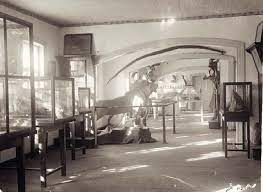

Mongolia’s first museum opened to the public in 1924, but that was the precursor to Natural History Museum (which was confusingly called National Museum). The collections started at that time were for a natural museum, but that building no longer exists.
1956 : State Central Museum

In the socialist period, history, natural environment, palaeontology and Mongolian art collections were moved into a renamed State Central Museum built in 1956.
1991 : National Museum of Mongolian History

Between the late 1980s and early 1990s, Mongolia began to transform toward democratic policies and an open-market economy. This led to the redevelopment of museum management and reopening of some earlier museums. In 1991, the National Museum of Mongolian History was established by merging the collections of two museums: the State Central Museum and Museum of Revolution.
In 2008, the National Museum of Mongolian History was elevated to the status of the National Museum of Mongolia. The present building was built in 1971, originally as the Museum of Revolution.
List of Exhibits

The museum consists of three storeys and 9 permanent and 1 temporary exhibition halls.
- First hall: Ancient Mongolia
- Second Hall: Xiongnu Empire and Ancient Kingdoms
- Third Hall: Traditional Clothing and Ornaments
- Fourth Hall: Mongolian Empire
- Fifth Hall: Traditional Culture
- Sixth Hall: Traditional Farming
- Seventh Hall: 17th-early 20th century
- Eighth Hall: Socialist Mongolia
- Ninth Hall: Democratic Mongolia
Opening Hours
- Summer (15 May – 15 Sep) 7.00am – 9.00pm
- Winter (16 Sep – 15 May) 9:00am – 6.00pm
- Closed on Mondays
Visited May 2023
Pingback: The Louvre Abu Dhabi – Part 2b Silk Roads and the Age of Chivalry – live2makan