
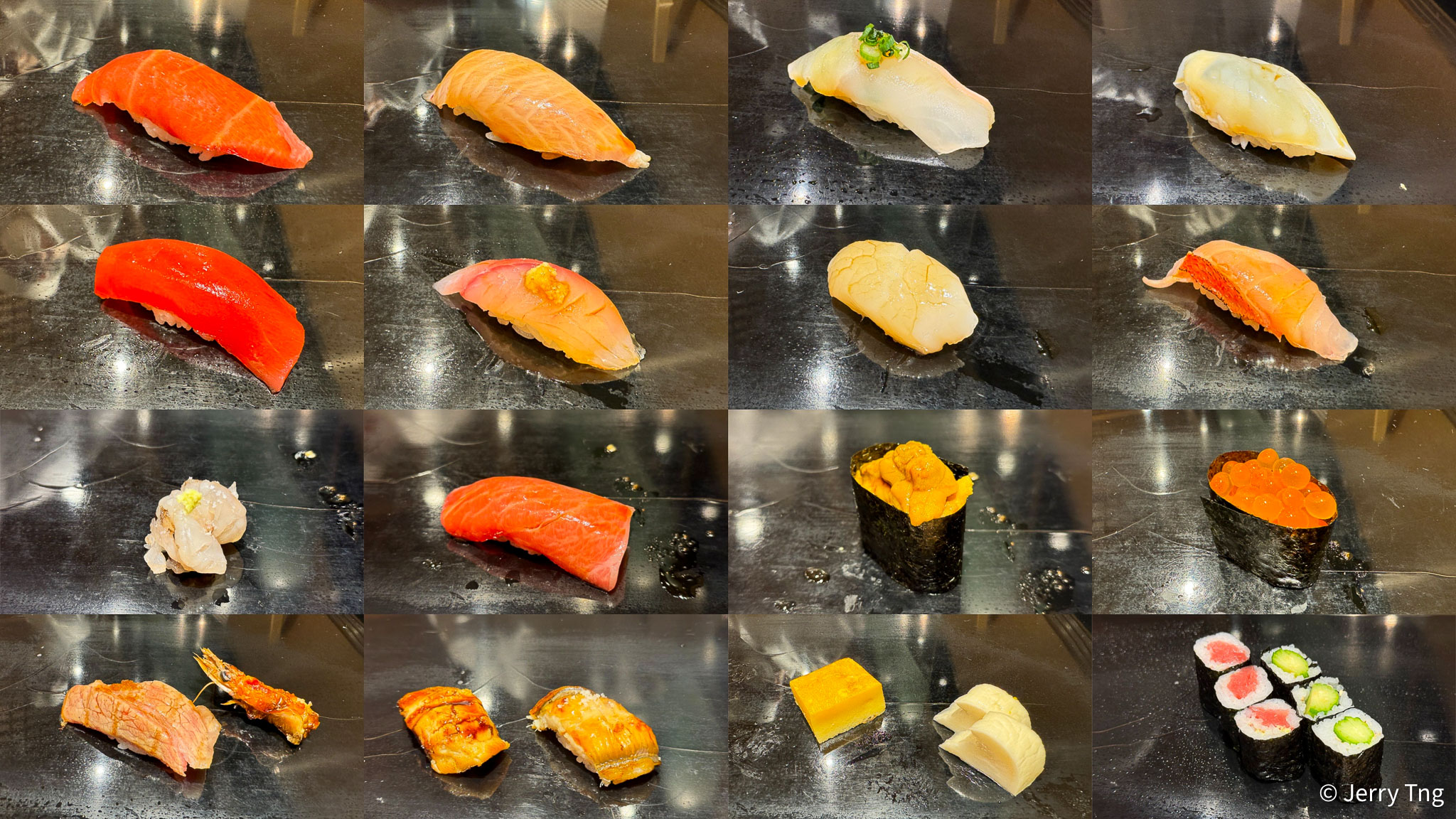
Been to many branches of this sushi chain, definitely a very high quality, excellent introduction to fine dining sushiya.

Founded in 1935, Ginza Kyubey is a famous store loved by people who left their gourmet footprints in history such as Shigeru Yoshida 吉田茂 and Kitaoji Rosanjin 北大路魯山人. It may be the most famous sushi restaurant in Japan that does not have a Michelin star.

Chef Yosuke Imada was born in 1945 and is the second-generation owner of Ginza Kyubey. He grew up in Ginza, Tokyo, and after learning how to cook sushi in Kobe, he began working at Ginza Kyubey in 1965. When the founder, Hisaji Imada, passed away in 1985, he took over and expanded the business. Through his marketing skills, Ginza Kyubey became widely known to the public.

Fresh fish reigns supreme across the board, at what is today considered one of the best sushi bars in Japan. Decor features warm wood in every shade from silver birch to treacle.

Sea Cucumber in Ponzu Dashi

The appetiser was raw namako ナマコ sea cucumber in a ponzu dashi. Before it was served, the itamae chef asked if we eat this strange ingredient. It was not cooked in anyway, rather crunchy and tasteless.
Chutoro 中トロ (Medium Fatty Tuna)

I was surprised they started with chutoro. Delicately brushed with a soy sauce that hinted a sweet dashi taste, the sushi was eaten with the fingers. The cut served was closer to the akamai part than the chutoro part. Nevertheless it was still fatty and satisfying to the very last chew.
Buri 鰤 (Yellowtail)

In the winter months, buri is regarded as the fattiest and most flavorful shiromi (white fish) – its taste and depth of flavor can equal the best maguro, especially when carefully aged for a few days to allow for naturally occurring enzymes to break down the fish’s proteins and fats into amino acids such as glutamate.
Tai 鯛 (Japanese Sea Bream)

There are over ten different types of tai found in Japanese waters, but madai 真鯛is the varietal preferred for sushi. High quality wild caught tai was extremely expensive and rare. The taste however, was unbelievably melt in your mouth tasty.

After the first round of sushis, we were presented with a deep fried eel bone 穴子の骨 and a deep fried konbu (seaweed) as a snack.
Aori Ika アオリイカ (Bluefin Reef Squid)

Before this, I did not know so many different types of ika (squids) are used as sushi. Aori ika was crunchy and did not have the slimy feel to those you get in Singapore. And the more you chewy, the more flavours were released.
Akami Zuke 本鮪の漬 (Tuna marinated in soy sauce)

Sometimes fresh is not the best. This is an excellent way to serve lean tuna on sushi. The tuna was marinated in shoyunikiri (a mix of soy sauce and mirin) then placed on the sushi shari (rice).
Hiramasa 平政 (Yellowtail Amberjack)

Hiramasa is a fairly rare and expensive fish, so while it is pretty well known in Japan, it tends to only be served in high-end sushi shops outside of the country.
Hotate 帆立 (Scallop)

Scallops used to be one of my favourite sushi (my favourite is sea urchin), but these days they are farmed rather than wild sourced. With scallops you are eating the ligament connect the actual scallop to the shell. The large ligaments were butterflied into thick pieces and molded onto sushi and provide a sweet flavor and pleasant, soft eating texture.
Kinmedai 金目鯛 (Splendid Alfonsino)

Kinmedai has a peculiar appearance; it is a bright red fish with very large eyes due to its preference for deep waters. This particular shiromi is generally served with some of its skin still on. The skin was lightly seared to tenderise it and release umami flavours from the oils. The flesh was delicate and tender, with good fat content. The taste was mild yet full of umami.
Aji 鯵 (Japanese Horse Mackerel)

Aji can either be served raw or cured with salt and vinegar. It is usually garnished with wasabi, ginger, and scallions to bring out the flavors of the fish. Most of the skin is removed during preparation, leaving a pinkish, appealing flesh.

Another round of snack before we proceeded to the non-fish part of the omakase.
Kurama Ebi 車海老 (Japanese Tiger Shrimp)
A good sushi chef will always procure live shrimp, and will prepare it only moments before it is served in order to maximize freshness and flavor. Kuruma ebi can be served raw (odori),
We were presented with two live kuruma ebi, which were shelled in front of us. The heads were not gone to waste. They were brought back to the kitchen to be deep fried and served later. As the name implied, the shrimp was sweet to taste, the flesh was firm and crunchy.

I was surprised that it was not made into a sushi. The raw prawn was served with its liver (ebi miso) wrapped but its flesh for that delicious taste of umami and creaminess.
Otoro 大トロ (Fatty Tuna Belly)

Otoro (大トロ) is the fattiest and most luxurious part of the maguro (bluefin tuna), located in the belly area. It’s one of the most sought-after cuts of tuna due to its rich and buttery texture that melts in your mouth, leaving behind a unique and unforgettable flavour.
Hamaguri Yaki 帆立焼き (Grilled Clam) – a la carte

We ordered two grilled hamaguri. The natural juice from the clams was retained in the shell and carefully served to us. Slurped all the juices, you would not regret it.
Bafun Uni 馬糞ウニ (Bafun Sea Urchin)
Uni Gunkan 军舰 was invented in Kyubey. The founder of Kyubey invented Gunkanmaki, which is now a staple in all sushi restaurants. Edible history here.

In uni (sea urchin) world, “peasants” eat fishes and prawns while the “royalties” eat top grade kombu (kelp). The expensive Bafun uni partakes kombu as its diet, so you can imagine how umami the sea urchin are. While the less expensive ones take fishes and prawns still taste umami, but how could you beat kombu? Different uni companies have different ways of rearing and grading their uni. This makes the price difference.
Ikura イクラ (Salmon Roe)

Next up, unadulterated ikura (salmon roe) in a gunkan. In most places, the ikura would be seasoned with soy sauce and mirin before serving. Here the chef opted to serve the salmon roe directly. Without the soy sauce and mirin, you can taste the original shaper taste of ikura. When eaten, each egg burst open, delivering a rich umami flavour that was complimented by the vinegared rice and nori.
Otoro Aburi 大トロ炙り (Seared Fatty Tuna)

At first looked, I thought it was wagyu beef aburi and proudly explained it to my guest. It even tasted like wagyu. But this being Tokyo and a traditional sushi restaurant, the chef explained that it was otoro. I made this mistake once again. And at this point, the kuruma ebi’s head returned deep fried for a really nice bite.
Anago 穴子 (Conger Eel)

Moving off red fish, we were coming to the end of the omakase, where the taste buds will be brought through more complex tastes. Anago was grilled to perfection and then served two ways on a sweet nitsune sauce and with a simple sprinkle of salt. Flavours onslaught on the palate.
Maki Course : Teka-maki and Kappo-maki

Classic end to the sushi meal. The nori was not mushy, signs of a really high standard sushi restaurant. The chef asked if we wanted to repeat anything or get more, signaling the end of the omakase run. Anything else will be a la carte from now. And please do not ask where there’s no salmon; you will not be served salmon in Japan as the fish in the wild can have parasitic worms, the chef explained categorically, although farmed versions have been served in lesser sushiya.

And together with the maki (which is considered a rice dish) was a bowl of misoshiru みそ汁 and tsukemono 漬物, a traditional gesture as Japanese would not eat rice without these two accompaniments.
Tamagoyaki 卵焼き (Grilled Egg)
This is the official end to the sushi meal when the tamago is served.

Ask a sushi aficionado how they judge a sushi restaurant or itamae, and you will get one of two answers: by their kohada or by their tamago, as both require arduous preparation, a lot of practice, and a lot of skill. A well-executed piece of tamago should be sweet and delicate, yet will have umami flavors from the shrimp and fish paste, and fluffy like a soufflé yet dense enough to hold form. The egg was cooked in Castella style and was served as a dessert.

In response to the increasing number of foreign customers, Chef Imada personally studied English to ensure the restaurant’s hospitality remains top-notch in contemporary times. The itamae chefs also tried their best to explain the ingredients in English, but it helps if you know beforehand what you are eating.

Kyubey provides great sushi for a reasonable price without the need for a long reservation queue. You do not need to go to other sushi restaurants with 3 stars from Michelin to enjoy top quality sushi in Japan. Of course, once you are accustomed to the quality of Kyubey, you can extend outwards to others.
Ginza Kyubey Keio Plaza Hotel Store 銀座 久兵衛 京王プラザホテル店
〒160-0023 東京都新宿区西新宿2-2-1 本館7F
Tel : +81 03-3344-0315
Visited Nov 2023
#久兵衛 #銀座グルメ #銀座ディナー #銀座寿司 #東京グルメ
Pingback: Sushi Aoi 鮨葵 @ Akasaka – live2makan