
It is a functioning residence of the President just like the Istana in Singapore, but the President does not live there. Belém Palace, together with Parliament, now constitutes the Portuguese democracy’s ‘main residence’, with a history that is extended and enriched every day.
Belém Palace

Belém Palace has been around for approximately five centuries. Built in the sixteenth century by the nobleman D. Manuel de Portugal, the building was purchased by João V in 1726 and remained in the Portuguese royal family until the late nineteenth century, when it began to be used for state-related purposes.

Used as a summer residence and sometimes as a main residence, Belém Palace housed successive generations of kings and queens, survived the great earthquake of 1755, sheltered exotic animals, witnessed the departure of the royal family to Brazil and the births and deaths of several princes, and hosted many visitors from different parts of the world.

After the establishment of the Republic, Belém Palace became the presidential headquarters and the official residence of the President, acquiring a new central role.


Maintaining its leading role over the course of history, Belém Palace has witnessed the evolution of the Republic: it has been the setting for crucial political meetings, government swearing-in ceremonies and dismissals, the announcement of the end of the Great War, the wake of a President who was assassinated during office, presidential resignations, the signing of regime pacts and the dissolution of parliaments, the welcoming of the highest-ranking figures in international politics and cultural personalities, emergency meetings, routine discussions and also in the adjacent square, popular demonstrations expressing indignation, joy or grief.
The Palace Collection

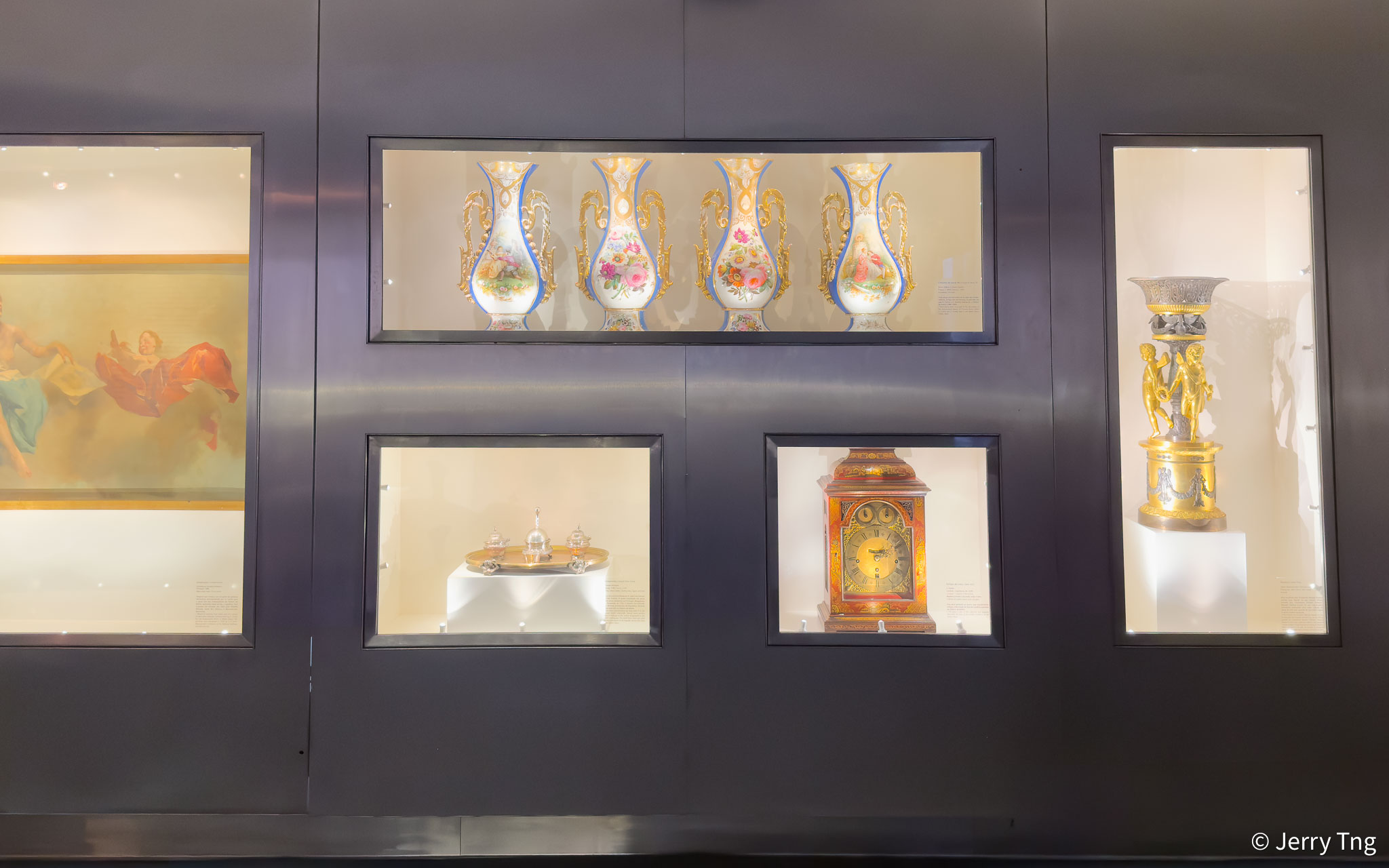
From left:
Chandelier Design
Barcelona, Espanha, s.d. | Barcelona, Spain, undated
Drawing of a chandelier measuring 220cm x 200cm and containing 32 lights, which is to be integrated into Belém Palace’s lighting system. It was designed by the Spanish company Juan Marti.
Itinerary of a visit
Lisboa, 18 de fevereiro de 1957 | Lisbon, 18 February 1957
By Queen Elizabeth II of England and the Duke of Edinburgh to Belém Palace.
Draft of a speech
Lisboa, 10 de junho 1973 | Lisbon, 10 June 1973
By the President of the Republic, Américo Tomás, about the National Day commemorations. In the document, the head of state mentions an honours ceremony that is to take place that day at Belém Palace.
Invitation
Lisbon, 1940s
From the President of the Republic, Oscar Carmona, to Navy Captain Américo Tomás, for a reception at Belém Palace.

(Top left corner)
Receipt for the Leasing go the Annex of Belém Palace
Lisbon, July 1912
After one year after taking office as the President of the Republic, Manuel de Amaga was authorised by the government to establish his official residence at Beiém Palace, which had, until then, been used for hosting foreign delegations. The head of state and his family moved in the summer of 1912, paying a monthly rem of 100,000 reis. From then on, and during the First Republic (1919-26), all presidents who wished to establish their residence there have been obligated to pay the respective rental fee.
Group of Four Vases
Sèvres (manuf.) | France, c. 1870 | Porcelain


These pieces were once part of the decoration of the Ambassadors Room, or Princess Room, when D. Carlos and D. Amélia lived in the Belém Palace (1886-1889).
Centrepiece
Unknown author | France XIX century | Bronze

Piece chosen by President Manuel Teixeira Gomes (1923) to decorate the scenario behind him, on his official portrait by Columbano Bordalo Pinheiro. Manuel Teixeira Gomes was a great art collector, and acquired a large number of important pieces during his lifetime. When he went to his exile, he decided to bequeath most of his art collection to several national museums.
Bed Quilt
Unknown Author | Portugal XIX century | Silk

Inkwell Desk Stand
Thomas Germain | France, 1744 | Sterling silver, copper and brass

Rare piece commissioned by King John V to the famous French silversmith. Almost every existing piece in Portugal of this author disappeared in the 1755 Earthquake. The Inkell Desk Stand was used by many presidents of the Republic during their time in the Belém Palace.
Table Clock
S. Alselin | London – England, XVIII century | Painted and gilded wood, brass and glass

This piece is part of the collection that regularly decorates the area of the private residence of the Belém Palace.
«Inspiração» | «Inspiration»
Columbano Bordalo Pinheiro | Portugal, 1886 | Oil on wood

Allegorical painting that makes part of a group of decorative paintings commissioned by D. Carlos for the Ambassadors Room in Belém Palace. The paintings were withdrawn in 1929 by D.G.E.M.N. (Management Institution of the National Buildings and Monuments).
Memorabilia from State Leaders
These were state gifts that have decorated the palace and were considered part of the collection of the palace.
Salver «Descoberta e Independência do Brasil» or “Discovery and Independence of Brazil”
António Maria Ribeiro (Manuf.) | Ourivesaria Reis & Filhos, Porto 1924 | Silver Prata

Gift from the Commission of the Reception of the Portuguese Colony of Rio de Janeiro to António José de Almeida (1919-1923), as a reminder of his visit to Brazil in 1922. The salvo evokes the journey of Pedro Álvares Cabral, identifying at the top the coat of arms of his family and in the centre the ships of the fleet he commanded. Below, two dates are marked: the “Discovery of Brazil” in 1500, and the “Proclamation of Independence” in 1825, the date on which Portugal officially recognised Brazil as an independent country.
Force et Veritas | Force and Truth
Georges Récipon (1860-1920) | [France, no date] | Bronze (sculpture); alabaster (base)

Gift by the Portuguese Republican Guild to António José de Almeida, during the solemn session that took place there on September 22, 1922, on the occasion of the President’s visit to Brazil. The “force” (Force) is represented by the lion, and the “truth” (Veritos) by the woman who holds a mirror, a symbol of truth.
Commemorative Salver of the State Visit to Portugal of President Ronald Reagen
Tiffany’s & Co | U.S.A., 1985 | Sterling silver

Given by President Ronald Reagen of U.S.A. to President António Ramalho Eanes – State Visit to Portugal, 1935
Medals Of The “Senado De España” And “Congreso Diputados”
Spain | Silver, enamel and silk

Medals awarded by the President of the Senate of Spain, Pio Garcia-Escudero, and by the President of the Congress of Deputies, Ana Pastor, to President Marcelo Rebelo de Sousa. State visit to Spain – 2018
About the Museum of the Presidency of the Republic

Meet the Presidents of the Republic and their official residence, the Palace of Belém. Museu da Presidência da República (MPR), as it is called in Portuguese, is housed in the Palácio de Belém’s old coach house.


The history of the development of the republic in Portugal is detailed in chronological order. With oil portraits, personal items and various documents illustrating the history and career of each of the presidents of the Portuguese republic, the museum presents all of the heads of state that have marked the country’s 20th century.
Permanent Exhibitions at the MPR
- Implementation of the Republic and National Symbols
- The Republic and its Presidents and Portrait Gallery
- State Visits and Gifts
- Powers of the President of the Republic
- Honorary Orders
- Belém Palace
Operating Hours
- Tuesday to Friday, from 10:00 a.m. to 6:00 p.m.; Saturday and Sunday, from 10:00 a.m. to 1:00 p.m. and from 2:00 p.m. to 6:00 p.m.
- Access is only allowed up to 30 minutes before closing.
- Closed every Monday, New Year’s Day, Easter Sunday, May 1st and Christmas
Museu da Presidencia da Republica
Palacio Nacional de Belem 1349-022, Lisbon, Portugal
Tel : +351 21 361 4660
Visited Aug 2023
@museupr
0 comments on “Museum of the Presidency of the Republic – Belém Palace”