
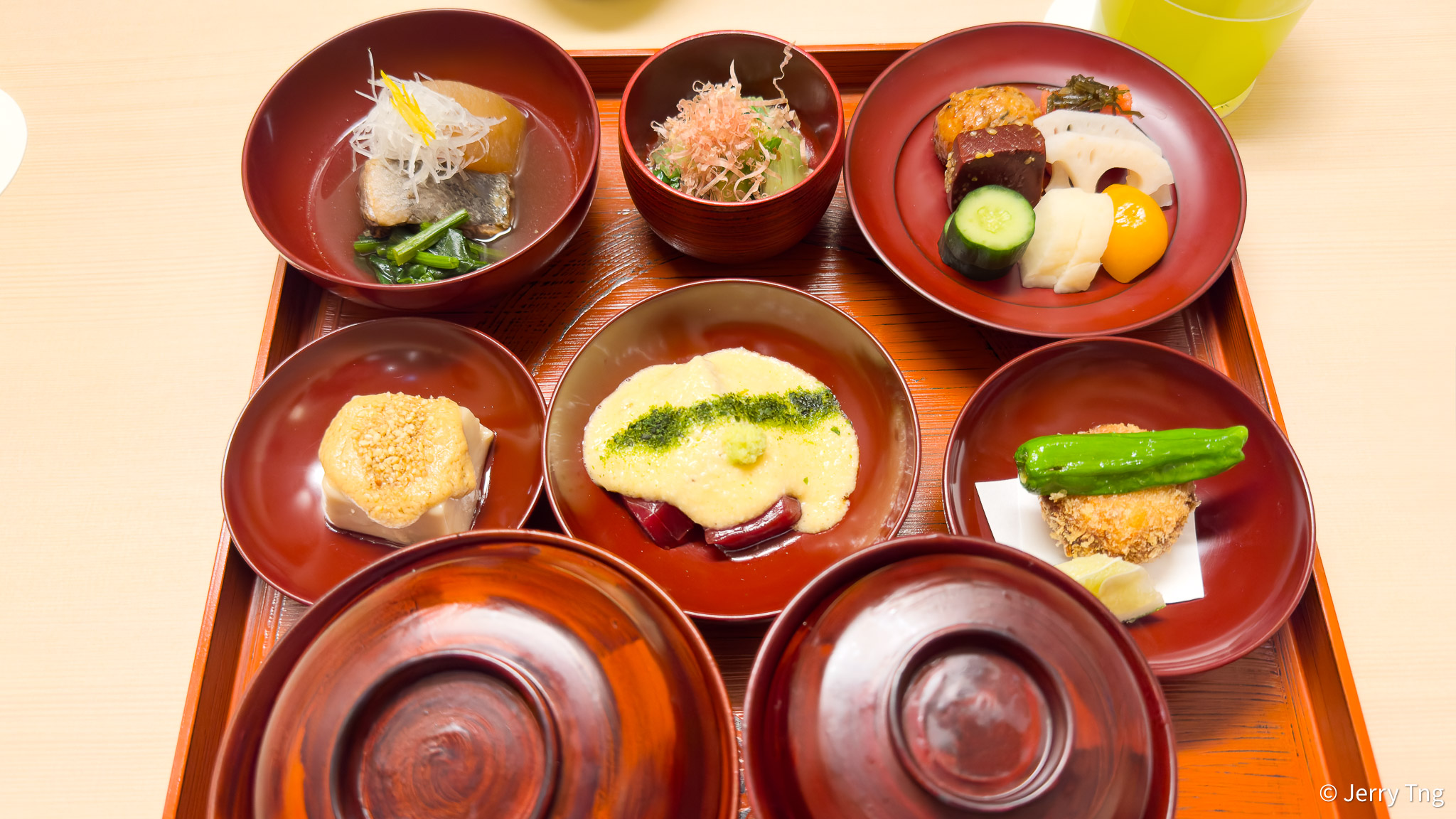
This elegant Japanese fine dining restaurant in Azabudai Hills serves an affordable and wonderful lunch set.

Located at a corner of the 3rd floor of Tower Plaza, the largest Mori JP Tower in Azabudai Hills, Azabudai Sui Inaba 麻布台 粋稲葉 is the sister restaurant of Ginza Inaba that specialises in kaiseki. They offer a set lunch menu as well as a couple of a la carte items that comes with rice for those with smaller appetite. In the cosy store, the dining area is divided between a L-shaped counter that faces the open kitchen and some table seats in the back.
華膳 昼餉ランチ献立 Hanazen Lunch Menu
先附 Appetiser
The Hanazen 華膳 came as a complete set divided into four parts, like a kaiseki course condensed onto an airline meal tray quite similar to SQ’s hanakoireki course.
新玉ねぎのスープ New Onion Soup


The “new” onion, called shin-tamanegi in Japanese, is primarily harvested between March and May, yielding a sweet onion with a slightly spicy bite that is particularly enjoyable raw. Here, they made a delicious, light onion soup that is creamy in texture (without using any diary cream), and sweet (without any added sugar).
御膳 Gozen

御膳 Gozen has two meanings: royal banquet or a phrase that politely refers to meals and meals. This usually means an elaborate set of small dishes to accompany the rice dish.
胡麻豆ふ。口取り Appetisers

胡麻豆ふ Goma dofu is a panna cotta–like sesame custard and a staple of shojin ryori, the food of Japanese Buddhist monks.

And the appetiser also included a simple boiled bokchoy with mushrooms and bonito flakes dressed with ponzu soy sauce.
温物、和え物、揚物 Nimono, Aemono, Agemono

温物 Kimono is the simmered or cooked dish in the course, and usually consisted of some boiled or simmered radish or other tubers. It is part of 強肴 Shiizakana in a kaiseki meal that is “another highly recommended appetiser”. A lot of care is usually put into this unassuming dish, but it represents the chef’s idea in assembling the meal. Today’s kimono was a simmered radish (veins carefully removed) with mizuna (Japanese water spinach) and Spanish mackerel. Absolutely delicious.

和え物 Aemono is a general term for dishes that are prepared with ingredients such as vegetables, seafood, and meat. Today’s special is tuna sashimi with yamaimo (Japanese yam) mash and seaweed sprinkle.

There’s no need for wasabi or soy sauce in an elaborate meal like this one, as the chef has already prepared the sashimi according to how he wants you to taste it.

揚物 Agemono is a deep fried course in the kaiseki meal, not to be confused with the term tempura. It categorises all fried food that includes tempura, but usually it is a piece of fish or something seasonal that would taste best deep fried, which for today’s meal was snow crab croquette and shishito (Japanese jalapeno).
加薬飯、汁、香の物 Kayakueshi, Shiru, Konomono

加薬飯 Kayakumeshi is a Kansai-style gome rice with cooked vegetables, meat, fish, etc., and pickled vegetables. It is so delicious, the term is a play of words that also mean “addictive rice.” And they know we would ask for second helpings, but they only restricted everyone to have only one serve.

汁 Shiru simply means soup, and this is not your usual misoshiru. It was a heartwarming clam soup with the stock made from shellfish dash.

香の物 Konomono is a must in all meals with rice in Japan, as the Japanese would find it impolite to be missing these pickles when rice is served. And they served a rather good spread that included grilled konnyaku, a sukiyaki meatball, mentaiko (spicy cod eggs), and pickles.
本日の一皿 Today’s Main Course

If you think Gozen was all you would get for the meal, then you will be surprised by the main course that followed. For 「本日の一皿」 or “Today’s plate” , you get a choice of either a fish 魚料理, meat 肉料理 or a small nabe (hotpot) 小鍋.
肉料理 Niku-ryori Meat Course

I picked the 肉料理 Niku-ryori Meat Course, which was a oyaku nabe 親子鍋 (earthen pot), where the chicken and egg are cooked together in a sweet and savoury broth.

If you choose the chicken course, you also get a portion of the sweet Japanese omelette with some mashed radish.

Although you cannot ask for another helping of the “addictive rice”, you can ask for steamed rice that comes with a raw egg and bonito flakes. As I have enough chicken eggs, I placed an a la carte order of Ikura (marinated salmon roe).

Pour the savoury fish eggs on the rice, and they will burst with umami in each mouthful.
甘味 Dessert

For desserts, you get a choice of red bean monaka with strawberry 華豆中, fruits 水菓子 and sake wine lees ice cream 酒粕アイス. The last time I picked the 水菓子 Mizugashi, seasonal fruits (mikan and strawberry) with jelly. This time I decided to try the monaka.
華豆中 Red Bean Monaka With Strawberry

Strawberries are in season, and there are plenty available at different price points. The traditional Japanese confectionary sweet called monaka 最中 is usually filled with red bean paste. Here half a strawberry was added.

It was a very good lunch the first time round, so good that I promised to come back again when I visit Japan. Here I am, and everything on the tray is spot on with a few changes due to seasonality. Perhaps the next time I am back in Japan, I would go try their honten in Ginza.
Azabudai Sui Inaba 麻布台 粋稲葉
〒106-0041 東京都港区麻布台1-3-1 麻布台ヒルズ タワープラザ 3F
Tel : +81 (03) 6277 8707 (Reservations)
Visited Mar 2025
#麻布台ヒルズ #麻布台ヒルズグルメ #六本木 #六本木グルメ #六本木ディナー #日本料理 #割烹 #tokyo #tokyogourmet #japan #japanesefood #japanesecuisine
0 comments on “Azabudai Sui Inaba 麻布台 粋稲葉 @ Toranomon”