
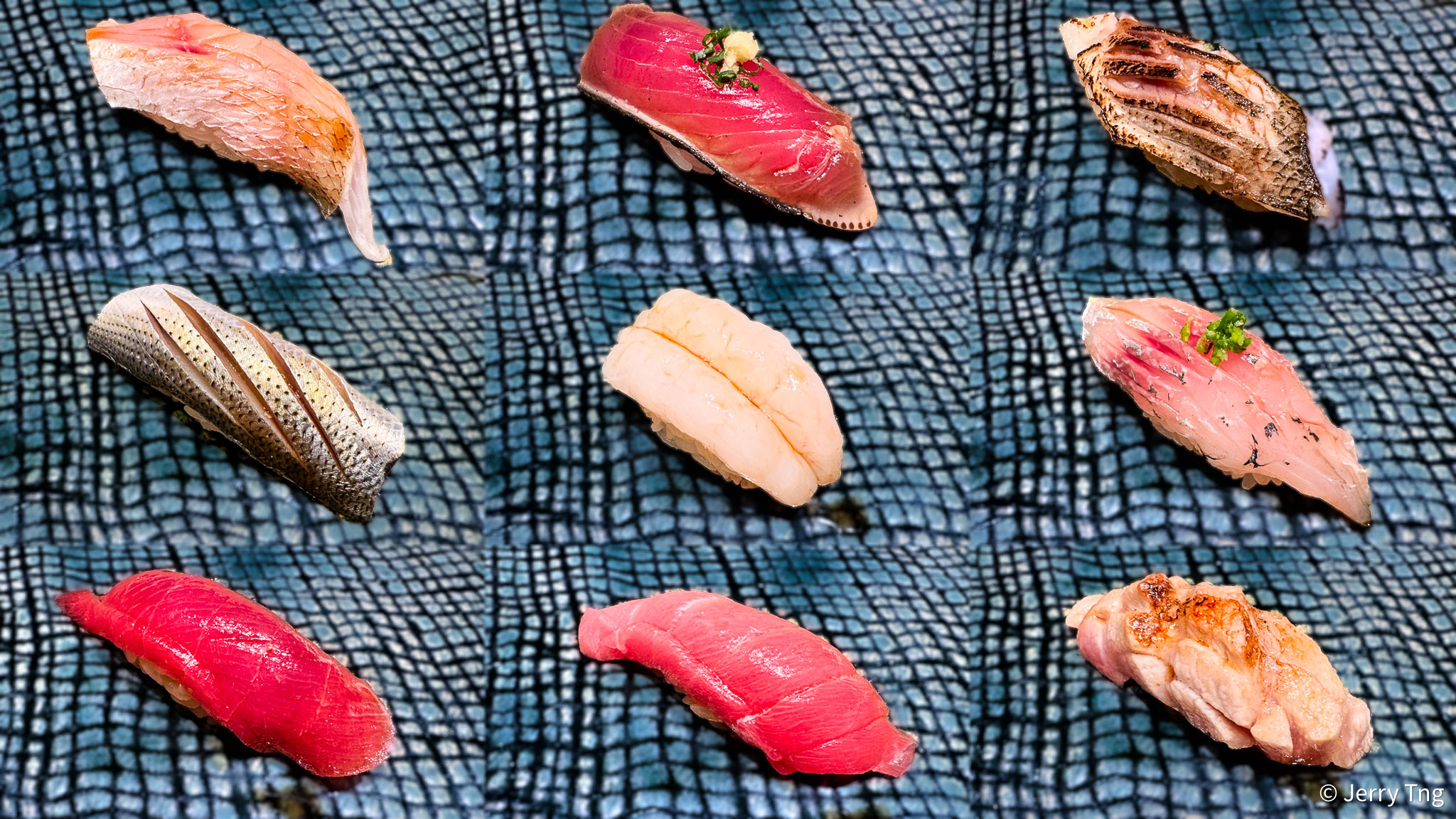
I was shopping in Orchard with Princess and we wanted some sushi for lunch. I was surprised I could get two seats at such short notice at Ginza Sushi Ichi.

Ginza Sushi Ichi in Singapore is a highly-regarded Michelin-starred restaurant known for its exceptional quality sushi and omakase experience. I had always wanted to come for a meal here, but it was a table that was difficult to get, especially for their special lunch set that was $130 pax.

Traditional Edomae sushi is made with seasonal seafood and vegetables from Japan. Only the best rice, marinated with red or white vinegar, makes it to the counter. Even the sauces are shipped from their flagship store in Japan to maintain consistency.

The silky smooth and tactile counter was fashioned from a 300-year-old cypress called hinoki in Japanese, and the wooden ornaments on the wall were handmade by a famous carpenter in Nara.

The current executive chef at Ginza Sushi Ichi Singapore is Takeshi Kawakami. He is assisted by Head Sushi Chef Shuki Yoshiaki, who was our itamae 板前 for the lunch omakase. Over the years, he has amassed his own fan base in Singapore and Jakarta, where he was posted previously. His greatest passion is preparing quality sushi for appreciative guests.

We ordered the Omakase Nigiri Lunch ($270++ per pax) that comes with an appetiser course, 12 pieces of premium nigiri, the popular ikura uni don, a hand roll, miso soup and dessert.
Omakase Nigiri Lunch (Jul 2025)
Appetisers


- Ayu (sweetfish) is often enjoyed as otoshi and is served here braised in a sweet soy sauce. I still prefer them whole and grilled simply with salt.
- Next up, edamame tofu with caviar was quite delightful with the natural sweetness of the soy bean coming through very well.
- Shredded squash with crab meat in a cider vinegar dressing, my favourite among the appetisers.
- Moroheiya, also known as Egyptian spinach, is a nutritious leafy green that can be used as a spinach substitute. It has a distinct, mucilaginous (slimy) texture when cooked.

After the appetisers, we went straight into the nigiri sushi segment of the omakase lunch. They had two different sushi-meshi (sushi rice) for the nigiri. One was with red vinegar and the other using white vinegar. The temperature of sushi rice is very important. If it is too warm it won’t be in harmony with the neta (which should typically be at room temperature, although this varies), and if it is too cool it will taste too salty and lose its vinegary flavour. And when the rice is shaped for nigiri, it is called shari 酢飯.
Kasugo 春子鯛 (Young Sea Bream)

When the Japanese sea bream is around one year of age and six inches in length, it is called kasugo (lit. “child of spring”). While madai flesh is rich and fatty, kasugo is quite lean.
Katsuo 鰹 (Bonito)

The katsuo has been warayaki (straw-fired grill cooking technique), so it came with a slight smokey straw taste. Princess was the first to discover it, I am so proud all that expensive meals have developed her palate. Garnished with grated ginger and chopped scallions, katsuo has a very unique, distinct taste that I quite enjoy as a neta.
Kamasu 魳 (Barracuda)

Its flesh, oil content, appearance, and flavour profile places the kamasu (barracuda) somewhere between hikarimono (silver, shiny fish) and shiromi (white fish). The most popular serving method is to aburi the surface to release the oil and fragrance of the fish that is at its peak right now. Served with yuzu pepper instead of wasabi to balance the fattiness.
Ankimo 鮟肝 (Monkfish Liver)

Ankimo (monkfish liver) is a Japanese delicacy often referred to as “foie gras of the sea” due to its rich, creamy texture and buttery taste. Usually steamed and served with ponzu sauce as an appetiser, I was surprised that it was whipped with mirin and sake, and served as a mousse on shari. It was almost like eating a savoury version of a umami-packed sea urchin.
Kohada コハダ (Gizzard Shad)

Kohada (gizzard shad) is a symbol for the philosophy of Edomae sushi among connoisseurs and chefs alike. Because of its fresh, shiny appearance, it is considered one of the most beautiful sushi dishes, which reaches its peak in flavour only when properly prepared and combined with sushi rice. I like the sharp vinegar taste that paired well with the white vinegar shari.

I have to commend on the keen observation of the chef who noticed Princess is left-handed. Her sushis are placed at the different angle as mine. As I was not so hungry, he was able to adjust the amount of rice per sushi for me.
Amaebi 甘海老 (Spot Shrimp)

Amaebi (spot shrimp or sweet shrimp) live in 500 to nearly 2000 feet of water and have a soft texture and sweet, lingering flavour. One of my favourite neta when sourced from the right places, but most sushi restaurants serve subpar quality ones. These were top of the shelf stuff.
Aji 鯵 (Japanese horse mackerel)

Another of my favourite neta, but only when they are extremely fresh. Else aji (Japanese horse mackerel) can have a really fishy taste, as with all red blood fish. This was a nice piece of aji that was at its peak and served scallions and shiso pepper.
Kegani Chawanmushi 毛ガニ茶碗蒸し (Egg Custard with Japanese Hairy Crab)


Delicious and piping hot steamed egg custard with shredded Japanese hairy crab and bits of kanimiso (crab innards).

If you go to a sushi restaurant and just order maguro, the chef will assume you mean lean tuna (akami) from whatever species of tuna they have on hand. But in sushi, we distinguish between the species and the cut. But the prized catch is bluefin tuna or hon maguro 真鮪 (lit. “the real tuna”). It is available by its different cuts depending on the part of the huge fish. And the prized cut is the toro 卜口 or belly.
Akami Zuké 本鮪の漬 (Marinated Tuna)

The word zuké is related to tsukemono (漬物, “pickled things”) and shoyuzuke (醤油漬け, marinated in soy sauce). During the Edo period virtually all maguro was marinated in a shoyunikiri in order to preserve it. Doing so not only preserved the fish, but it also kept it visually appealing as otherwise the tuna’s flesh would have turned dark when exposed to air. Every sushi chef has his own style, and here it was marinated lightly just before serving.
Chutoro 中卜口 (Medium Fatty Tuna Belly)

The really good chutoro 中卜口 (medium fatty tuna belly) has that melt-in-mouth texture, you really do not need to go one more grade higher for raw tuna belly. While most otoro are served seared or aburi, chutoro are almost always served raw for one to enjoy the buttery texture and protein tartare taste.
Otoro 大卜口 (Fatty Bluefin Tuna Belly)
The fattiest cut of the bluefin tuna has to be otoro, and usually it is too much to eat on its own. A slight aburi 炙り (flame seared) will help release more amino acids that makes the fatty tuna belly tastes even better. And they do it one step better – grilling the tuna belly under red hot binchotan.

This prized cut has beautiful marbling and a delightful pink colour. It has a creamy texture that melts on your tongue. The aburi released even more of the fats and enhances the flavour and texture of the otoro.
Uni Ikura Don ウニ イクラ 丼 (Sea Urchin Salmon Roe Bowl)

The next course was a small don (bowl) of marinated ikura イクラ (salmon roe) and uni ウニ (sea urchin) on sushi rice. The word ikura is a loan word from the Russian word “Ikra”which means fish roe, it was introduced as neta after the end of WWII.
Kani Misoshiru カニ味噌汁 (Crab Miso Soup)

Not your typical miso soup, this one came with crab miso. Kani miso (crab miso or crab brains) is a delicacy in Japanese cuisine, referring to the rich, creamy paste made from the crab’s innards, specifically the hepatopancreas (a combined liver and pancreas). It has a salty, umami-rich flavour.
Akamutsu アカムツ (Rosy Seabass) Add-on

The best akamutsu, also sometimes called nodoguro (blackthroat perch), usually comes from the east coast of Japan, and top specimens will be line-caught, like the one we were having for lunch. A deep sea dweller, it offers a very high fat content, especially for a white fish. Only available in Singapore at the very best sushiya.

Nodoguro is celebrated for its rich, umami flavour and exceptionally tender, oily flesh. The fat melts in your mouth, leaving a lingering, sweet aftertaste. This was not part of the lunch omakase, but we couldn’t resists to add on these delicious morsels.
Tairagai 平貝 (Japanese Pen Shell) Add-on

Another special that was available that afternoon was tairagai (Japanese pen shell). Its meat has a delicate, slightly sweet flavour and a firm yet tender texture. Served with a slight smooch of nikiri.

The tairagai‘s shell can be over a foot long and it is typically believed that the longer the shell, the better the taste. Like hotate, only the adductor muscle is consumed. It is comparable in taste and texture to hotate, but the flesh is firmer, less sweet, and has more concentrated umami.
Anago 穴子 (Conger Eel)

Often mistaken for its freshwater counterpart (unagi), anago is saltwater eel. Anago (conger eel or sea eel) is available year-round, but best in the summer time, especially from June to mid-July when they reach three feet in length and are at their fattest. It is a classic Edomae-zushi topping that announces the arrival of the rainy season (June) in the Tokyo region. It was simmered in shōyu and sake, served warm and brushed with a tsumé reduction.
Torotaku Maki トロタク巻き (Tuna And Pickled Radish Roll)

Torotaku maki (tuna and pickled radish roll) is a makimono made with chopped pickled radish is combined with sukimi to form the centre of this seaweed roll. The pickled radish that was pickled in house had a refreshing flavour and matched perfectly with the thick fat of the tuna. Sukimi refers to a thin slice of the fish from which the meat between the muscle and the fat remaining on the back of the skin is cut away.
Tamagoyaki 卵焼き (Egg Castella)
The final piece of sushi that signalled the end of the omakase is usually the tamago (egg). Ask a sushi aficionado how they judge a sushi restaurant or itamae, and you will get one of two answers: by their kohada or by their tamago, as both require arduous preparation, a lot of practice, and a lot of skill. A well-executed piece of tamago should be sweet and delicate, yet will have umami flavors from the shrimp and fish paste, and will also be dense like a soufflé. It is considered by many to be the best way to finish a great sushi meal.
Dessert

Dessert is usually the weakest course even in a high-end sushiya like this one. It usually comprises of a seasonal fruit and Japanese sweet, accompanied with a hot cup of tea. Some even ended their meal with simply the tamagoyaki. So I wasn’t expecting much here.

The Japanese musk melon and salt ice cream in a monaka 最中 was a wonderful closing. The super sweet fruit was perfect with savoury sorbet that wasn’t overpowering like a matcha or similar ice cream.

Excellent omakase lunch with extremely fresh ingredients and superbly attentive service. The ingredients, while top-notch, were boring and lacked surprises. Everything was prepared to the strictest tradition of Edomae sushi, even down the sequence of neta served. While I find the experience lacking in “something special” given the price point, it is still a must-try for sushi lovers in Singapore if you have not been here before.
Ginza Sushi Ichi Singapore 銀座 鮨一
320 Orchard Rd, #01-04 Singapore Marriott Tang Plaza Hotel, Singapore 238865
Tel : +65 6235 5514 (Reservations)
Visited Jul 2025
Michelin Singapore Guide 1 Star 2016-2025
Pingback: Sushi Singapore: 10 Restaurants for Authentic Japanese Flavors
Pingback: Best Sashimi in Singapore: 10 Top Restaurants