
Kazan is volcano in Japanese, and Tonkotsu Kazan Ramen 豚骨火山ラーメン‘s signature ramen features an erupting “volcano”. Not interested in theatrics when it comes to food. So let’s go on with the ramen.

Their signature dish is the Ishiyaki Ramen (hot stone roast ramen). It is similar to a normal bowl of ramen in terms of content, but it is served using a hot stone pot. Then, boiling soup is poured into the hot pot and the conical cover with an outlet on top is covered on top. The contact of boiling liquid and hot stone creates a sudden spurt of steam, and the whole visual looked like a volcano erupting.

Tonkotsu Kazan Ramen is a small and discreet Japanese restaurant with rather friendly and jovial service crew. The setting was simple but richly infused with authentic Japanese decor. Although they claim to originate from Osaka, the flavours have been adopted to demand of the local palates.

There’s a lot of condiments available for the ramen, which is uncommon in a ramen restaurant in Japan. Ramen chefs are usually proud of their broth, and would limit the types of condiments so that you can enjoy their creations. This lack of faith is concerning.

This little gimmick was quite appealing. Usually I will leave boiled eggs alone. I don’t know why we couldn’t help ourselves from peeling them.

Princess had the Chashu Karamiso Ramen. It was supposed to be spicy, but it wasn’t, though the soup was tasty. The pork slices were tender, firm and thick – very lovely to chew. Despite only half an egg and its slightly flattened appearance, it turned out decent. The yolk has a delightful gooey texture, as any well-prepared egg should. The marination is well-balanced and complements the dish nicely.

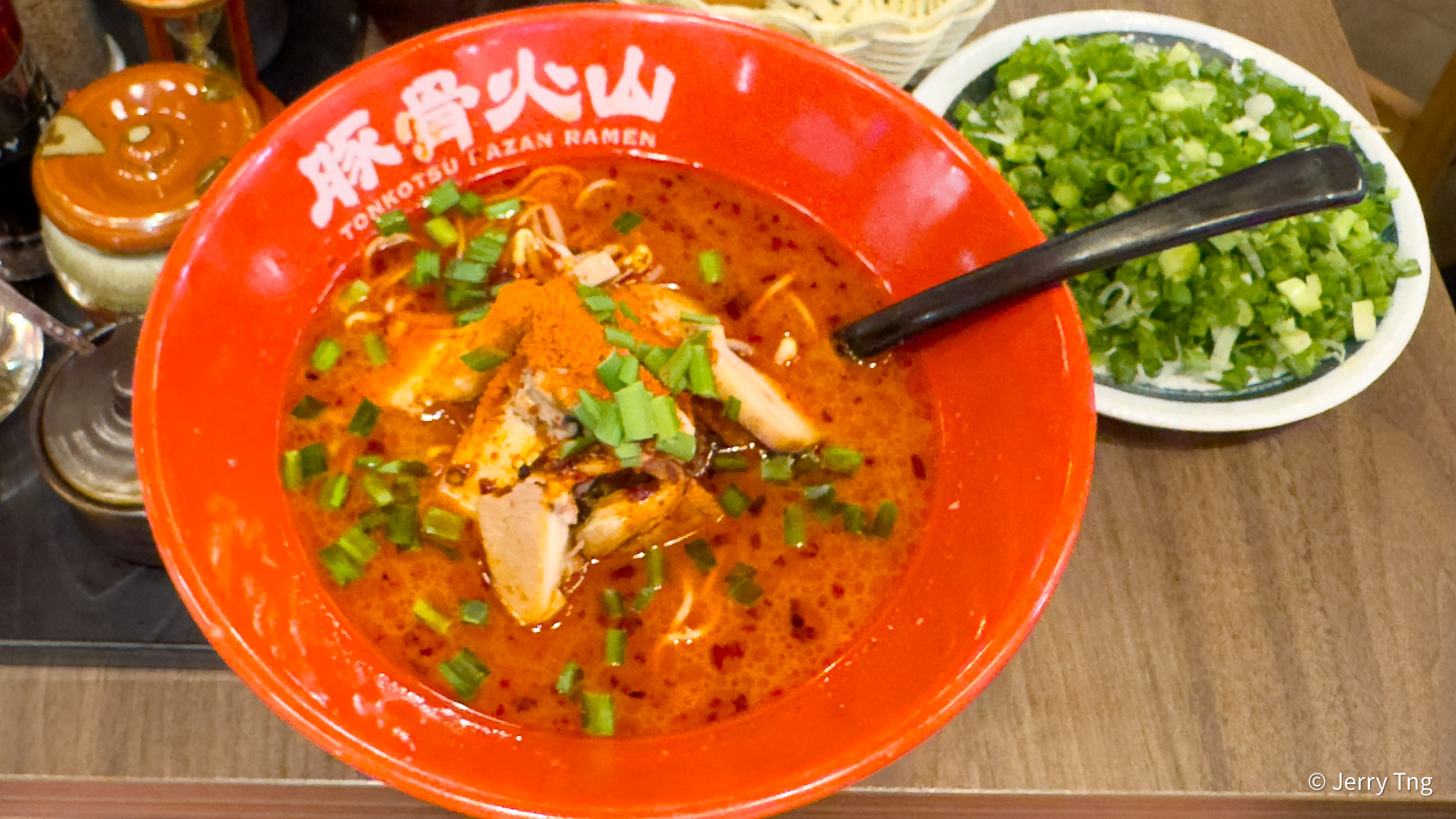
I ordered the seasonal curry tantanmen, but one should not expect the Szechuan-style dan dan noodles 担担面. Tantanmen is a highly popular noodle dish in Japan, and is not the same as the ones from Sichuan in terms of taste. In Japan, variations of the dish often incorporate sesame paste for a rich flavour.

Common toppings include stir-fried ground pork and chopped scallions. I used to ask for more scallions, but these days they charge for more scallions as inflation has struck hard on this aromatic. I love scallions on my ramen, so I always order one more serving of it and pour it over my noodles.

The Szechuan version tends to be relatively dry with minimal soup, focusing on the seasoning. In contrast, Japanese tantanmen usually comes with a generous amount of broth, allowing for a variety of flavours and ingredients to be enjoyed.

The noodles looked springy / hard but were actually rather soft – I would prefer the doneness a little more al dente. But you can’t expect much for the price we paid for lunch.

Szechuan dan dan noodles are famous for their minced pork topping. This one was quite good and didn’t overpower with the peppercorn.

I was expecting thinly sliced charsiu, but thick cuts of pork belly was given. I didn’t like these because they are often overcooked. This was no exception.

The curry was not obvious, it tasted like a spicy broth with tahini incorporated.

Pan fried dumplings or yakigyoza were part of the set, nothing to shout about and I would not order it separately if it wasn’t part of the set.

It was not an obvious choice, but it was a safe option when you want a quick and easy lunch. Very popular this branch is, but the table turns very quickly.
Tonkotsu Kazan Ramen 豚骨火山ラーメン
Novena Square 2, 10 Sinaran Drive #02-68/69, Singapore 307506
Tel : 6397 6636
Visited Sep 2025
0 comments on “Tonkotsu Kazan Ramen 豚骨火山ラーメン @ Novena”