
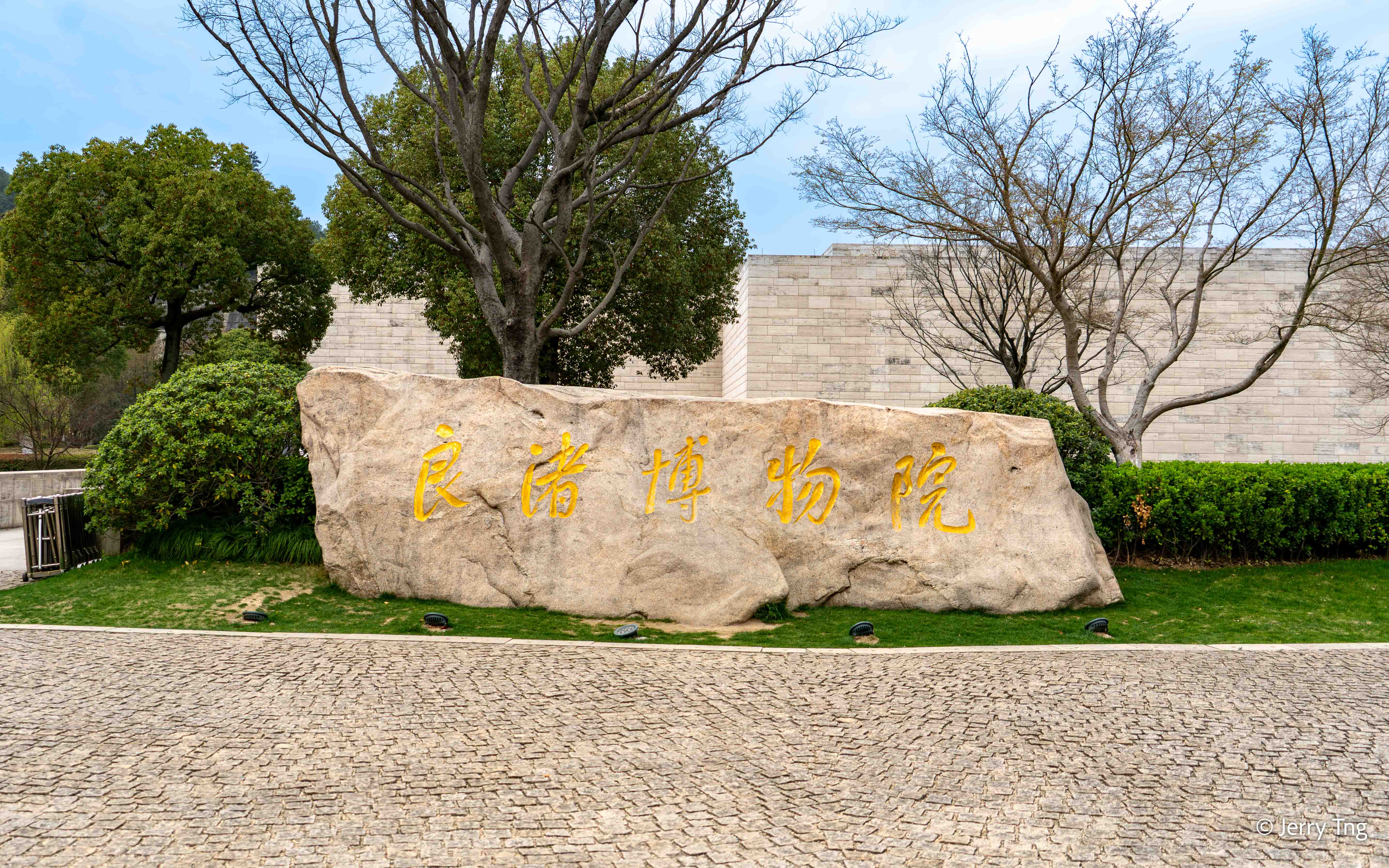
The Liangzhu Museum first opened its doors to the public in October 2008. Between August 2017 and June 2018 it was renovated and upgraded.

The Liangzhu Museum showcases a collection of Liangzhu culture relics that were unearthed during the various archaeological excavations of the Liangzhu Site. Travellers are advised to visit the Liangzhu Museum first before going to see the Archaeological Ruins of Liangzhu City inside the Liangzhu Ancient City Ruins Park. The museum and the archaeological ruins park are about 7km away from each other.

The Liangzhu Meilizhou Park that the Liangzhu Museum is located in used to be a contaminated industrial site. Levin Monsigny Landschaftsarchitekten transformed this site into a beautifully landscaped park with hills and manmade streams. The modern museum building with its five internal courtyards was designed by the renowned architecture firm David Chipperfield Architects.

The museum’s entrance can be reached via a bridge that crosses a manmade lake. This lake surrounds the museum building on three sides. Another bridge at the back of the museum leads to a small island that is sometimes used for outdoor exhibitions.

Three of the four exhibition halls inside the Liangzhu Museum host a permanent exhibition about the Liangzhu culture. The 4th hall is used for temporary exhibitions.

The museum combines traditional museum features such as display cabinets, historical scene recreations and large-scale oil paintings with the latest in digital display technology. There is even a Virtual Reality exhibition (where visitors have to wear VR goggles) which however costs a small extra fee!

More than 600 of the more than 3,000 cultural relics that are in the Liangzhu Museum’s collection are on permanent display. Themed temporary exhibitions are used to show some of the other items to the public. In fact, a large part of the museum’s Liangzhu civilization relics were just excavated during the last decade!

Unsurprisingly, the Liangzhu culture’s famed jadeware and pottery make up the lion’s share among the exhibits. However, other types of objects such as lacquerware and stone and bone objects are shown to the public as well.
Exhibition 1 – The Early Wetland State 水乡泽国

The theme of the first of the three exhibition halls is “The Early Wetland State“. It focuses on the Liangzhu culture’s system of agriculture that was based on the cultivation of rice and the domestication of pigs. The ideal living and farming conditions near the Taihu Lake helped the Liangzhu civilisation to prosper.


This strong economic basis made the formation of handicraft industries possible. These industries such as jade carving, pottery making, stone processing, lacquer coating and the production of textiles gradually became more and more specialised and sophisticated.
Exhibition 2 – A Sacred Place of Civilization 文明圣地

The second exhibition hall’s theme “A Sacred Place of Civilization” relates to the planning, construction and structural layout of the ancient city of Liangzhu. After visiting this hall of the Liangzhu Museum, travellers will have a much easier time to make sense of the various Archaeological Ruins of Liangzhu City that can be found throughout the area.

In addition to information about the Palace Area, Inner City with its tombs and workshops and Outer City where most people lived, the displays in this hall also focus on the ruins of villages, altars and cemeteries that have been excavated in the outlying areas. The water conservancy system of Liangzhu Ancient City with its advanced system of dams and canals is thoroughly explained as well.
Exhibition 3 – Jade as the Spiritual Symbol of the State 玉魂国魄


For most visitors, the third permanent exhibition hall of the Liangzhu Museum is the highlight of their visit. This is the place where the Liangzhu culture’s amazing jadeware can be seen such as jade vessels (cong 琮), jade discs (bi 璧) and jade axes (yue 钺). The Liangzhu civilisation used jade as a symbol that unified spiritual and political power.

This merger between religion and the state is reflected in the theme of the third hall “Jade as the Spiritual Symbol of the State“. Ceremonial jades were used in ritual settings but were also a symbol of power. During the time of the Liangzhu society, a person’s status and function within the hierarchy of the state could be seen by the ceremonial jades he possessed.
Key Exhibits
Among the exhibits, here are some highlights not to be missed.
刻符陶片 Potsherd with inscribed symbols


Pottery pedestal plate dou with carved pattern pottery6

Pottery cup with flat-handle and inscribed symbols7


Many carved symbols have been unearthed in the Liangzhu Cultural Site. More than 340 kinds of symbols depicted on pottery, stoneware and jade, which are distributed on more than 600 artefacts. Some are shaped according to objects, some contain abstract stroke combinations, and some symbols are arranged in an orderly manner and appear repeatedly.10
Lacquer Cup Inlaid With Jade 嵌玉漆杯
Lacquerware, jadeite | Neolithic Liangzhu Culture (5400-4300 BP) | Unearthed from Tomb M12 Anshan Site, Yuhang, Zhejiang | Zhejiang Archaeological Institute Collection. 漆器、玉|新石器良渚文化(距今5400-4300年)|浙江余杭反山遗址12号墓遗址出土|浙江省文物考古研究院藏

This is a cup with jade inlay and lacquer from the Liangzhu Culture. The whole piece is a tall, thin cup with a handle and wide spout. Small jade pieces are inlaid on the outside of the rim’s string pattern. The belly is bulging. Based on the red marks on the back of the cup’s bottom found in the field, it might have had a ring foot. The pattern is centred around the larger jade pieces, with the main structures being double circles and spiral patterns, similar to the bird-snake carvings on pottery or the spiral lines of the jade background pattern. Its craftsmanship is extremely complex, making it a “high-end” product of the Liangzhu Culture.11


The Yaoshan Altar 瑶山祭坛

Measuring 1.5m x 1.5m, the Yaoshan altar is demonstrated by shallow carvings and multimedia videos. The table surface is a single side frosted plexiglass, printed the layout of the altar and high-precision fine carving altar contour line. The lower part of the table projects the four seasons sun track on the altar: spring, summer, autumn and winter. Above the table, laser engraved Liangzhu plank silhouette simulates a sacrificial activity scene.13
Ivory Sceptre 象牙权杖
Ivory | Neolithic Liangzhu Culture (5400-4300 BP) | Excavated from Tomb M207 in the Wujiachang cemetery of the Fuquanshan site, Qingpu district, Shanghai (2010) | Liangzhu Museum Collection. 象牙|新石器良渚文化(距今5400-4300年)|2010年出土于青浦福泉山遗址吴家场墓地|良渚博物馆藏14


象牙权杖长约1米,由镦和主体两部分组成,主体呈片状,它是利用整根象牙剖磨制成,上大下小,顶端平直,下端为突出的榫状结构,可以插入椭圆形的镦部。象牙权杖表面装饰有精美繁缛的细刻纹饰,以主体转折处为中轴线,利用浅浮雕手法细致地表现出10组神人兽面纹的主题,主题纹饰外以细密的云雷纹做地纹。镦部同样雕满了纹饰,主题是两组鸟纹和兽面纹,地纹依然是细密的云雷纹。

权杖上面的神人兽面纹是良渚文化重要玉器上的典型纹饰,只有在少量玉琮、玉钺上才有完整的图案,神人纹头戴宽大的羽冠,梯形脸,小眼睛,兽面纹为大眼睛,宽鼻翼,大嘴巴,口内画有獠牙。

一般认为这类神人兽面纹与当时的先民崇拜的图腾信仰有关。而鸟纹则是长江流域常见的艺术形象。早在距今6000多年前,与长江三角洲地区相邻的宁绍平原的河姆渡文化中就曾出土过多件鸟纹的刻画图案,其中最著名的是“双鸟朝阳”图案。良渚文化的陶器、玉器上也常见各种鸟纹的图案。鸟在天空中的自由飞翔,很容易让人把飘忽不定、来去无踪的天帝神灵与鸟联系起来,于是鸟便被想象为神灵驭使的工具。因此,良渚文化一些高等级的玉器上,鸟纹常常装饰于神人兽面纹的两侧,作为辅助纹饰。同时,良渚先民可能还把鸟作为祭祀时巫觋的助手,希望它能够成为人类与神灵之间交流的媒介,以实现巫觋与神灵的沟通。象牙权杖上雕刻神人兽面纹与鸟纹,正体现了当时先民对于这类器物的崇拜。原始先民认为通过这样的图腾崇拜,可以加强人与自然之间的关系,并接受它的佑护。这种重视神秘主义的宗教观念,是良渚文化重要的精神支柱,它也开启了后世长江下游地区吴越先民“信巫鬼,重淫祀”的精神文化传统。

Getting There

Liangzhu Museum
No.1 Meilizhou Road, Yuhang District, Hangzhou, Zhejiang province, China
Tel : +86 571 887 73875
Footnotes :
- Stone yue axe
石钺
Stone | Neolithic Liangzhu Culture (5400-4300 BP) |Unearthed from Tomb M14 Houyangun Site, Yuhang Zhejiang | Liangzhu Museum Collection. 石器|新石器良渚文化(距今5400-4300年)|浙江余杭后杨村遗址14号墓出土|良渚博物馆藏 ↩︎ - Pottery jar with inscribed symbols 刻符陶罐
Pottery | Neolithic Liangzhu Culture (5400-4300 BP) | Collected at Nanhu, Yuhang Zhejiang | Liangzhu Museum Collection. 陶器|新石器良渚文化(距今5400-4300年)|高26.4,口径12.8,腹径25,底径19|浙江余杭南湖采集|良渚博物馆藏
“朱㫃[yǎn]戔[jiān]石,网虎石封” https://www.jfdaily.com/sgh/detail?id=1007668
黑陶圈足罐采集于浙江余杭南湖,器腹上有的一圈12个连续的符号。中国社会科学院李学勤学者曾解读为,记录了当时一位姓朱的人或部族遇到的一场惊心动魄的狩猎故事。https://www.lzmuseum.cn/LiangBoXinWen/2024364418365.html
↩︎ - 陶纺轮 Pottery spinning wheel
Unearthed at Miaoqian Site, Yuhang, Zhejiang | Liangzhu Museum Collection. 浙江余杭庙前遗址出土|良渚博物馆藏 ↩︎ - 石纺轮 Stone spinning wheel
Unearthed at Miaoqian Site, Yuhang, Zhejiang | Liangzhu Museum Collection. 浙江余杭庙前遗址出土|良渚博物馆藏 ↩︎ - 刻符陶片 Potsherd with inscribed symbols
Unearthed at Bianjiashan Site, Yuhang Zhejiang | Zhejiang Institute of Cultural Relics and Archeology Collection. 浙江余杭卞家山遗址出土|浙江省文物考古研究所藏 ↩︎ - 刻纹陶豆 Pottery pedestal plate dou with carved pattern pottery
Unearthed at Meirendi Site, Yuhang Zhejiang | Zhejiang Institute of Cultural Relics and Archeology Collection. 浙江余杭美人地遗址出土|浙江省文物考古研究所藏 ↩︎ - 陶刻纹宽把杯 Pottery cup with flat-handle and inscribed symbols
Unearthed at Putaofan Site, Yuhang Zhejiang | Zhejiang Institute of Cultural Relics and Archeology Collection. 浙江余杭葡萄畈遗址出土|浙江省文物考古研究所藏 ↩︎ - 刻符陶片 Potsherd with inscribed symbols
Unearthed at Bianjiashan Site, Yuhang Zhejiang | Zhejiang Institute of Cultural Relics and Archeology Collection. 浙江余杭卞家山遗址出土|浙江省文物考古研究所藏 ↩︎ - 刻符陶片 Potsherd with inscribed symbols
Unearthed at Miaoqian Site, Yuhang, Zhejiang | Liangzhu Museum Collection. 浙江余杭庙前遗址出土|良渚博物馆藏 ↩︎ - 良渚刻符 | 探寻原始文字的秘密. 2021.04.26.
在良渚文化遗址中出土了很多的刻画符号,良渚博物院编著的《良渚文化刻画符号》一书收录了刻画于陶器、石器、玉器上的符号340余种,分布在600余件器物上,总数量超过750个,有的依物赋形,有的包含了抽象笔画组合,有的符号排列有序、重复出现。https://www.lzsite.cn/wap/details.aspx?id=2886, accessed 10 Jan 2026 ↩︎ - 良渚文化嵌玉漆杯
此件嵌玉漆器整体为一瘦长形的带把宽流杯,口沿外壁弦纹带上镶嵌有小玉粒,鼓腹,从野外背面的杯底涂朱痕迹判断,其可能有圈足。其图案以大者玉粒为中心,主要结构有重圈、螺旋纹等,类似陶器上的鸟蛇样刻划或玉器地纹的螺旋线,其工艺极为复杂,是良渚文化的“高精尖”产品。Museum information card, Mar 2024 ↩︎ - 囊形漆器 Lacquer flask
Lacquerware, jadeite | Neolithic Liangzhu Culture (5400-4300 BP) | Unearthed from Tomb M23 Anshan Site, Yuhang, Zhejiang | Liangzhu Museum Collection. 漆器、玉|新石器良渚文化(距今5400-4300年)|浙江余杭反山遗址23号墓遗址出土|良渚博物馆藏 ↩︎ - 瑶山祭坛采用浅浮雕刻与多媒体影片相结合的方式进行展示。台面为一整块单面磨砂有机玻璃,印制瑶山祭坛平面结构图,高精度细线雕刻祭坛轮廓线。台面下部投射祭坛上春、夏、秋、冬四个节气的日照轨迹。台面上方放置激光雕刻的良渚先民木板剪影,模拟祭坛祭祀活动的场景。Museum information card, Mar 2024 ↩︎
- 陈杰, 上海博物馆考古研究部. 象牙权杖背后的良渚文明, 光明日报, 2015/06/17, 11:33
这件象牙权杖出土于上海市青浦区福泉山遗址。20世纪80年代,考古学者曾经对福泉山进行过多次发掘,确认福泉山是一处人工堆筑而成的新石器时代墓地,特别是在福泉山墓地发现了一批良渚文化晚期权贵墓葬,当时的发现推动了长江下游地区早期文明的研究。2010年12月,福泉山遗址又开始了新一轮的考古发掘,经过细致的调查,考古学者又在福泉山北部250米处发现了另一处权贵墓地吴家场墓地。经过近10天的清理,终于到了墓坑的底部,随葬品开始逐渐显露,其中既有大量的陶器,也有重要玉器,如玉琮、玉璧等,还有众多白色玉珠散落在棺木的底部。更重要的是,在墓葬的东西两侧,考古学者发现了两件雕刻有细密纹饰的有机质器物。https://finance.huanqiu.com/article/9CaKrnJM8KC, accessed 10 Jan 2026 ↩︎
0 comments on “Hangzhou Liangzhu Museum 良渚博物馆”