
Just wanted to document three nice lunch spots in Seoul that I really enjoyed.
Sinsa Dongindong Annyeong Insadong 신사동인동 안녕인사동점
49 Insadong-gil, Jongno District, Seoul, South Korea
When you see “Dongin-dong,” think delicious Korean food, particularly fiery spicy stew and savoury pancakes, whether in the culinary capital of Daegu or the foodie streets of Seoul.

Located in the popular Insadong area, Sinsa Dongindong is a restaurant that offers a regional cuisine from Daegu. Dongin-dong 동인동 refers to
a neighbourhood in Daegu, South Korea, famous for its signature dish, Dongin-dong Jjimgalbi (spicy braised short ribs). It also refers to a district in Seoul’s Jongno-du

동인동 쭈꾸미 Dongindong Jukkumi is their signature sautéed webfoot octopus in spicy sauce. Jukkumi 주꾸미 refers to the webfoot octopus, a small, flavourful cephalopod popular in Korean cuisine, especially in spring (March-April) when it’s best for dishes like spicy stir-fry (Jukkumi Bokkeum) or Tteokbokki (with rice cakes), often featuring a spicy red chili sauce. It’s known for its unique texture and sweet taste, typically prepared by stir-frying with vegetables.


The proper way to eat this dish is to take some steamed rice and put it in a large mixing bowl provided and top it up with the pickles, shredded seaweed and blanched bean sprouts. And then, scoop a few spoonful of that savoury, spicy sauce and add some sesame oil provided if there’s not enough sauce from the dish.

Just mix everything together and enjoy!
Choma Jjamppong 초마짬뽕
13, Heungdeok 1-ro, Giheung-gu, Yongin-si
Heungdeok IT Valley Complex Building 1st Floor Room 121

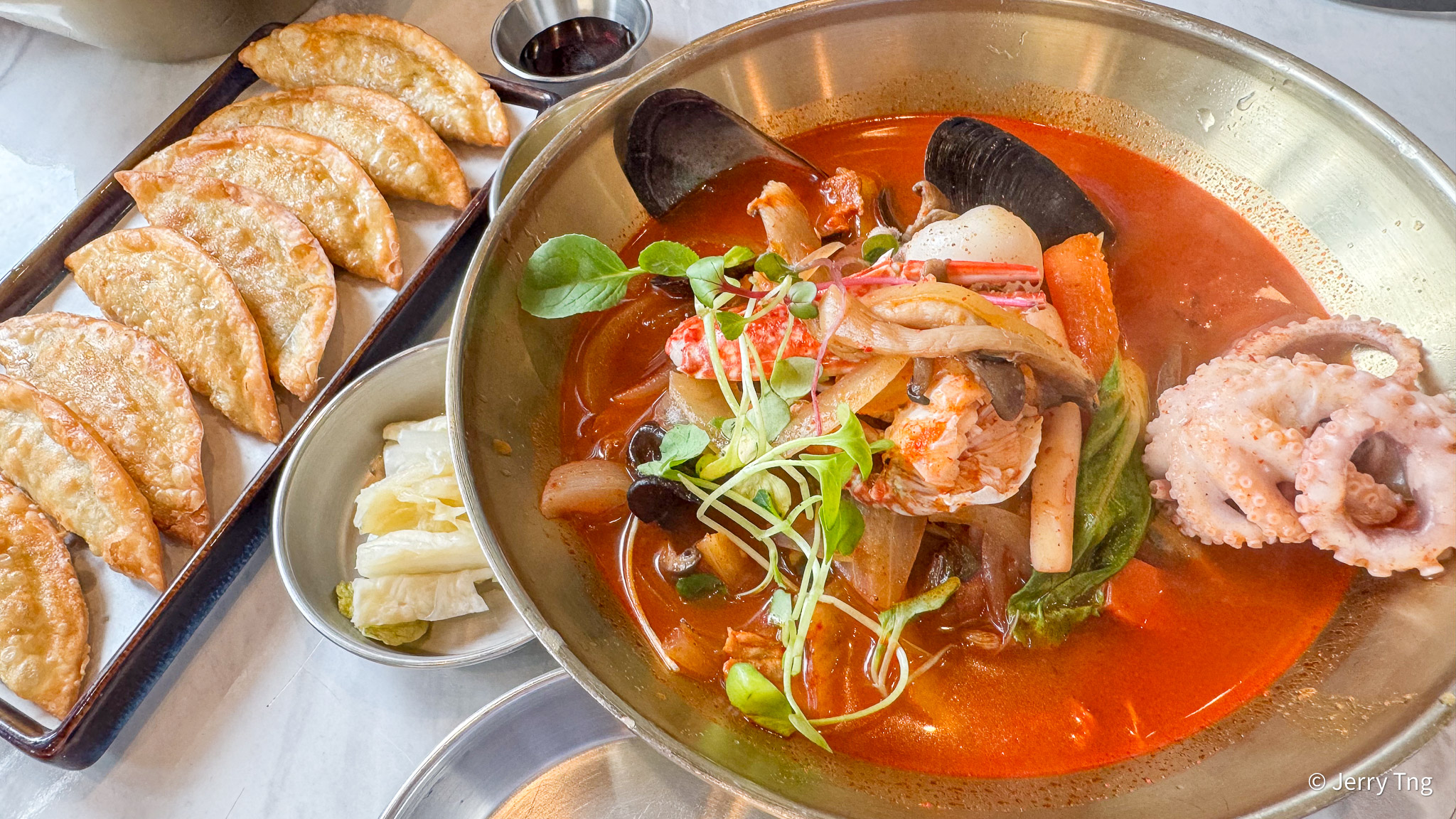
Choma Jjamppong is a good place to have lunch at Gwanggyo Heungdeok IT Valley. It is a Korean-Chinese restaurant that serves Chinese originated cuisine with a Korean adaptation. Their signature items include Jjamppong (spicy seafood noodle soup) and handmade dumplings (수제만두).

Jjamppong 짬뽕 is a popular Korean-Chinese spicy noodle soup, known for its fiery red broth packed with seafood (like squid, mussels, shrimp), vegetables (cabbage, zucchini, onions, carrots), and chewy noodles, all flavoured with gochugaru (chili powder) for a rich, savoury, and spicy kick. A staple in Korean Chinese restaurants alongside Jjajangmyeon, it’s a hearty, comforting dish adapted from Shandong’s chao ma mian (炒码面) to suit Korean tastes. It was called ちゃんぽん Chanpon noodles by the Japanese during the colonial period, and the name stuck to it.

Jjajangmyeon 짜장면 is a highly popular Korean-Chinese noodle dish consisting of thick, handmade wheat noodles topped with a rich, dark sauce. This savoury-sweet sauce is made from chunjang (a roasted black soybean paste), diced pork, and vegetables like onions, zucchini, and potatoes. The dish originated around 1905 in Incheon’s Chinatown, developed by Chinese immigrants from Shandong based on the Chinese dish zhajiangmian. I love jjajangmyeon as it reminds me of my favourite noodle genre, Lor Mee 卤面 or noodles with thick, sticky, savoury sauce.

Mandu 만두 is a popular item often found in Korean restaurants and can be enjoyed as an appetiser or a main dish. They can be served steamed, in soup or pan-fried. Pan-fried mandu or gunmandu 군만두 are mostly deep-fried these days to save time. The outside is golden and crispy, while the inside remains juicy. The filling was a mix of ground pork, napa cabbage, garlic chives, and glass noodles, served with a tangy and savoury sauce made with soy sauce and vinegar.
Gatten Sushi Sinsa 갓덴스시 신사점
40 Gangnam-daero 152-gil, Sinsa-dong, Gangnam District, Seoul, South Korea
Tel : +82 2 34461477

Another favourite lunch choice in Seoul is a lively conveyor-belt sushi spot (kaiten-style) that doesn’t pretend to be ultra-refined omakase; instead, Gatten Sushi Sinsa 갓덴스시 신사점 leans into being casual, efficient, and fun.

If the sushi on the conveyor is not what you are looking for, you can also place the order on their iPad. We started with scallops 가리비, fresh white leg shrimp 활 흰다리새우, flounder fin 가자미 지느러미, and bluefin tuna fatty belly (honmaguro otoro) 혼마구로 대뱃살. All very fresh, all delicious.

Gatten Sushi serves innovative mix of ingredients, something Korean sushi joints differ from the Japanese. Flounder fin with seaweed 고소한 감태의 조화 (right) is a perfect balance of richness, the chewy texture of flounder fin, and the savoury flavour of seaweed. And there’re the salmon roe gunkan 연어알군함 and salmon roe with monkfish liver gunkan 연어알아귀간크림군함, first time I had ankimo with ikura.

Another innovative combination I had that day was the hotaruika (firefly squid) with cuttlefish (ika), two different species of squids in one sushi for different texture and complimentary taste.

Bluefin tuna otoro sashimi 대뱃살 사시미 was quite a generous portion. But do note that Korean sashimi are not thawed completely, so do expect some ice on the fish. If you are not used to it, just leave it slightly longer on the table.
0 comments on “Lunch in Seoul”