
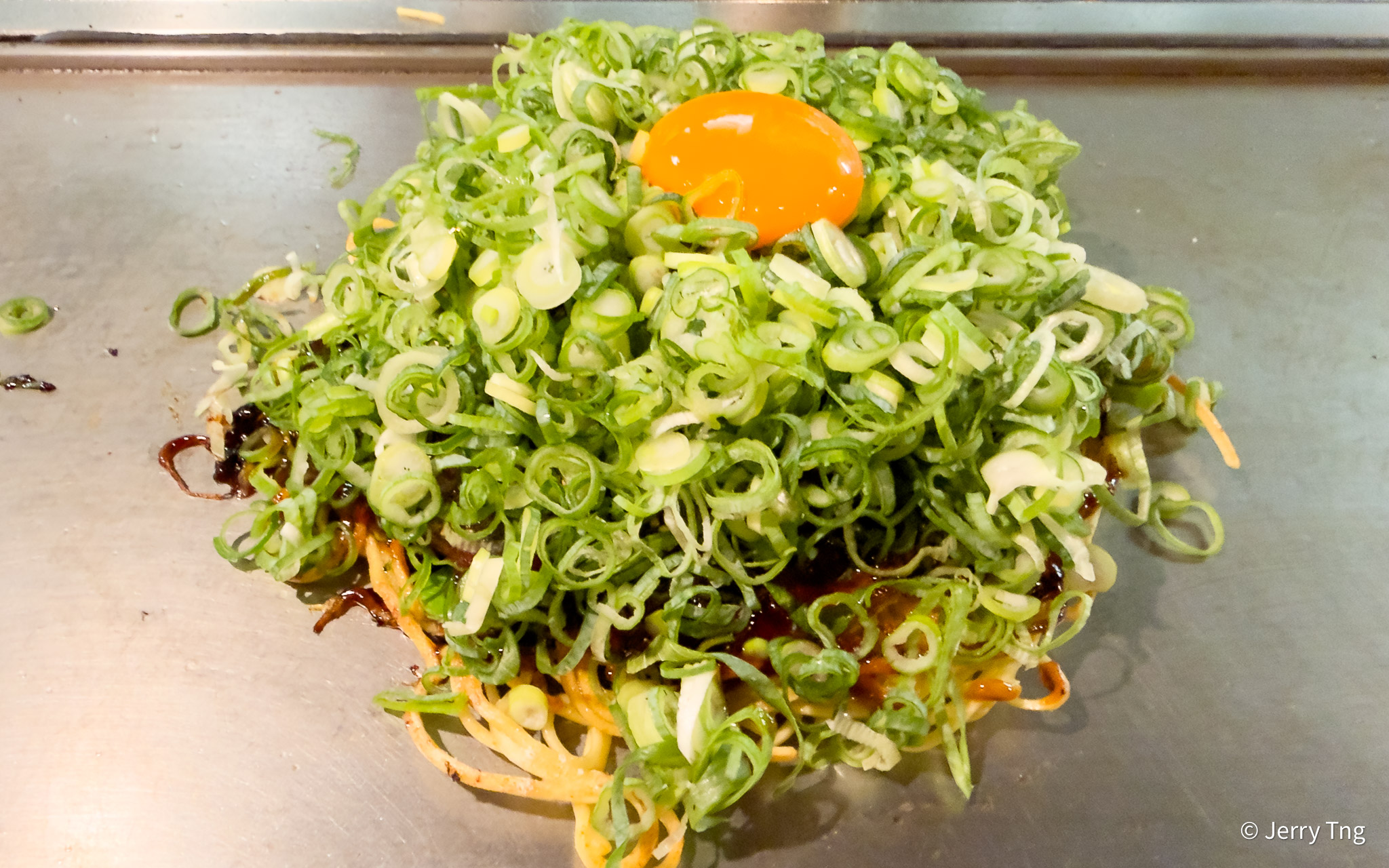
Their signature okonomiyaki is packed with fresh Hiroshima green onions called negi in Japanese which is known for their flavour, aroma, and crunchy texture. Hence the name of the restaurant, Negi-an (ねぎ庵), or “Temple of Green Onions”.

Hiroshima is the other major city for okonomiyaki besides Osaka and there are so many restaurants that specialise in this genre. Frankly, I wasn’t a fan of okonomiyaki because of the combination of mayonnaise and Otafuku sauce that was based on Worcestershire sauce, making a weird mix of flavours – salty, fishy with sweet, tangy taste – it’s what you do when you do not know what to put in your cooking. But everyone told me to try the Hiroshima version.

I was only attracted by the amount of scallions that they put on the pancake in this particular one. Negian Kamiyacho is the main store that seems to have been in business for more than 10 years. And besides okonomiyaki, they also serve teppanyaki with Hiroshima specialties like oysters, gansu (fried fish cake), uni-horen (sea urchin with sautéed spinach, you need to call and pre-order this in advance), and senjigara (fried offal chips).


Hiroshima-style okonomiyaki (お好み焼) is built in layers starting with a thin crepe-like batter base, followed by a large pile of cabbage, bean sprouts, and pork. It takes about 15 min to prepare a delicious okonomiyaki, so it’s definitely not fast-food.


And then based on the order, noodles or udon that had been cooked in the boiling water behind are added to the pile of cabbage and crepe before flipping over. This process with be repeated to add the rest of the ingredients.


Osaka first used the name “okonomiyaki” and created the mixed pancake style in the 1930s, while Hiroshima independently evolved its own layered style after World War II to stretch scarce food supplies. The main difference between Hiroshima and Osaka okonomiyaki is that Osaka style mixes all ingredients together like a pancake, while Hiroshima style layers the ingredients like a cake and always includes noodles (or udon).

It takes time to make a proper okonomiyaki, so I ordered some side dishes to go with some cold beer. This is an okonomiyaki restaurant, as well as a teppanyaki izakaya, so they have some bar food. Like this crunchy gizzard (コリコリ砂肝); the chicken gizzards were grilled on the teppan and seasoned simply with salt and pepper, served a slice of Setouchi lemon. I have to mention this special lemon grown in the mild, sunny climate along the Seto Inland Sea. I had so much Setouchi lemons this trip to Hiroshima, it makes my gastric pain even by thinking about them. But they actually are less sharp acid and have a sweet, juicy taste, which is why I couldn’t stop having lemonade.

Next, I had to order their oyster and mushroom teppanyaki (かきときのこ焼き). Hiroshima oysters were sautéed with Shimeji mushrooms. The nutty taste of the mushrooms paired very well with briny, umami-laden flavours of the oysters.

Hiroshima is famous for oysters, and more specifically Pacific oysters farmed in the Seto Inland Sea. The calm waters of the Seto Inland Sea and nutrient-rich rivers from the mountains create an ideal brackish habitat for a steady supply of plankton that helps the Pacific oysters grow large, firm, and full of rich flavour. And they tasted wonderful cooked in a variety of ways – deep fried, grilled, steamed, and now teppanyaki. I regretted not trying them freshly shucked at Miyajima as I ran out of time on the wonderful island.

Their signature is the “Tsukimi Negi-an Special” (月見ねぎ庵スペシャル). The generous amount of green onions used is Takarajima negi (literally translating to “Treasure Island Green Onions”) grown in Kurahashi Town, Hiroshima, on the restaurant’s dedicated farm. The green onions is cultivated using traditional soil farming methods, boast natural flavours, aromas and crunchy texture that are their charm.

The Hiroshima-style is always with a carb like ramen noodles or udon, but Osaka-style needs to order noodles as an add-on, what they called modan-yaki (モダン焼き). The “Negian Special” is topped with so many green onions that the okonomiyaki itself is almost completely hidden. “Tsukimi” (月見, lit. “seeing the moon”) refers to the raw egg yolk on top of the negi resembling a full moon.


The combination of crispy noodles and the crunchy texture of the onions is amazing! That fresh green onion flavour pairs perfectly with the rich, savoury taste of the okonomiyaki sauce called the “Carp Sauce,” a spicier version of the Otafuku sauce that is named after the baseball home team, the Hiroshima Carps.


The okonomiyaki is like a pizza pie, and you divide it into six equal parts, and try different combination of sauce and condiments. The crispy noodle was almost like the Cantonese san-meen (生麵), and you will need more of the Carp sauce to soften the noodles. The garlic pepper powder was also a nice touch, and I recommend you try with and without to make your judgement.

One more item before calling it a day, one of my favourite food, rock salt-grilled beef tongue (牛タン岩塩焼き), served with salt and pepper mix and the Setouchi lemon. Perhaps the chef was still on training wheels, the beef tongue was overcooked. I didn’t want to get her into trouble, so I just ate it with a smile while her supervisor looked on.

For those who have followed my blog know that I (or my friends) paid for every meal that I post, there’s no bias because of sponsorship or free meal from the restaurant. I sincerely enjoyed this particular store as well as the Hiroshima-style okonomiyaki. It has totally changed my mind about okonomiyaki and perhaps I would try it again when I am back in Osaka.
Negian Kamiyacho Branch ねぎ庵 紙屋町店
NS Building B1, 13-13 Motomachi, Naka-ku, Hiroshima City, Hiroshima Prefecture
広島県広島市中区 基町13-13NSビルB1
Tel :+81-(082)-222-8282
Visited Aug 2026
0 comments on “Negian ねぎ庵 @ Hiroshima”