
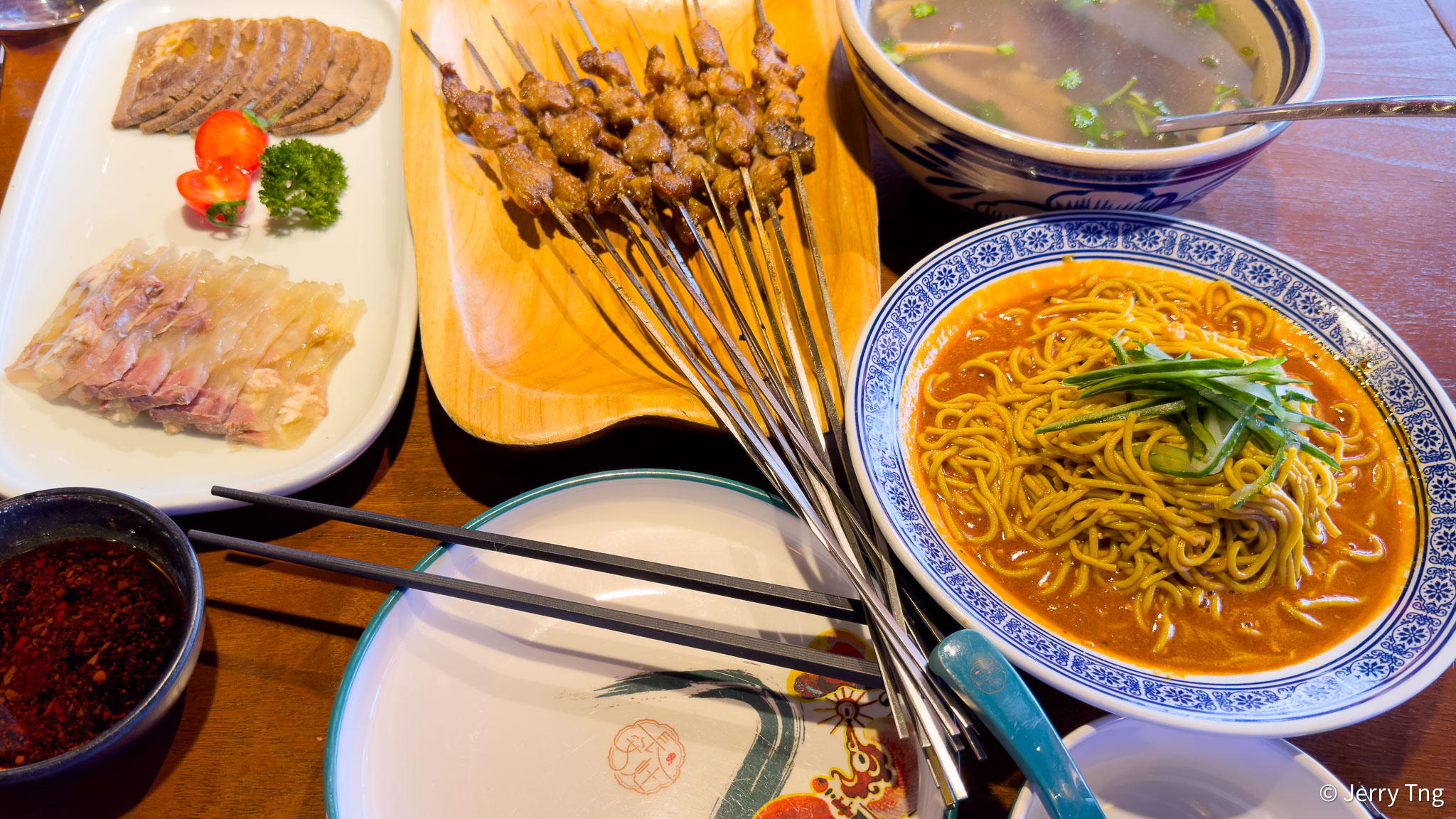
Xi’an is known to everyone as the capital of carbohydrates – you can find little eateries selling noodles, flatbreads, dumplings, and many other forms of starch to fill your tummy.

The Terracotta Army may be the most famous landmark in the central Chinese city of Xi’an, but the Shaanxi capital’s array of noodles, breads and dumplings are the tastiest way to be transported back to ancient China.

Once the starting point of the Silk Road, Xi’an cuisine doesn’t just have one of the world’s longest culinary histories but one of the richest, too.
Xi’an Favourite Dishes
羊肉泡馍 Mutton Paomo (Flatbread in Soup)


羊肉泡馍 Flatbread and lamb soup is a unique local snack founded in Xi’an, with a history dating back to the 11th century BC. Paomo (flatbread in soup) evolved from beef and mutton soup in the Western Zhou Dynasty (1046–771 BC) and are the products of Silk Road trade exchanges.
Flatbread that was brought along by the foreign mercantile and was called 胡饼. It was added to the beef or lamb soup that was sold in the markets to make a really satisfying meal. This formed the ritual of breaking the flatbread 掰馍 into smaller pieces so that the bread will soak up the liquid for an easier eat. These days, to save time, the flatbread is chopped up for you in the kitchen. Of course you can always ask to do-it-yourself for the full experience.

The flatbread will soak up all the soup like a sponge. The good thing is that most stores will allow a refill of the soup. You will need a lot of soup to help wash down the carbs.
About Tong Sheng Xiang 同盛祥

There’s a saying, “同盛祥的饭,易俗社的戏”. You can see how the Xi’an people hold this restaurant that was founded in 1920 in reverence. Since it becomes a private enterprise, they expanded to multiple locations, and lost that esteem. This is still a very good local restaurant chain to try Shaanxi cuisine. They have multiple locations around the old city and serve high quality cuisine in a clean environment. Their paomo is regarded to be one of the best in the city.
Tong Sheng Xiang 同盛祥
西大街5号(近钟楼)
肉夹馍 Pita Bread Stuffed with Meat

肉夹馍 Pita bread stuffed with meat is absolutely the best street snack you need to try when you travel to Xi’an. There are two versions, one which is halal style made by Hui people, usually made with beef or lamb, and another style made by Han Chinese, usually made with pork.

腊汁猪肉夹馍 Stewed pork pita was stuffed with diced stewed pork belly and pork trotters simmered with soy sauce and signature spices until tender. Savoury and greasy, the toasted flatbread soaked up all the flavours of the sauce. No wonder they call it the Chinese hamburger. Found everything, and I would look for those with really fatty meats, if you know what I mean.

面 Biang Biang Noodles

This noodle is perhaps one of the most famous noodle dishes outside of China. Biang Biang noodles is a Shaanxi noodle dish, named after the sound the dough makes when it is slapped on the table to broaden the noodles. As Shaanxi is in the north of China, the preferred staple dish is noodles over rice, although Shaanxi noodles differ from those of Beijing and Shanxi in terms of their width, thickness and length. When it comes to Shaanxi noodles, bigger is better.

The locals know it as “hand-pulled noodles in chilli oil” 油泼扯面, and is touted as one of the “eight curiosities” of Shaanxi 陕西八大怪 – 面条宽的像裤带 (“noodles as broad as the belt”). For most of their existence, they have been an obscure dish local to Xi’an, eaten by workers lacking the time to make thinner noodles. Thanks to social media, these local noodles gain national (and worldwide) popularity.

The wide hand pulled noodles are covered in a rich chilli oil with a strong cinnamon and star anise flavour and topped with carrots, celery, cilantro, beans, and nice big chunks of beef or lamb. The best shops will carefully keep the length of the noodles unbroken while pulling the noodle, and it is difficult for a full grown man to even eat one strand of noodle.
水盆羊肉 Basin of Mutton

Another one of the “eight curiosities” of Shaanxi 陕西八大怪 –盆碗难分开 (“one cannot distinguish between a basin and a bowl”) refers to the size of the serving bowl for some of the staples like this 水盆羊肉 basin of mutton soup. Made popular during the Tang Dynasty and brought to Southern China during the Song Dynasty, it is usually served with mung bean vermicelli and flatbread, so it can be a meal on its own.

There’s one shop that I went to that specialises in this style of humongous basin of mutton soup, and they have many mutton offals that make me salivate even when I write this. The taste is peppery like our Teochew bak kut teh, but beneath the clear soup there’s a hint of Malay sup kambing. Delicious, if you find the right shop.
锅盔 Guokui (Unleavened Bread)

This is another one of the “eight curiosities” of Shaanxi 陕西八大怪 – 锅盔大的像锅盖 (“bread as large as wok cover”). 锅盔 Guokui is a large round baked wheat bread that uses only two ingredients – flour and water. They keep very well, and is the main food ration used when the traveling caravans moved along the Silk Road. Today, they are more a tourist gimmick than a staple.
镜糕 Jinggao (glutinous flour cake)

镜糕 Jinggao is one of many Xi’an desserts/snacks, made mainly the Hui people from glutinous rice flour, rose jam and there are a lot of variations. with crushed nuts toppings, dates, etc. It’s very cheap for one stick, usually one or two RMB, and is found all over the Huiminjie area. I didn’t try any as I cannot digest glutinous stuff properly, and I don’t like these sweet cakes. Again this street food is very touristy, and there are many shops that sell them.
粉蒸肉 Steamed Beef With Rice Flour

粉蒸肉 Steamed Beef With Rice Flour is one of my favourite food in China. It’s found all around China, served spicy and numbing in Sichuan, and Xi’an, where it’s a little more mild but served with raw cloves of garlic for an extra punch of flavour. It’s essentially steamed beef (because of the large Muslim community in Xi’an) or pork belly (which is the more commonly found version) with chunks of rice flour mixed with five spice powder and other aromatics, served with a soft bun.
烤羊肉串 BBQ Lamb Kebabs

Eating BBQ lamb kebabs 烤羊肉串 on the streets of Xi’an late at night is one of the most satisfying and enjoyable things you can do in the city. The portion of meat on the kebabs is quite small at many places, so it’s a good idea to order at least 10 kebabs to get a good filling of meat.

In the Huiminjie area there are many late night kebab joints, but the safest bets are still in the restaurant in terms of hygiene and the sources of the meat. These ones from Tong Sheng Xiang had the perfect mix of cumin and chilli. You can eat them as-is or wrap them in local flatbread 馕.
油泼鸭血 Duck Blood Jelly in Chilli Oil

Like its neighbour Sichuan, Shaanxi’s cuisine is characterised by its intense spiciness. In Shaanxi, you will get many dishes downing in chilli oil. This is another one of the “eight curiosities” of Shaanxi 陕西八大怪 – 油泼辣子一道菜 (“chilli oil is a main ingredient”). The chilli oil in Shaanxi is different from Sichuan – while Sichuan is hot and numbing (because of the addition of Sichuan peppercorn), the Shaanxi version is singularly hot, extremely hot. You break into a cold sweat the moment you eat food that has been soaked in it, like this duck blood jelly in chilli oil. It doesn’t matter what the main ingredient is, the heat and flavours the chilli overtake it all.
秦川酱牛肉牛筋 Qinchuan Beef Terrine and Aspic

秦川牛 Qinchuan Cattle is one of the five native cattle breed found in China, and it is known for its strong flavour and ample amount of meat. They are not known for their marbling and are often used as stew or braise. The terrine is one very good way to taste this beautiful beef.
蓝田饸饹 Wholemeal Noodles from Lantian

Hele 饸饹 is a type of wholemeal noodles made from oats, buckwheat, cornmeal and sorghum flour. The name is derived from the Shaanxi dialect of the mill that is used to produce the flour for the noodles. It has the texture of Japanese soba but with a grassy taste. This noodles is usually served as a cold noodle dish with spicy, peanutty dressing.
老陕烧三鲜 Shaanxi Meatball, Pig Skin and Tofu Stew

老陕烧三鲜 Shaanxi Meatball, Pig Skin and Tofu Stew is a typical home cooked food from ingredients that can be commonly (and cheaply) found. The main three ingredients that give it the unique flavour are deep fried pork meatballs, pig skin and bean curds. These are cooked in a milky white stock made from boiling pork and chicken bones for a long time, and finished with black wood fungus, zucchini and leeks.
葫芦鸡 Hulu Chicken

This is dish has nothing to do with the gourd. This dish dates back to the Tang Dynasty and was traditionally made using a chicken that weighed only one kg. To make the dish, a whole chicken is blanched to expel all the blood in the chicken, steamed and then deep fried. After that it is either shaped to look like a gourd or, in some restaurants, placed into a decorative gourd-shaped container.

Before eating, the waitress would hand shred the chicken. The meat is moist and flavourful while the skin is crispy. The chicken is normally served with a dipping salt made from grounded chilli, fennel, salt and pepper.

I find the final step totally unnecessary, especially I don’t like the taste of cumin in the first place. The chicken is served whole all the time, so it is something that needs to be shared among friends. Of course unless you like chicken like I do and have a good appetite, I would recommend to order this every time you come to Xi’an.

There’s one thing I left Xi’an with regrets was not having the chance to try their dumpling banquets. Xi’an is famous for the different dumpling and dumpling inspired banquets. But you would need a big group (10 or more) to be able to book this banquet. They should start thinking about a smaller scale version for two persons.
Visited Mar 2024
0 comments on “Chomping through Xi’an”