
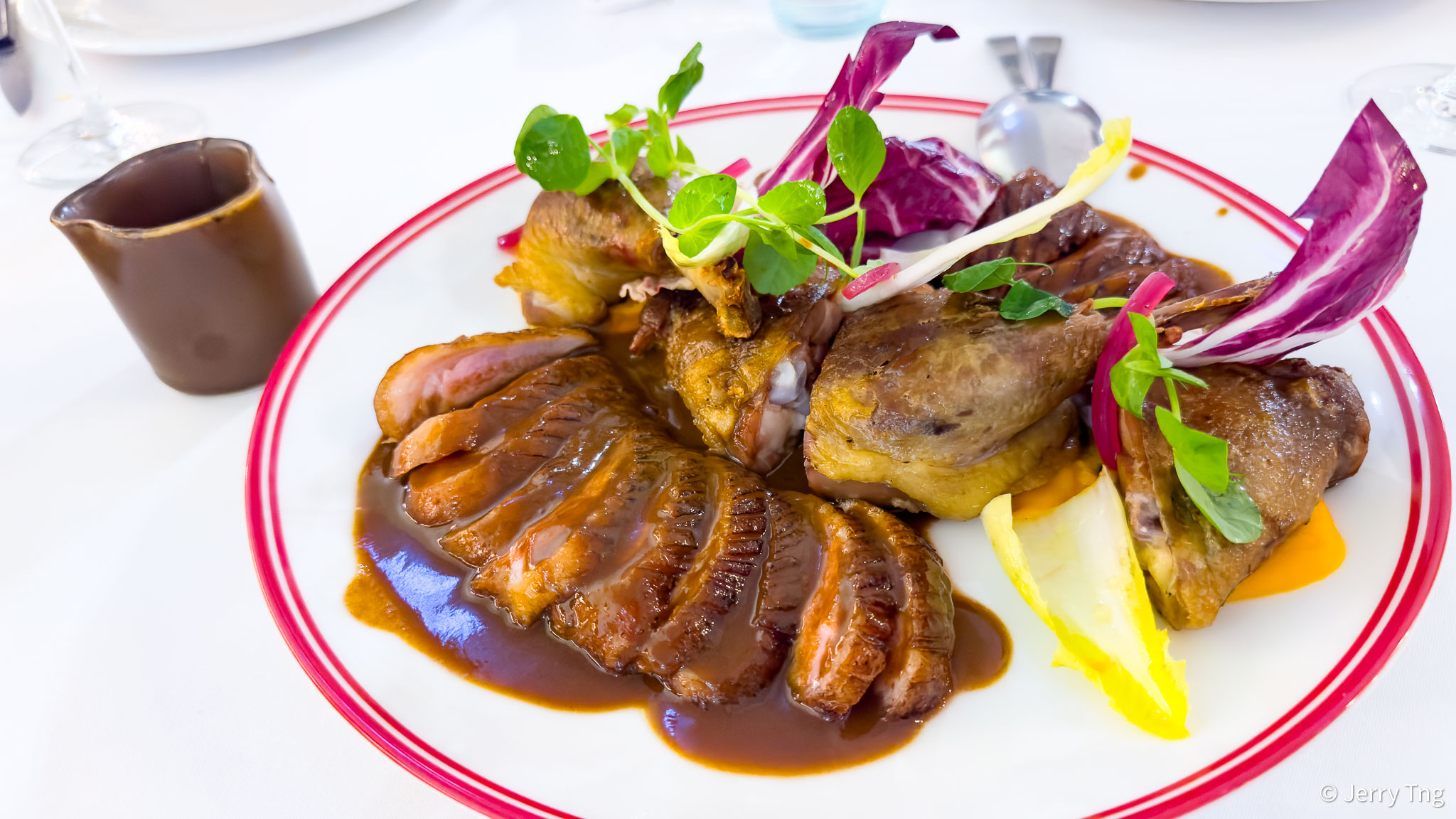
Since the last time I came to Philippe, I had wanted to try their Canard à la Presse which required advance booking. This luncheon meeting, I ensured that my guests and I get to try this classic dish.

Philippe is an institution for classic French food in Melbourne. A namesake restaurant by Owner/Chef Philippe Mouchel, who is a protege of the reverent Paul Bocuse, Philippe offers a summary what the chef has accomplished in his years of culinary excellence in Australia. Chef Mouchel is still the only chef to have a “five hats” restaurant in Australia – an accolade for perfection.
Our Lunch Menu
Michel Chapoutier “LES ARENES” Red Cornas 2016

Cornas Les Arenes 2016 is born in decomposed, almost sandy granitic soils, and from several different plots. Its deep and dark color is followed by a classic Cornas scent of black currant, crushed stones, smoked earth and caramelised meats. Rich, full-bodied, unctuous and yet pure and well-focused, it will need a short holding time to come together.
Hand diced tartare, Sher wagyu beef rump, cured egg yolk

Sher Wagyu beef is produced from Fullblood & Wagyu cross cattle by Nick & Vicki Sher on their farms in Ballan and Tallangatta Valley, Victoria. The beef rump was used as the base for this beautiful beef tartare dressed with the right amount of Worcestershire sauce and finished with a luscious sous vide egg yolk.
Rock oyster, Pacific oyster, oyster in sea water jelly

The sea water jelly oyster was a delightful way to present the oyster. It was a Pacific oyster that was encased in a jelly of sea water (or the liqueur that was extracted from the oyster). Every oyster was paired with a clover of nasturtium which provided the herby taste. Delicious.
Green Prawns in a brick pastry papillote

This appetiser was new on the menu, and seemed to take inspiration from deep fried Asian prawn roll. Brick pastry is a North African ingredient used to make both sweet and savoury stuffed deep fried parcels. A bit like the Chinese spring roll skin but crispy and thicker, it held together parcel of a whole South Australian green prawn and other aromatics.
Canard à la Presse (Frederic Delair 1890)

The classic dish Le canard à la Rouennaise à la presse, also known as Pressed Duck, is designed to be shared. It was invented in La Tour d’Argent of Paris by Chef/Owner Frédéric Delair around the 1890s. The original recipe called for caneton or duckling, but here, a slightly older sibling (40 days to be precise) was used.

La Tour d’Argent (translated “The Silver Tower”) is a historic restaurant in the 5th arrondissement of Paris, France. The restaurant was owned in the 1890s and 1900s by Frédéric Delair, who began the tradition of presenting a numbered certificate to each person who ate the restaurant’s signature dish, Canard a la Pressse or pressed duck. In 1984, a branch was opened in Tokyo, in the Hotel New Otani, and that was when I first tried this dish.

After a light roast of no more than 20 minutes, enough to brown the skin and breast meat while leaving the interior raw, a specially-trained canardière brings both duck and press to the table. In this case, it was the restaurant manager Tim who had been doing this for years and has processed hundreds of ducks.

The presentation of the dish is completed in two parts – the sauce is prepared at table side while the duck breast is finished in the kitchen. But first, the duck breast was carefully carved out of the half-finished duck at table side and returned to the kitchen. The remaining carcass was cut into smaller pieces to fit the press.

The true innovation of canard à la presse was the involvement of a duck press, an upgraded press made of shiny brass, silver plate, or even solid silver and therefore of sufficient beauty and grandeur to be brought to the table to perform the pressing before delighted observers.

Canard à la presse is not simply a delicious dish but a ritual performance. The wheel was turned, the piston inched downward into the canister, and we watched in fascination (or horror depending on your tolerance to the gore) as the duck’s blood and other bodily juices emerged from the spout of the press.
This precious essence was added to the sauce base. The sauce base was a traditional rouennaise which the duck’s liver was pureed with wine and onions. The duck sauce was completed at table side using this combined sauce and finished with a dash of Cognac.

Roasted duck breast that had been sliced into aiguillettes, or slender “needles”, and confit of the duck thighs and drumsticks were returned back to the table with seasonal garnish. The delicious sauce was then drizzled on right before serving, with some extra in a small jug for good measure. And voila, may I present to you the most extravagant and luscious dish in French cuisine.
The duck was good for two persons, so we ordered another main course to share among the diners.
Thousand Guineas Entrecôte “scotch fillet” 300g

Thousand Guineas Entrecôte came from the bloodline of Shorthorn locally bred in Victoria but traceable to the original from old England. In 1810, a world record 1,000 guineas was paid for a Foundation Sire of this Shorthorn Breed. In 1825 the first registered Shorthorn cattle arrived in Australia. Hence the name. If you are a Wagyu fanatic, this scotch fillet is not for you as it was quite lean and very beefy. But for me, it was the way beef should taste.
Mesclun salad, balsamic vinaigrette

Mesclun is a mix of assorted small young salad greens that originated in Provence, France. The traditional mix includes chervil, arugula, leafy lettuces and endive. These days the term is used for any fresh salad blend, so I was quite surprised when this one stuck to the original mix.
Cauliflower gratin

No mac and cheese in this classic French restaurant. This cauliflower gratin was even better, which featured cauliflower florets baked to perfection in a creamy cheese sauce and topped with chopped chives.
Pommes boulangère

Pommes boulangère, to “baker’s potatoes”, is a savoury dish of sliced potato and onion, cooked slowly in liquid in an oven. The name of the dish is said to derive from an old practice in French villages, where families without their own ovens would take the prepared dish to the village bakery. After the baker had finished making his bread, the potato dish would cook slowly while the oven gradually died down. Deliciously crispy on the surface and creamy and fluffy underneath.

Melbourne has no shortage of excellent French restaurants. From brasseries and bistros, to bastions of both haute and nouvelle cuisine, Philippe holds its own as one of the best of the bests. And the Canard a la presse was a feast for the palate as well as the visual. Tim was excellent in explaining the history of the dish in relation with the chef, but the perfectly executed duck blew my mind. Highly recommended.
Philippe
115 Collins St, Melbourne VIC 3000, Australia
Tel : +61 3 8394 6625
Visited Apr 2024
#philipperestaurant #philippemelbourne #philippemouchel
Pingback: 1,189,830 Pressed Ducks Since 1890 – live2makan