
One of the highlights of eating seafood in Korea is their traditional seafood market which looks more like an aquarium than a food market. While the nearest (and largest) to Seoul is Noryangin, this one in Anyang to the South is more value for money.

Anyang Produce & Fish Wholesale Market 안양농수산물도매시장 is a hub of logistics in the southern region of the metropolitan area. It’s a bustling centre for both wholesalers and consumers. The market includes distinct sections such as a fruits wing, a vegetables wing, and a fishery wing.

And the fishery wing is similar to Noryingjin Fish Market albeit smaller in operations. When the commercial business is over, the retail stores take over with their fresh and live seafood on display in large tanks.

Meongge 멍게 is called ‘Pineapple of the Sea’ 바다의 파인애플 because its hard body that resembled the tropical fruit. These days they are farmed in Tongyeong in South Gyeongsang Province; more than 70 percent of meongge in Korea originate here.
Wanted a “Pirates of Caribbean” feel for the background music, and I got Hans Zimmer 🙂 Wow for Clips in iPhone.

Once you sent the seafood that you bought to the kitchen, the banchan came fast and furious. And then the hoe dishes came first. In Korean sashimi is called 회 “hweh” or 膾 “kuai”, which has its origin from the same Chinese character that is raw fish dish in old Chinese.

This is the first time I tasted Haesam 해삼 sea cucumber as a sashimi. Meaning “ginseng of ocean,” the name of the weirdly-shaped sea creature hints at its high nutritional value. Quite crunchy like cartilage of chicken, I was quite surprised by the texture when the dead and rehydrated versions are quite soft and slimy. As the skin isn’t removed, the saltiness of the ocean (or at least of the water tanks at seafood restaurants) remains. Except for the saltiness, haesam doesn’t have a definite taste or odour.

One of the most popular weird but often eaten foods of Korea, is raw octopus or Sannakji 산낙지 – San (산) meaning living, and nakji (낙지) meaning octopus. Octopus tentacles are chopped and seasoned with sesame oil and soy sauce. The oil keeps the powerful suckers from holding on to the diner’s throat, but chewing thoroughly is a must to avoid choking.

Not quite the Squid Game, Ojing-eo 오징어 squid is a Korean slang for stuck in debt. Squids and octopuses are in the same family of cephalopod, but the similarity ends there. Squid tastes totally different to octopus. Sweet and crunchy if fresh, the Hwasal-ojing-eo 화살오징어 spear squid is a tasty mollusc compared to the octopus.

Gae-bul 개불 sea spoon worms (aka penis fish) are chopped up into bite-sized pieces and served along with sesame oil and salt or gochujang, the spicy Korean chilli paste/sauce.

The cooked version of Meongge 멍게 Sea pineapple tasted like a chewy piece of gummy bear with gasoline smell. The sashimi was so much tastier.

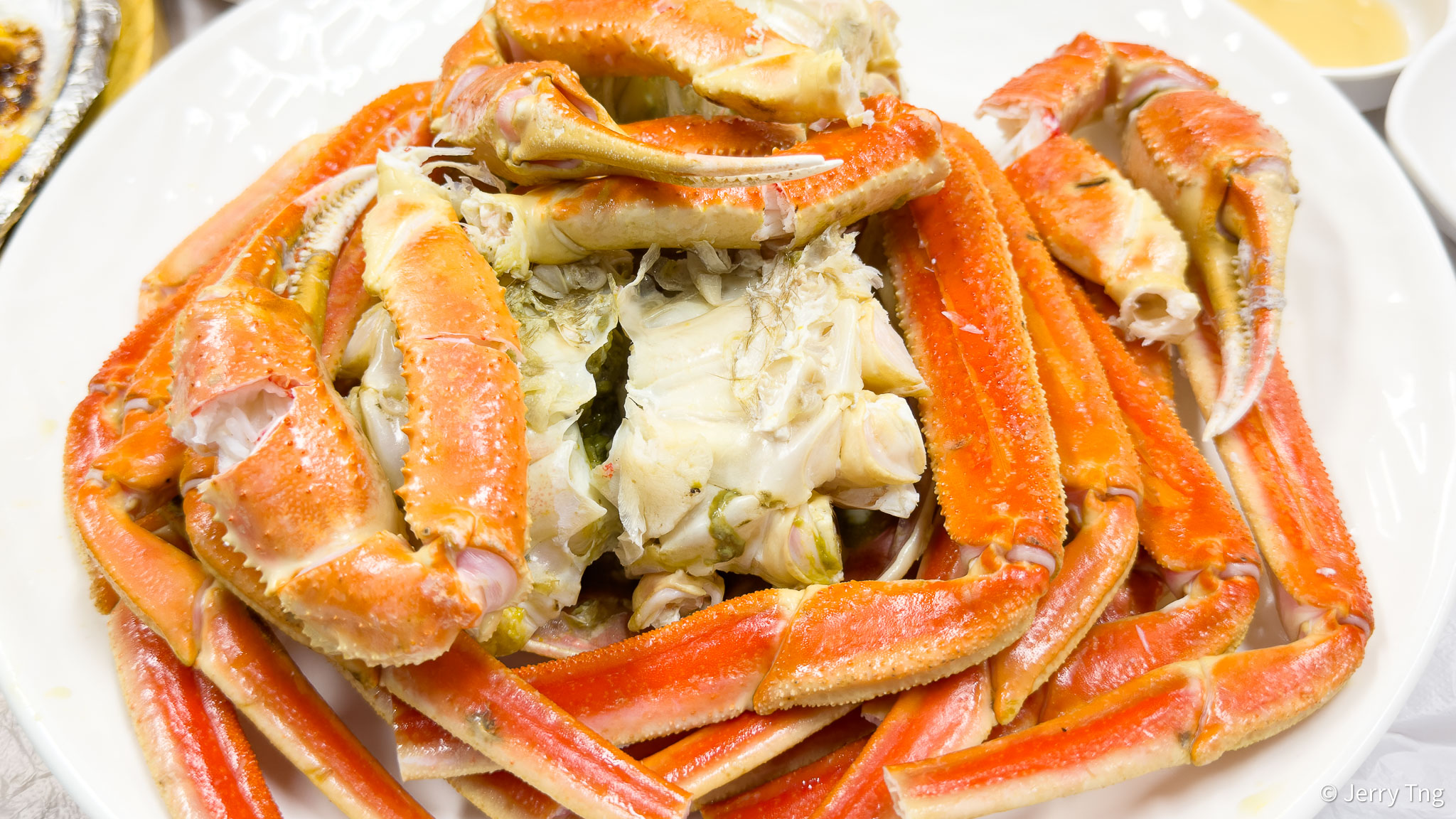
Jjim Wang-ge 찜 왕게 Steamed kings crabs is the highlight of the dinner. Very often in the buffets in Las Vegas, these crabs are boiled to death. Steaming is a great way to maximise sweetness as well as texture for the delicate, lush meat. Sometimes when boiling you run the risk of overcooking, and it can be difficult to extract meat if done improperly. By steaming with the shell, the high heat cooks the crab in its natural juices.

As we ordered 7 crabs, there was enough kanimiso (crab organs) to make the special mixed rice. This is such a delicious way to eat the crab, by mixing the kanimiso with seaweed, rice and sesame oil.

And we were all given seaweed soup to go with the crab rice. But there was one more dish to come.

My host asked me what I find memorable and I spoke about the Cutlass Street in Namdaemun Market. Galchi–jorim 갈치조림 Cutlass stew is a spicy braised galchi (cutlass fish or beltfish) stew, made from beltfish, radish, and onion.

The spiciness was delicious and the radish was the highlight of the stew as eating stewed cutlass fish can be quite a challenge for its bones.
Highly recommend if you happen to be in the area. This place is so much more economical than Nroyangjin. However the store owners (and the restaurants) are not used to tourists, so they speak almost no English.
Anyang Produce & Fish Wholesale Market 안양농수산물도매시장
313 Heungan-daero, Dongan-gu, Anyang-si, Gyeonggi-do, South Korea
경기도 안양시 동안구 흥안대로 313
Visited Jul 2024
Pingback: Bisowon 비소원 @ Seoul – live2makan