
Warayakiya わらやき屋, or “straw burning house”, is a popular chain of izakayas, with branches in all corners of Tokyo. I have been to their Akasaka branch many times and the Ginza branch. This is the Roppongi branch.

In Kochi Prefecture, fishermen used to make bonfires of using straws and cooked their catch. This technique called warayaki 藁焼 and is quite a spectacle to watch. The result is a smokey and tasty BBQ-style of cooking.

Warayaki traditional cooking method in Kochi Prefecture in Shikoku, Japan. The burning straw provides a dramatic fierce fire with temperatures in the range of 800 – 900C- and this results in very fast and even cooking, as the high temperatures sear the outer layers and leave the centre of the meat or fish tender and juicy.

And like all izakayas, there’s a cover charge that comes with an otoshi. Tonight’s otoshi was a small plate of raw vegetables to eat with the special dips that’s on the table.
Our dinner tapas
前菜盛合せ Appetiser Platter

We started with an assortment of appetisers that included dorome どろめ, smoked duck breast and 藁焼きうずら玉子 warayaki quail eggs. Dorome どろめ is sardine fry and is a seafood delicacy from Tosa 土佐, Kochi Prefecture 高知県.
カツオの藁焼き “Warayaki” Skipjack Tuna

Katsuo カツオ (bonito, sometimes called skipjack tuna) has been a dietary staple in Japan for millennia, evident from the discovery of its bones in Jomon-era (14,000–300 BC) shell middens. And if you’ve ever eaten Japanese food, you’ve likely eaten bonito. It is the foundation of dashi broth, an indispensable ingredient in Japanese cuisine. You might have even seen fish flakes called katsuobushi, shaved from dried bonito, dance like an apparition atop tofu, rice, and other dishes. Kochi is very well known for bonito.

カツオの藁焼き “Warayaki” skipjack tuna is the traditional way of eating bonito in Kochi. The block of bonito is grilled with a big flame from burning hay and the fish is smoked at the same time. The fish is then sliced and eaten with a variety of condiments, or for me, simply with a dash of salt.
きびなごの唐揚げと Fried Kibinago

Kibinago きびなご (Silver-stripe round herring) is small fish used as fishing bait, especially in skipjack tuna-fishing. Kibinago are said to be the most delicious when the fish are about to spawn as they swim close to the coastline from early spring until the beginning of summer. These fish are deep fried and are perfect snacks with ice cold beer during summer.
鯨の竜田揚げ Deep Fried Whale

鯨の竜田揚げ Deep Fried Whale has quite a strong flavour and the meat is very dark, like in between red and black. Not quite what I imagine it to be a “fish” fillet as whales are mammals and the flesh should be like other red meat like beef or mutton.
牛リブロース藁焼きステーキ “Warayaki” grilled beef rib steak

Japanese kuroge beef steak given the warayaki treatment and completed on the hotplate that it is served on. Comes with black pepper onion sauce on the side as a dip, or you can pour it over the hotplate for the sizzle.
藁炙り鶏もも肉のにんにく醤油焼き “Warayaki” Grilled chicken thigh meat with garlic and soy sauce

藁炙り鶏もも肉のにんにく醤油焼き “Warayaki” Grilled chicken thigh meat with garlic and soy sauce uses Tosa Hachikin Jidori. Of the 38 breeds of jidori 地鶏(heritage chicken breeds) in Japan, 8 are from Kochi Prefecture. Raised in pristine natural areas like the village of Okawa, Tosa Hachikin-Jidori are a cross between several Kochi heritage chicken breeds. The meat is lean and tastes very clean, while still packing a serious punch of umami.
炙り鯖棒寿司 Seared Mackerel Sushi

炙り鯖棒寿司 Seared Mackerel Sushi is prepared Kyoto-style sushi called bo-sushi 棒寿司, which only uses cooked ingredients like this “warayaki”ed mackerel. The mackerel is burnt with straw and releases a very flavourful oil onto the rice which elevates the entire sushi. And slight smokiness of the straw added another dimension to the bo-sushi.
特選生姜の手ごねつくね Handmade Tsukune with Torch Ginger

Juicy hand-kneaded tsukune meatballs made with coarsely ground chicken, cartilage and torch ginger, a local specialty of Kochi. A raw egg yolk in heavy soy sauce is given for you to dip the tsukune. Delicious.
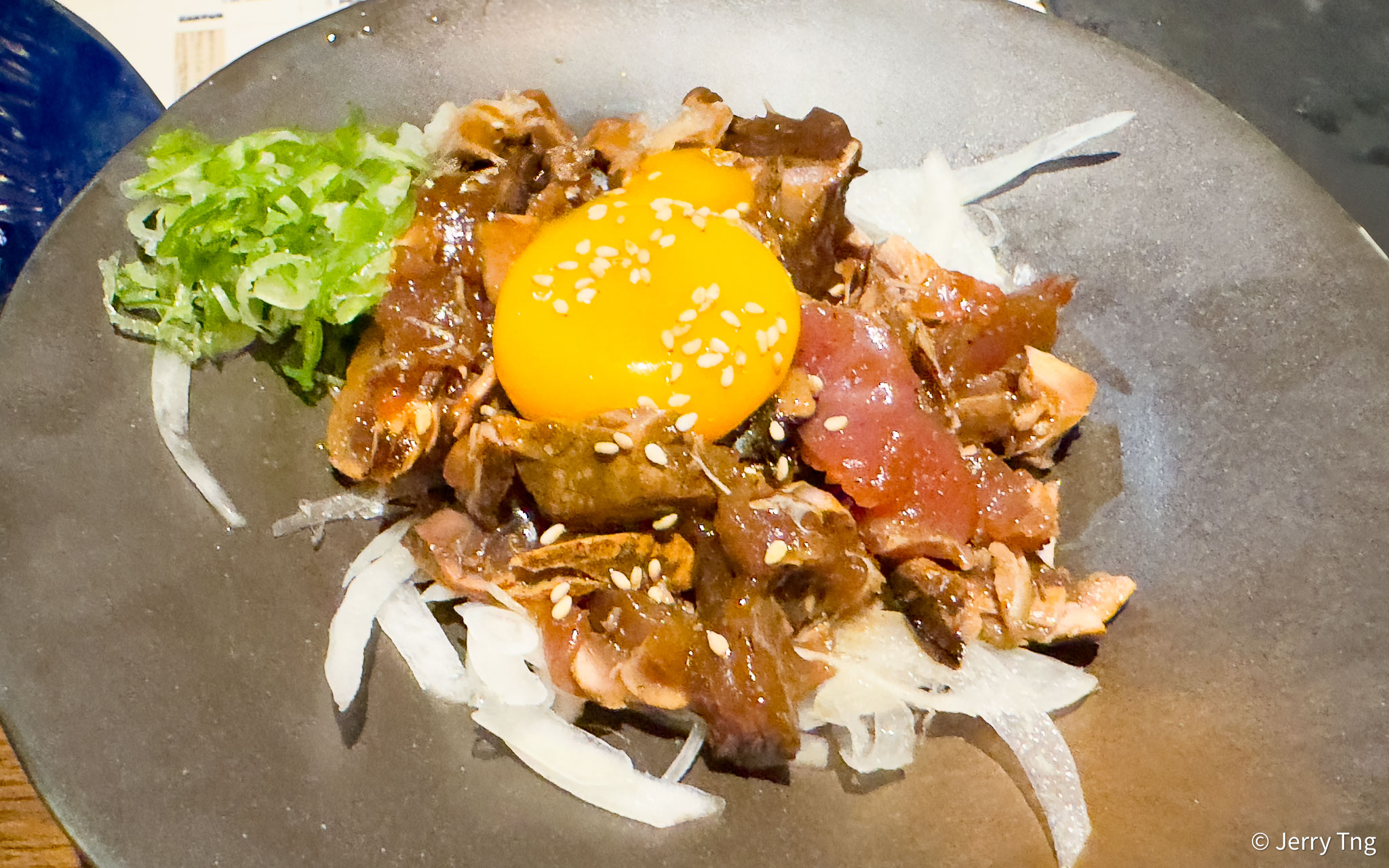
かつをユッケ Pork Cutlet Yukhoe

Raw Japanese Kurobuta pork loin marinated in a special soy sauce and made into a deliciously spicy yukhoe.

A highly recommended dish with Korean origin, I was surprised the pork can be eaten raw. This being Japan, I have absolute confidence in their food safety. Boys and girls, do not try this at home.

Lively atmosphere, great place for afterwork gathering, although the food is only good at best, not outstanding; it only costs around USD 50-80 per person, and you can limit the damage with a nomihodai 飲み放題 package.
Warayakiya Roppongi わらやき屋 六本木
6 Chome−8−8, Roppongi, Minato City, Tokyo, Japan
〒106-0032 東京都港区六本木6-8-8 六本木ゴーディービル1F
Tel:+81 (03)-5410-5560 (Reservations)
Visited Nov 2024
Pingback: Modowoo 모도우 @ Gangnam – live2makan