
My business partner gave me a real treat this evening. He is treating me food that will kill me if not prepared properly.

Sohobokjip 小湖복집, the only puffer fish specialty restaurant in Pyeongchon, is a good place for family gatherings and dinners. It has been doing this for over 30 years so I guess I am in safe hands.
Called bokeo 복어 in Korean, there are about 120 species of puffer fish in the world and 18 species can be found in Korea. Edible puffer fish include Chambok 참복 (aka the “true” puffer fish), Kkachibok 까치복 (Magpie puffer fish), Hwangbok 황복 (yellow puffer fish), Jolbok 주복 and Milbok 밀복.
While puffer fish has a poison called tetrodotoxin in the liver and intestines, it is sought after for its clean taste. Some say there’s a tingling sensation as you eat the sashimi, but I think that’s just your imagination.


In Korea, some farmers are now able to breed poison-free puffer fish in domestic conditions, and wild puffer fish are carefully handled by highly trained professionals, with safe parts frozen and distributed in Korea. Live chambok 참복, aka the true puffer fish, comes from a farm in Incheon.

The live fish is used for sashimi and processed in the restaurant. This is supplemented for the rest of the courses with frozen chamboks and milboks that have been factory processed from Pohang and Busan to keep the meal affordable.
The Puffer Fish Banquet
Hongeojjim 홍어찜 Steamed Skates

Skates may look like rays but they are different. Skate is a delicate, firm fish that has a mild, sweet taste and a unique texture. It has cartilage — no bones. If you leave fresh skate in the fridge for a day or two, the skate may have a bad ammonia smell developed from the uric acid in the flesh. This is not a sign of the fish going bad. In fact, fermented skate, or hongeohoe 홍어회, has a strong funky aroma is a unique delicacy favoured by many older Koreans.
Mu Jorim 무조림 Korean Braised Radish

Korean braised radish or mu jorim 무조림 is soft and tender radish that’s braised in a spicy, sweet and savoury sauce – a perfect combination of flavors that’s delicious with a bowl of rice.
Bokeo-kkeobjil-muchim 복어껍질무침 Spicy Puffer Fish Skin with Vegetables

This dish served cold contains chewy strips of puffer fish skin 복어껍질 served up with a mountain of different types of vegetables served like a pajeori 파절이. The chewy puffer fish skin doesn’t contain much flavour, most of its flavour comes from the sauce it’s mixed in. This dish was served as an appetiser that made you want to go back for more.
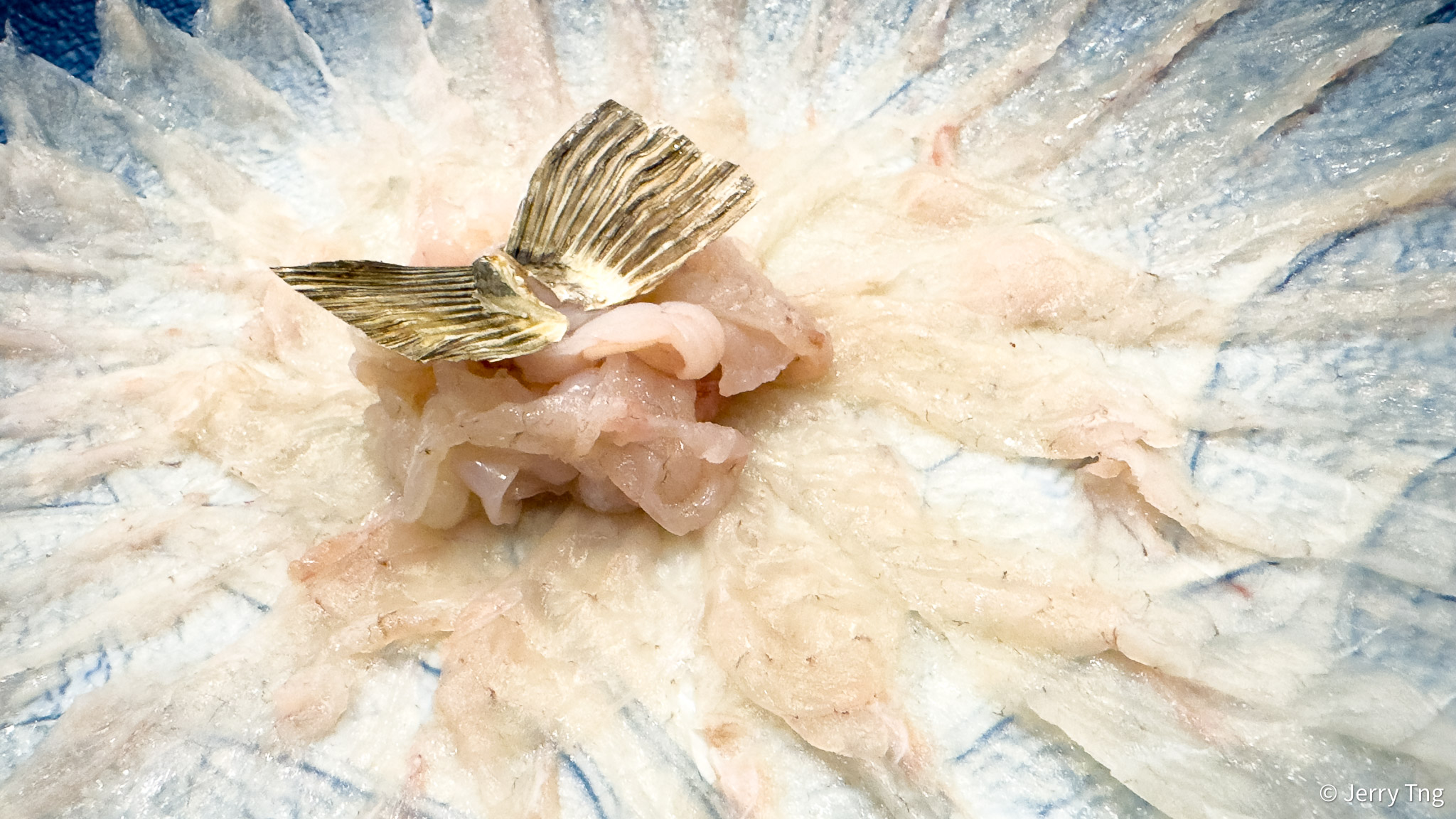
Bokoehae 복어회 Puffer Fish Sashimi

The puffer fish used for sashimi, called hoe 회 in Korean, is the chambok 참복 and is supposed to be sliced after being aged for an hour. Because puffer fish is chewy, it is cut thinly; and the thinner it is cut, the more chewy the texture comes to life.

Puffer fish sashimi is eaten like Peking duck. The thinly sliced fish is used as the “wrapper” for the scallion and pea shoots with the fish skin. These are rolled together and looked like Teochew fish dumpling heekoay 魚餃.

Ponzu with spicy mashed radish is the sauce the Japanese used for their fugu; the Koreans eat their bokeo with a tangy, spicy sauce that tasted like watered down Thai chilli sauce.
Bokeo-jili 복어지리 Puffer Fish Clear Soup

For the clear soup, magpie bok 까치복 is used for its soft texture. The fish is boiled in the broth with the bean sprouts, tofu and vegetables at the table. The fish is sweet and delicious. There’s one fish for each of us. I really enjoyed the soup as the stock was made from boiling puffer fish bones.
Bokeo-twigim 복어튀김 Fried Puffer Fish

Next up, deep fried puffer fish fillets. The puffer fish used is magpie bok 까치복 because it is smaller. They are flown in frozen from Busan and Pohang. This would be the best fish fillets you have eaten.
Bokeo Bonjuk 복어본죽 Puffer Fish Porridge

Juk 죽 is Korean porridge and is similar to Cantonese chok 粥 where the rice has been boiled to gooey consistency. And similarly this is a savoury porridge and incorporated the ingredients, in this case puffer fish. I cannot taste the fish in the porridge as it was overwhelmed by the base juk that was really delicious.

Why do we eat puffer fish despite the danger of getting poisoned by remnants of the toxins? Firstly it is low-calorie, high-protein, low-fat, and contains various minerals and vitamins. It is said that eating puffer fish can reduce cholesterol as well as aid in alcohol detoxification. More importantly, the clean, sweet taste of puffer fish and the feeling of a roll of the dice is what gourmands chase after.

Remember that no matter where you choose to dine, consuming bokeo is a respectful nod to a time-honoured culinary tradition. Enjoy it responsibly, in the confines of a fugu specialty restaurant that has the skill and experience to serve it safely and most deliciously. Savour every bite and reflect on its significance as a unique dining experience.
Sohobokjip Pyeongchon Pufferfish Restaurant 소호복집
1602-6, Gwanyang-dong, Dongan-gu, Anyang-si, Gyeonggi-do
경기도 안양시 동안구 관양동 1602-6
Tel : 031-385-6328
Visited Feb 2025
0 comments on “Sohobokjip 소호복집 @ Seoul”