
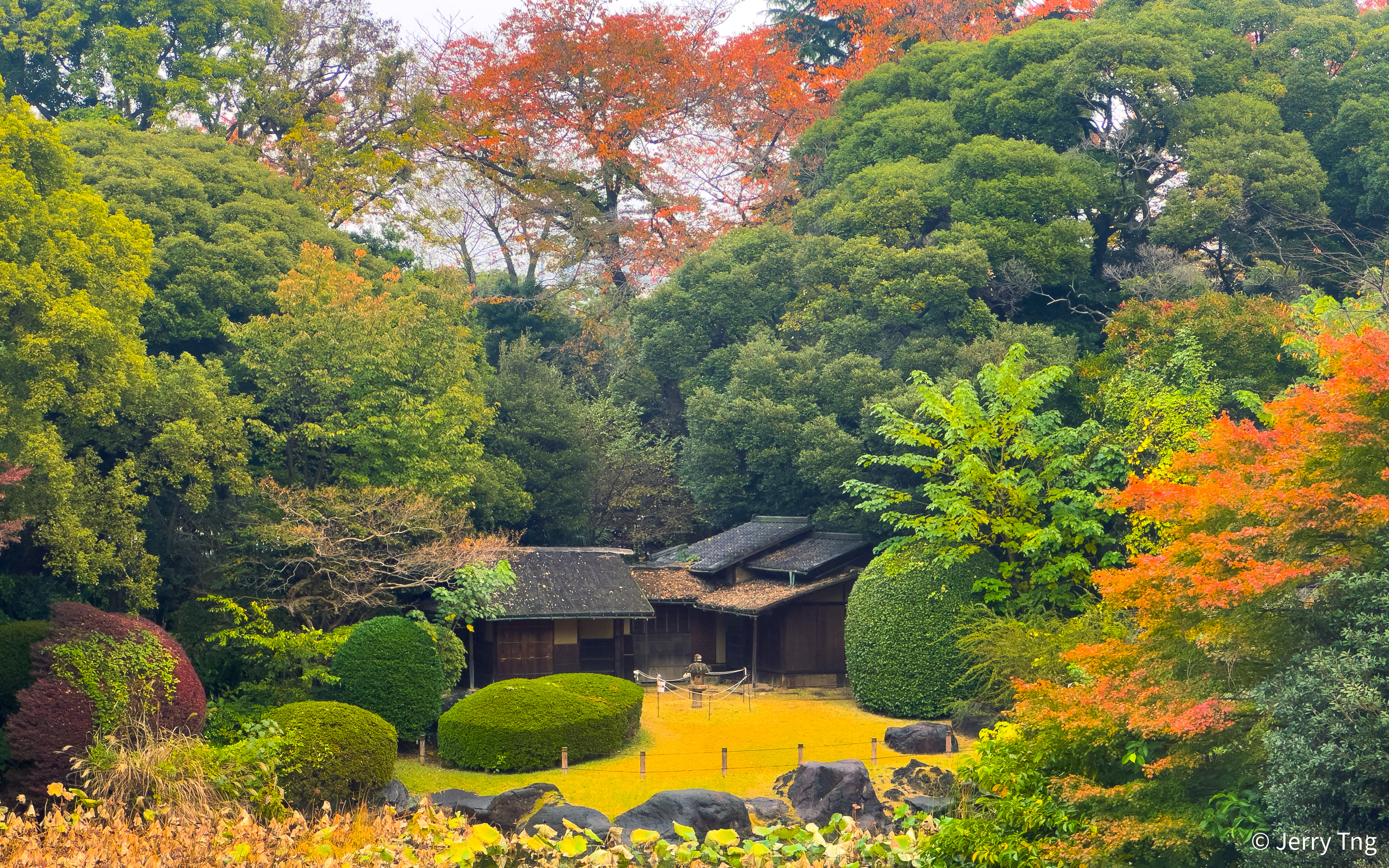
Fancy having tea in an 18th century teahouse? Since Jul 2023, Tokyo National Museum in Ueno, in conjunction with Tohaku Chakan, has opened up a teahouse experience in the historic Okyokan.

Located inside the gardens of Tokyo National Museum is a collection of actual teahouses from different eras. One of them, Okyokan 応挙館, has retained its original functions of a teahouse and offer its visitors a place to rest their tired feet.


It was built in 1742 as shoin (a study room) of the Meigen’in Temple 明眼院 located on the outskirts of Nagoya City. A variety of food, beverages, and activities are in place for visitors to enjoy Japanese culture while appreciating the (reproduced) fusuma paintings by Maruyama Okyo 円山応挙, one of the master painters of the Edo period.

The ink paintings (from 1784) on the interior walls and sliding doors are by artist Maruyama Okyo (1733-1795), when the artist resided at the Myogen’in Temple for eye treatment. The current installations are high-resolution digital reproductions.

A Japanese teahouse is not only for tea ceremonies these days. It can also be a place for people to have a break away from the mundane of everyday life. Before the days of pubs and izakayas, these teahouses provide the elites a small snack and a drink as well.

This is a very strange combination, canned crab meat with pickles from a jar. However in Japan canned food can pack a pretty rich flavour, which makes it a perfect otsumami (snack to enjoy with a drink).

The crab meat is paired with a glass of Amazake 甘酒. As a beverage, amazake has an almost porridge-like texture, milky white with visible broken parts of rice in it. Amazake has no or only a small amount of alcohol

Traditional Japanese sweets are called Wagashi 和菓子in Japanese. And what’s on offer is depending on the season. Wagashi generally makes use of cooking methods that pre-date Western influence in Japan and is often served with matcha 抹茶, Japanese green tea powder suspended in hot water.

Sweet azuki bean paste (anko) is a central ingredient in a large number of Japanese sweets. Namagashi is a type of wagashi that is made of rice flour and a sweet bean paste filling, and is delicately shaped by hand to reflect the season. It is usually served at the tea ceremony.

This was still a cold winter day, so I could not bear myself to open the door and enjoy the scenery outside. But it was still quite nice to have a place to rest your feet, provided you can sit crosslegged on the tatami floor for a long time.
Tohaku Chakan, Authentic Japanese Tea Café
Okyokan of Tokyo National Museum
13-9 Uenokoen, Taito-ku, Tokyo
Visited Jan 2025
Pingback: Dining in Museums – live2makan