
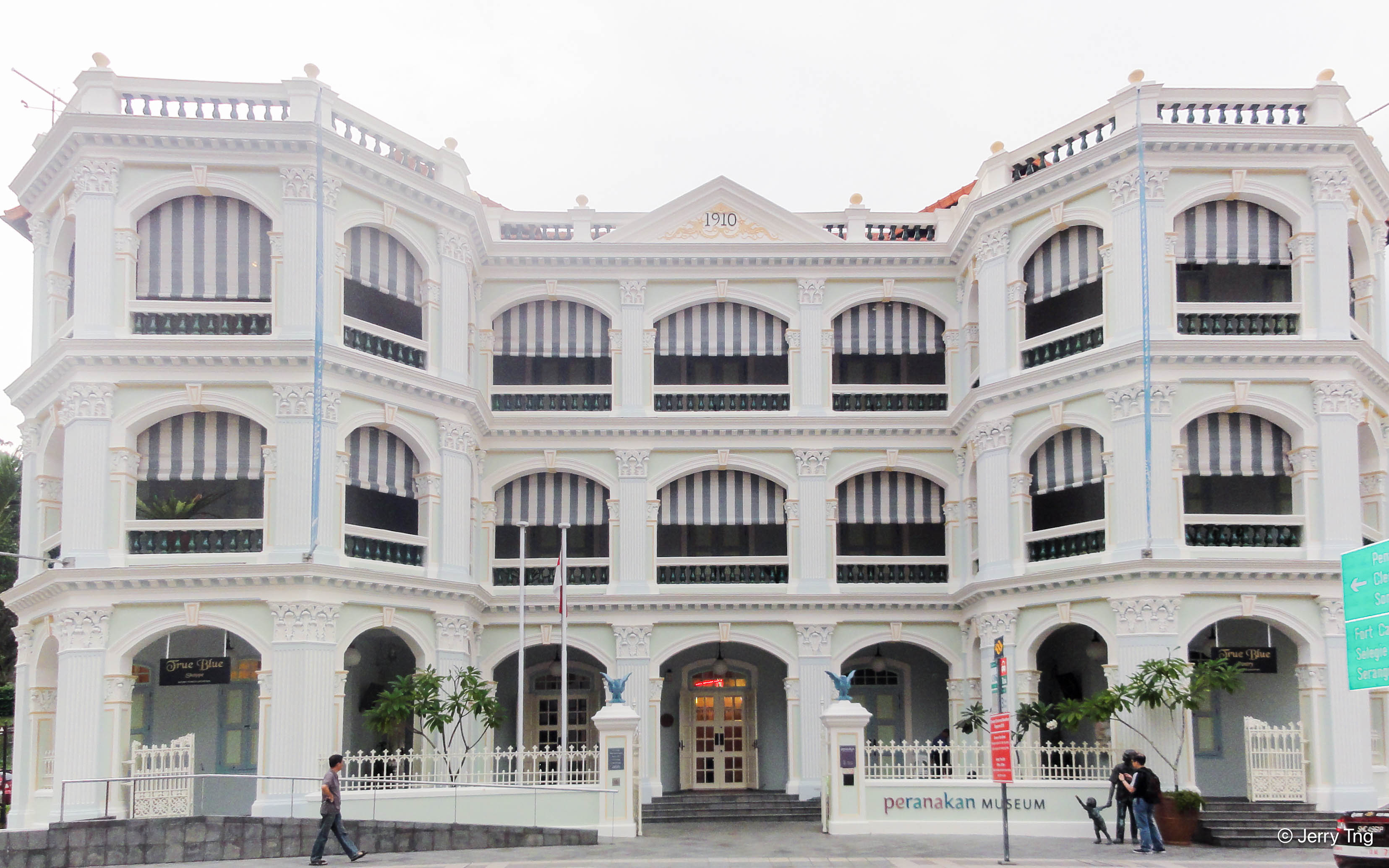
On February 17, 2023, the museum reopened its doors after nearly four years of renovation work. This was a visit 10 years earlier.

The Peranakan Museum explores the art and culture of Peranakan communities in Southeast Asia, and possesses one of the finest and most comprehensive public collections of Peranakan objects.

The Armenian Street building was formerly the Tao Nan School built in 1912. It was first converted to Asian Civilisation Museum1 in 1994, which was then redeveloped into the Peranakan Museum in 2008. The redevelopment was spurred by the immense popularity of the Peranakan display in the old ACM.2

The interior of a home reveals the lives of its inhabitants. Peranakan homes were filled with furniture, furnishings and other items that were mostly bought at markets of port cities, where goods from all over the world were sold. Peranakan tastes were shaped by global regional trends, and reflect urban consumption patterns of the period. Galleries here present objects related to family and community life, revealing a range of Peranakan customs, foods, languages and beliefs.

What I was impressed (remember that this was 2013) was the use of high definition multimedia seamlessly incorporated into the exhibition to tell some stories of the exhibits, like these B&W “portraits” a Peranakan couple that you would usually see in the living rooms of these colonial shophouses with the red wood furniture.

Peranakan fashion has for centuries responded to the cosmopolitan environment of port cities in Southeast Asia by integrating diverse influences. Hybrid and innovative, it offers ways to rethink conventional concepts of fashion in Asia as unchanging, traditional, or “ethnic”.


While museums showcase artefacts from the past, there were collaborations with aspiring Peranakan artists, like this chandelier in main hall that featured batik patterns recreated using neons.

There was a familiar piece of history retained in a corner of the museum – the Peranakan Mother-of-Pearl Inlaid Blackwood Bench3. This same bench has been kept on the first floor for visitors to sit on. My aunt used to have one in her Tanglin house and I never find it comfortable to sit on.

The contents of the galleries have been greatly revamped. Once solely focusing on the Chinese Peranakans in Singapore, there is now a greater emphasis on other smaller groups such as the Chitty and Jawi Peranakans.
Peranakan Museum
39 Armenian St, Singapore 179941
+65 6332 7591 (Ticketing)
Visited Nov 2013
Footnotes:
- Asian Civilisation Museum (ACM) opened in the former Tao Nan School Building on Armenian Street on 21 April 1997, with then Deputy PM Lee Hsien Loong presiding. The museum included 10 galleries, with thematic displays on China and space for special exhibitions. Later, a Peranakan display was added, after a special exhibition on the topic proved especially popular.
The Armenian Street ACM building had closed at the end of 2005, and, because of the immense popularity of the Peranakan displays in the old ACM, was redeveloped into a brand new Peranakan Museum. On 25 April 2008, the Peranakan Museum was officially opened by Prime Minister Lee Hsien Loong. Operated and managed by the Asian Civilisations Museum, the Peranakan Museum explores the culture of hybrid communities in the former Straits Settlements of Singapore, Malacca, and Penang, and their links with other communities in Southeast Asia.
[Extracted from ACM’s website, 10 Aug 2025, https://www.nhb.gov.sg/acm/about-acm/who-we-are] ↩︎ - BUILDING HISTORY
The Armenian Street building was formerly the Tao Nan School built in 1912. It was first converted to Asian Civilisation Museum in 1994, which was then redeveloped into the Peranakan Museum in 2008. The redevelopment was spurred by the immense popularity of the Peranakan display in the old ACM.
1912 : Built
The current Peranakan Museum is housed in the former Tao Nan School building at 39 Armenian Street. The architectural plans of the building were first drawn up and approved by the Municipal Engineer’s Office in 1910. Construction of the building itself was completed in March 1912. The Tao Nan building was designed in the “Eclectic Classical” style. The fluted columns and the symmetry of the building are characteristic of Classical architecture while the balconies fronting the façade suggest a colonial or tropical style. The layout of the building is also based on Straits Settlements bungalows with rooms arranged around a common central hall and toilets and kitchens outside the principal building.
1994: Conversion to Museum
Preparations for the inaugural exhibition of the Asian Civilisations Museum began in 1994. Storylines and themes were discussed, designers and construction companies appointed, artefacts selected and labels written.
Appropriately, for a building that was once converted from a Chinese school, the permanent exhibition of the Museum began with a focus on different aspects of Chinese culture and civilisation, ranging from architecture to the connoisseurship of the literati. Later, the permanent exhibition at ACM, Armenian Street focused on showcasing the rich material and cultural heritage of the Peranakans.
The ACM closed at the end of 2005 to be redeveloped as a new museum to showcase the eclectic Peranakan culture. Over the 70-year occupation of the place, several changes were made to the building. Space was differently employed and some structures were added while others demolished.
Today, the old Tao Nan School has entered the latest and most colourful phase in its history – as the Peranakan Museum. [From museum websites extracted 10 Aug 2025, https://www.nhb.gov.sg/peranakanmuseum/about-us/about-peranakan-museum] ↩︎ - This blackwood bench was the type of furniture that was found in the homes of rich Peranakans at the turn of the century. They display fine wood-working skills and decorations in the form inlaid mother-of-pearl. Even though they are distinctively Peranakan, furniture such as this, was specially made to order in China. ↩︎
0 comments on “The Peranakan Museum (2013)”