
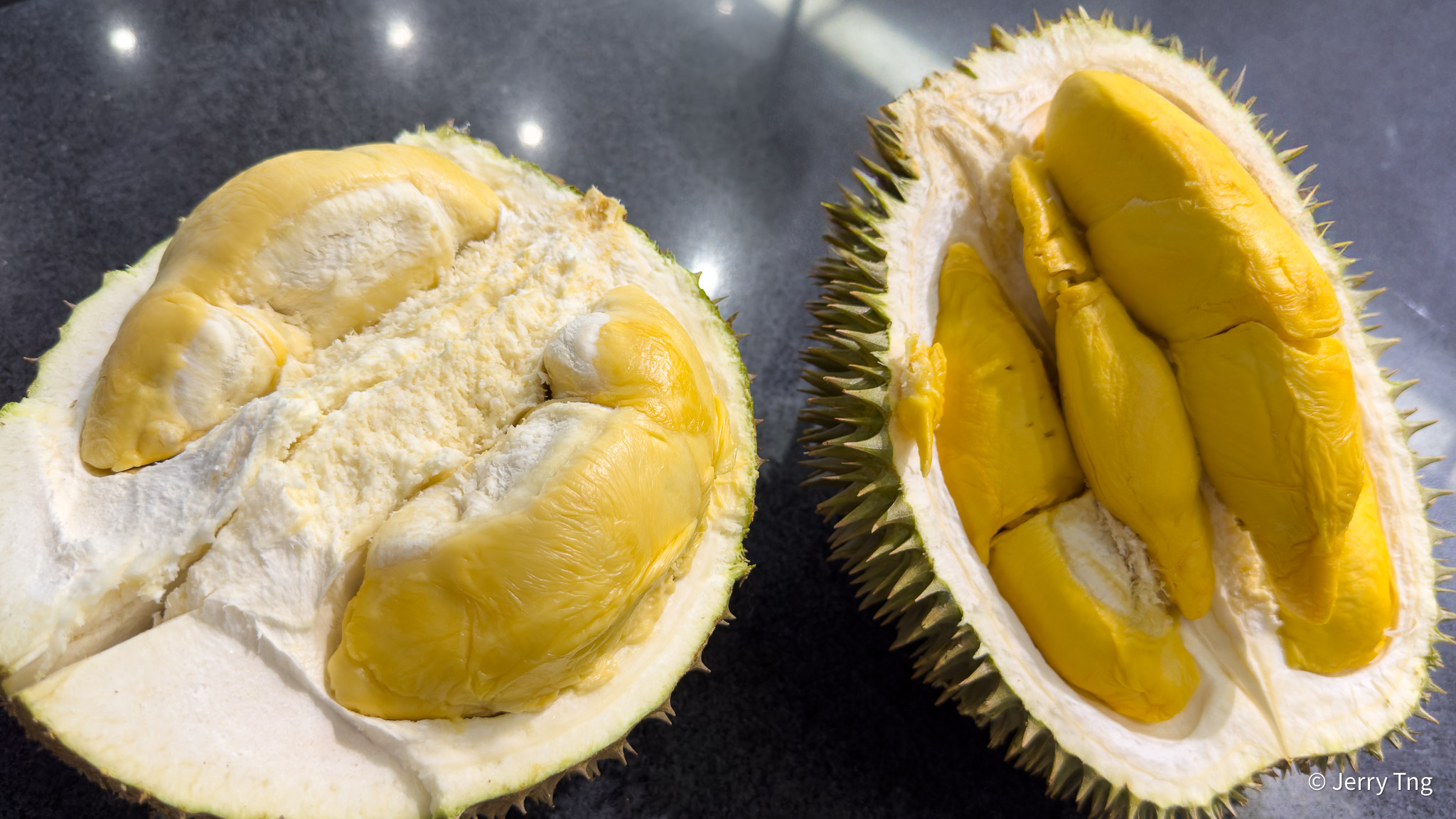
The 2025 durian season kicked off in late May, and went all the way to end August. What is it about these custard-coated seeds hidden within thorny husks that make them worth top dollar, whenever durian season arrives?
Journey to the Greatest Flavours
The Infatuation


Hate it or love it, durians exude an exotic appeal that inspires intense devotion. Some might pucker their nose at the fruit’s strong smell, yet durian prices are steadily on the rise thanks to heated demand from the China market that, more recently, have fixed their sights on Malaysia’s durian supply instead of Thailand’s.
About the Durian

Durian is regarded by many people in Southeast Asia as “The King of Fruits”. The tropical fruit is known for its thorn covering, large size, unique taste and distinctive aroma. The name emerged from the fruits distinctive thorn covering and comes from the Malay word Duri which means thorn. The durian is believed to have originated from the Malay Archipelago. Although the durian tree is native to Malaysia, Brunei and Indonesia, it is also grown in Thailand, the Philippines and more recently in Australia (Darwin) and China (Hainan).

Aril, aka the pulp or flesh, is the edible portion of the durian fruit. The aril varies extensively between cultivars in colour, aroma, flavour, texture, thickness,
and sweetness/bitterness. The inside of the fruit is divided into compartments called carpels. Durian may have three to seven carpels although it typically has five. The arils are found inside locules that are segments or chambers formed within the carpel that house the fleshy seeds.

There are many cultivars of durian, of which several are popular among the durian lovers in Malaysia and Singapore. Durian cultivars are distinct varieties selected for specific traits like taste, flesh texture, and fruit size, with prominent examples including Musang King 猫山王 (D197), known for its bittersweet, custard-like flavour, and D24, aka XO or Sultan, prized for its dense, slightly bitter flesh. Other popular cultivars are the Thai Monthong (D159), aka “Golden Pillow” 金枕头, popular for its mild aroma and firm flesh, the Black Thorn 黑刺 (D200), with its rich yellow flesh, and the Red Prawn 红虾 (D175), known for its reddish hue and sweet taste.
Meet the Queen… Mangosteen

And when there’s the King, there will always be the Queen – the mangosteen. Mangosteen is a tropical fruit about the size of a tangerine, averaging 5-7 cm in diameter. It has a thick, smooth, leathery, burgundy-coloured shell with about 4-8 flat and woody lobes arranged in a rosette at the apex. Cultivated in the tropics, especially in Southeast Asia, it is often paired with durian and considered a cooling counterbalance to the durian’s “heaty” properties.

Encased in the thick skin are an average of five or six triangular floral-scented segments of white, juicy, soft flesh, which is either seedless or contains just a few flat seeds. The number of lobes at the outer apex of the fruit actually correlates to the number of segments inside. Mangosteens offer a sweet-tart tropical flavour and are packed with antioxidants and other nutrients that support the immune system making them a superfood.
Different Cultivars of Durian


Durian cultivars are specific varieties of Durio zibethinus selected for traits like taste, texture, and aroma. Most cultivars have a common name (e.g., Sultan or Musang King) and an official code number (e.g., D24, D197).


These cultivars are then planted commercially through cloning by vegetative reproduction, often through bud-grafting, to create a genetically identical clone to retain the characteristics of these cultivars.
XO (D24)

Despite the name, there’s no chance that indulging in the XO durian can leave you a tad drowsier than other durian types. Strong and bitter with a thick, almost watery flesh, the D24 durian is left to ferment for longer inside its shell, giving it an aftertaste that resembles alcohol and hence the name, XO, after the famous cognac that should not be mixed with the fruit according to urban legend.
Golden Phoenix 金凤 (D198)

This exceptional durian is renowned for its medium to large size, elongated shape, and striking dark green or black skin with prominent thorny spikes. Its unique profile is complemented by a distinctive bitterness and pungent aroma, making it a standout choice for durian enthusiasts.
Red Prawn 红虾 (D175)

Red prawn 红虾 (Hokkien “ang heh“) used to be the durian that Penang is most famous for before black thorn 黑籽 (Hokkien “orh chee“) sort of took over the title. The flesh was soft like yogurt and felt watery in the mouth. But the taste was so delightfully packed like pastry dessert.
King of Kings

Musang King, aka Mao Shan Wang 猫山王, is a popular Malaysian durian cultivar prized for its creamy, golden-yellow flesh and a rich, bittersweet flavour combination. It’s a leading durian variety, highly sought after in Asia, especially China, and a significant part of Malaysia’s durian export industry.

The price of Musang King is around SGD28/kg in Singapore on a regular season, but it costs almost double in China as the transport cost is reflected in the price. It is also increasingly popular in China, where it has been dubbed the “Hermes of durian”.

In the 1980s, a man named Tan Lai Fook from Raub, Pahang stumbled upon a Raja Kunyit (lit. “King of Tumeric”) durian tree in Gua Musang, Kelantan, Malaysia. He brought a branch of the tree back to Raub for grafting, and this new breed attracted other cultivators. The cultivar was named after Gua Musang, its place of origin. And the rest is durian history.

This durian is known for its most fragrant taste and creamiest texture. ‘Musang King’ remains unbeaten by other durians. There are also many other durian varieties like the Black Pearl, Red Prawn, Black Thorn and Black Gold durian but nothing triumphs like the ‘Musang King’. The fruit balances just the right profile of bitterness and sweetness, and a small seed giving more flesh per pound versus other cultivars.
The Illusive Tupai King

Tupai King durian (D214) is a rising star in the durian world known for its unique bittersweet, nutty, and slightly alcoholic flavour profile. This variety, discovered in Penang, Malaysia, by farmer Chew Chee Wan, is characterised by its slender, oval shape, thick husk, and pale flesh with bluish-black tones when opened. The name Tupai King, meaning “Squirrel King”, was inspired by Mr Chew’s durian shop, Cap Tupai. Despite its limited production and high demand, potentially fetching double the price of Musang King, the Tupai King is still relatively new and may not be widely available in markets like Singapore yet.

The eight-hour journey from Penang to Singapore can negatively affect its quality, leading some farmers to delay exporting it to Singaporean retailers. Therefore, there’s a risk of the Tupai King being mislabeled or disguised as other varieties, such as Mao Shan Wang (pictured above), making it crucial to source from authentic farmers. For the time being, I would not pay that premium in Singapore, given that it was already so difficult for me to find Tupai King in Penang.

Due to acquaintance, one Tupai King was specially kept for us that day. As you can see it was not the usual torpedo shaped arils, as this particular fruit has been harvest from an old tree that has been kept wild for a long time. This cultivar is not yet commercially harvested as most of the tress planted are still young. I wasn’t sure I enjoyed the durian, as it did have a more pronounced liquor taste with a weird kind of bitterness that was between bitter gourd and burnt food. For now I would stick to Musang King.
Where to Eat Durian in Malaysia

To enjoy durian in Malaysia, seek out specific farms and stalls in locations like Raub, Balik Pulau, or Johor, particularly during peak season (June-July). Look for fruits with thick thorns and a knocking sound when shaken, indicating a good consistency. Be prepared to eat it outdoors due to its strong aroma.
DurianMan SS2, Petaling Jaya, KL

DurianMan specialises in serving Malaysia’s famous variety of fresh durians, including Musang King, Black Thorn, XO, and a diverse range of cultivars. This is the largest durian store I have seen anywhere, and most likely the largest in the world. DurianMan has nicer renovation but is expensive, but the quality is guaranteed.
Durian Man SS2
7680, Jalan SS 2/24, SS 2, 47300 Petaling Jaya, Selangor, Malaysia
Phone: +60 12-234 5619
81 Durian, Georgetown, Penang

A Penang colleague has been coming to this durian vendor since she was a child. And this was where I had my Tupai King. They have their own durian farm in Balik Pulau. And the store owners were really friendly and patient. Just down the street from Green House Prawn Noodles, so you can get two fixes at one go.
81 Durian Store
100, Jalan Burma, 10050 George Town, Pulau Pinang, Malaysia
Tel : +60 12-551 7381
All durian tasted Jun 2025
0 comments on “For Now Let Us Feast…. Durians!”