
Shanxi 山西 (lit. “west of the mountain”) recent gained worldwide fame for the game “Black Myth: Wukong” which took a lot of inspirations from the ancient architectures in the province. But Shanxi is famous for other things – its noodle cuisine and excellent vinegar.

Shanxi cuisine, or Jin cuisine 晋菜, is derived from the native cooking styles of Shanxi Province in China. It is famous for noodles, fried flatbread (da bing) and sour tastes. The cuisine is also famed for using its locally produced vinegar. Being a very traditional region where the lifestyle of locals has not been disturbed, many outsiders find Shanxi cuisine too authentic and traditional.

There’s a saying, “If you come to Shanxi, you will not repeat the type of noodles for the whole year!” Shanxi, long famed as a homeland of wheat and noodles, has a rich tradition of turning simple flour into countless dishes. You will be surprised how the Shanxi folks have made noodles into a category of its own.
刀削面 Knife-cut Noodle

Daoxiaomian 刀削面, or Knife-cut Noodle, is perhaps the most famous noodle dish originating from Shanxi. Originating from Datong in the northern part of Shanxi, it is made from slicing strands of noodles from a ball of dough directly into boiling water. And then you can choose the toppings and soup base with the cooked noodles.
And this video1 showed how it is made. Although it can be eaten almost everywhere these days (even in Paris), the best ones are still in Datong. Nothing can replace a freshly made bowl of knife-cut noodles.

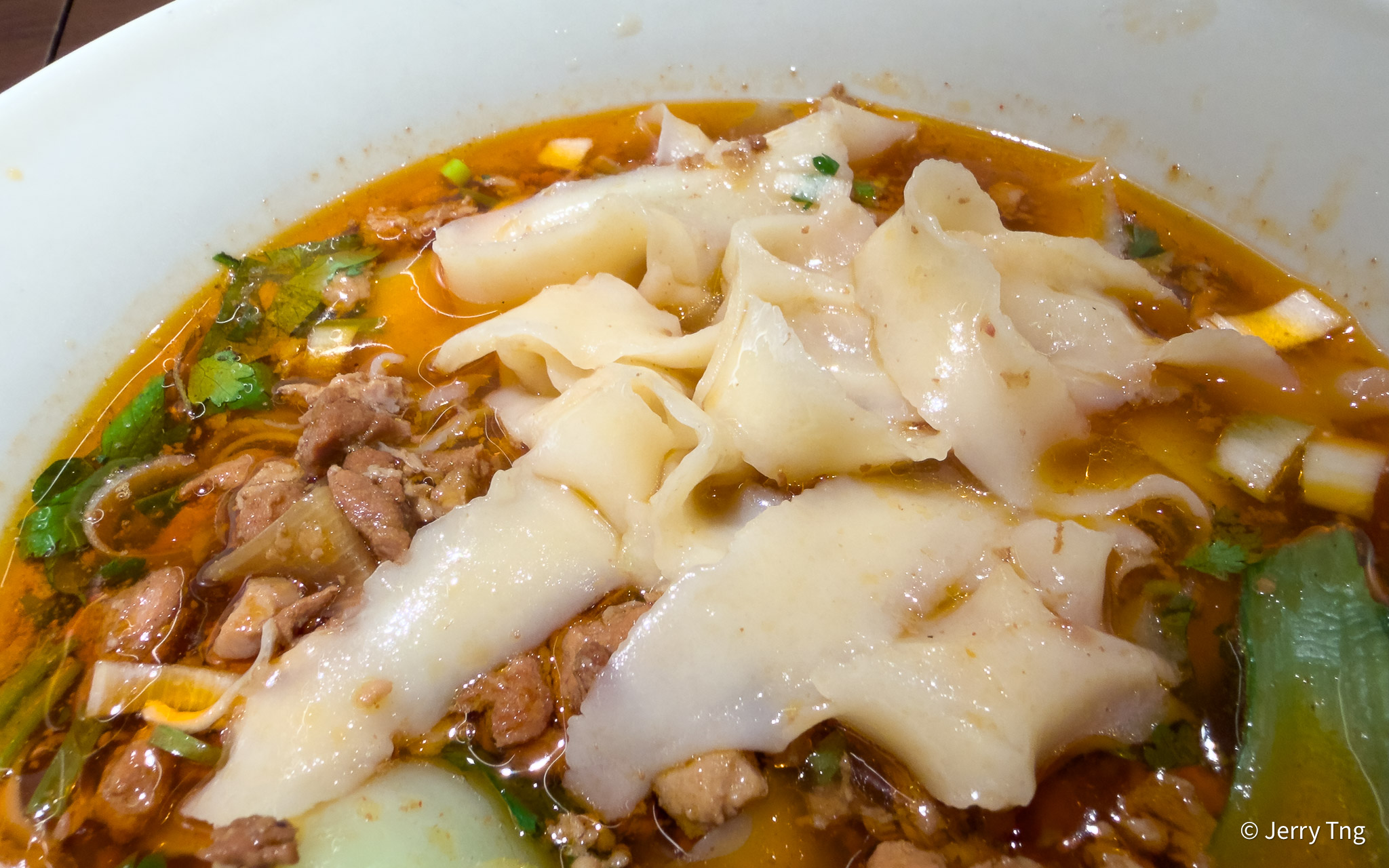
Here’s a variation of the knife-cut noodles. The same dough is flatten and then cut into broad noodles similar to our mee pok but with the texture of udon.
沾片子 Dipping Noodles

Zhanpianzi 沾片子, or Dipping Noodles, is a noodle cuisine of Qingxu County. Zhanpianzi’s exact beginnings are hard to pin down, but it clearly grew from thrift and ingenuity. In eras when resources were limited, families stretched vegetables and flour into satisfying meals by coating leaves or strips of produce with batter and boiling them. The result was an economical, filling dish that doubled as both vegetable and staple.

I ordered a portion of Sanqi leaf noodles 三七叶沾片子. Sanqi leaf 三七叶 is the leaf of the Notoginseng Root, more commonly known as Tianqi 田七. The slippery, slightly chewy batter, the vegetable’s fresh sweetness and the bold dipping sauce unfold together on your palate.2


Over generations—especially in places like Taiyuan and Jinzhong—this everyday comfort food became a regional emblem, carrying memories of summer harvests and family tables. Zhanpianzi reflects Shanxi people’s practical “one-dish” approach: combining staple (batter) and side (vegetables) in one easy process.
碗托 Wantuo

Originating in Lvliang City 吕梁市 and in particular 柳林县 Liuyang County, 碗托 wantuo is a unique noodle type that is made using a bowl as the mould. It is also commonly known as 碗脱, which is a homophone with wantuo.

After the buckwheat batter is cooked, it is cooled and solidified in the bowl. The wantuo is then scrapped off the bowl and then cut into pieces. Then the savoury and spicy sauce is poured liberally over the wantuo.


Guanchang 灌肠 is another name given to Wantuo, but is made from mung bean starch, served with a soy sauce and vinegar-based sauce.3
河捞面 “River Bed” Noodles

There’s no English name for this one, so I named Helaomian 河捞面 as “River Bed” Noodles as the unique process of making this particular type of noodles. As the noodles are made with buckwheat or sorghum or oat flour, there’s not enough elasticity to prevent the noodle from breaking before cooking.

Helaomian 河捞面, aka Helemian 饸饹面, is made by pressing the dough through a mould directly into a cauldron of boiling water.

Another version of the same noodle uses potato flour instead of the more chewy buckwheat flour. These savoury noodles are then topped with tender lamb offal in a flavourful broth for a really delicious meal. Actually it tasted like vermicelli but more chewy.
栲栳栳 Honeycomb Noodles

This is something really uniquely Shanxi. Youmian Kaolaolao 莜面栲栳栳, or Honeycomb Noodles aka Oatmeal Rolls, are made from oat flour and shaped like biscuit rolls or Spanish barquillo. They can be served steamed (like the photo below) and accompanied by a tomato-based dipping sauce, very much like an Italian pasta; or stir-fried like this version that I ate in the ancient town of Pingyao. Here’s a short video4 on how it’s made.
It originated from the Tang dynasty. There are two versions of how it came about. One version said that it was a reward for the people of Taiyuan for supporting the founding emperor of Tang dynasty, Li Yuan, and the dialect pronunciation of 栲栳 is similar to 犒劳 (reward). 5

The other version of the story is also around Li Yuan. One day he was visiting a temple in Taiyuan, and the abbot made a noodle meal out of oat flour. When asked, the abbot said this dish was call 栲栳. And when Li Yuan became emperor, he asked the abbot to start a temple in Wutaishan, and as the abbot taught the locals to use the abundant oats to make these honeycomb noodles. 6
猫耳朵 Cat’s Ear

After trying the long noodles, let’s try some cutely shaped Shanxi noodles. Maoerduo 猫耳朵, which literally translate to “Cat’s Ear”, are noodles shaped like a cat’s ears. Similar to Italian orecchiette, this noodle is pinched to resemble a cat’s ear, thick in the middle and thin at the edges.. Maoerduo noodles are a must-try in Shanxi Cuisine.
莜面 Oatmeal Noodles

Oatmeal, aka avena, when milled properly is used as a type of flour for making noodles called Youmian 莜面. They can be used in different ways – when mixed with lots of water, it can be made into a gelatinous like cake that can be used as an appetiser; when mixed with appropriate hot and cold water, you get noodles.

I really enjoyed this first trip to Shanxi and tried all these wonderful noodles dishes. I am sure to return and perhaps make a more comprehensive listing of all the different types of noodles. Perhaps you can leave a message to recommend other types that I should try in Shanxi.
Shanxi trip made in Oct 2025.
- 【早餐中国第3季】 第18集:山西大同·刀削面 | Breakfast in China Ⅲ | 腾讯视频 – 纪录片, 19 Oct 2022. https://youtu.be/7pdIdH1pqiU?si=Qo8bdnhBzewJn5Ym&t=37 ↩︎
- “Taste Shanxi: Zhanpianzi, Rustic Chinese Noodle Dip”, China Wonders Guide, https://chinawondersguide.com/noodle/, accessed 15 Nov 2025 ↩︎
- 山西的平遥、忻州、吕梁等地呼灌肠为荞面碗饦。饦为古代面食称谓,当地民间口传始于西晋战乱年间,因制于碗、食于碗而得名。碗饦与灌肠本质上均为荞面蒸制品,食法相同,如果必求其异,唯蒸糊之碟、碗器具不同而已。发布日期:2015-11-06 11:15 来源:山西微生活http://www.jinsui.org/zoujinjinsui/msfq/tsms/ty/2015/1106/3098.html, accessed 15 Nov 2025 ↩︎
- “Mysterious 2-Ingredient Honeycomb Noodles | Gluten-Free Oat Pasta 莜面栲栳栳”, emmymade, 21 Apr 2024. https://youtu.be/SX1oz-DoNi0?si=ZRh-sI6-eh-S9xLa&t=334, accessed 15 Nov 2025 ↩︎
- 民间还有一种说法,相传李世民父子在太原起兵,用的就是这种面食犒劳三军,一举建立大唐王朝,栲栳是由犒劳一词演变而来的。https://news.qq.com/rain/a/20210605A03I4H00, accessed 15 Nov 2025 ↩︎
- 相传,唐国公李渊被贬太原留守时,途经灵空山古刹盘谷寺,寺中方丈特地制作了这道莜面食品款待他。李渊问:“手端何物?”方丈答:“栲栳栳”。栲是植物的泛称,栲栳指用竹篾或柳条编成的盛物器具。后来李渊当了皇帝,便派老方丈到五台山当住持。老方丈在赴任途中路过静乐县,看到莜麦丰收,便将莜面栲栳栳的制作方法传授给当地的老百姓。从此,这种民间面食传遍了晋、陕、蒙、冀、鲁等地,成为北方山区人民的家常美食。https://www.wenxiaobai.com/api/expends/detail?article=eef2edf0-8b71-466d-8dc8-494e08bba786, accessed 15 Nov 2025 ↩︎
0 comments on “Shanxi – Noodles Capital of the World”