
First night back in Shanghai, and my friends treated me to a wonderful Shanghainese meal in a neighbourhood restaurant that has recently undergone a renovation.

Mishi Laorenke (“Old Gentleman Seeking Food”) opened in 1998 and is considered one of the older restaurants along Dingxi Road. My friend is a gourmand and so I trusted that our dinner would be a good one.
Our Dinner Menu
Pan-fried Zhoushan Ribbonfish 干煎舟山带鱼

Ribbonfish is Zhoushan’s treasure, and those caught using the radar net method are the ultimate delicacy—dubbed the ‘Hermès’ of the sea. The ribbonfish has a striking appearance — a slender, metallic silver, ribbon-like body ending in a thin whip-like tail; with large eyes and a mouth full of fang-like teeth. It was prepared like how my mom with do it, pan fried with sprinkling of salt. The flesh was delicate, white and flaky, and had a slight sweetness that only fresh seafood would bring.
Stir-fried Pork Liver 爆炒猪肝

Pig liver is a very cheap ingredient, but to cook it properly, you need a lot of preparation and skill. Picking the right quality liver is a skill on its own, and to make sure that the right doneness requires even more skill. The heavy sauce was coated evenly on the pinkish soft liver, creating what the Shanghainese refer to as flavour of 浓油赤酱 (“rich and dark sauce”).
Spicy Stir-fried Snails 辣炒螺蛳

River snails 螺蛳 (which is very often written wrongly as 螺丝 “screw”) comes on every spring as a feed to the Chinese mitten crabs. Because of the timing, it is also used as a source of river food. Spicy stir-fried river snails are a classic dish to enjoy during drinking sessions. The key to its deliciousness lies in removing any fishy and muddy smell from the river snails and infusing the flavours, using high heat to stir-fry and lock in the freshness. And then there’s the method to eat it – a quick suck on the mouth of the snail to pull out the little morsel of meat. A lot of effort a little taste, IMHO, not worth the effort. Let’s leave them as food for the Chinese mitten crabs.
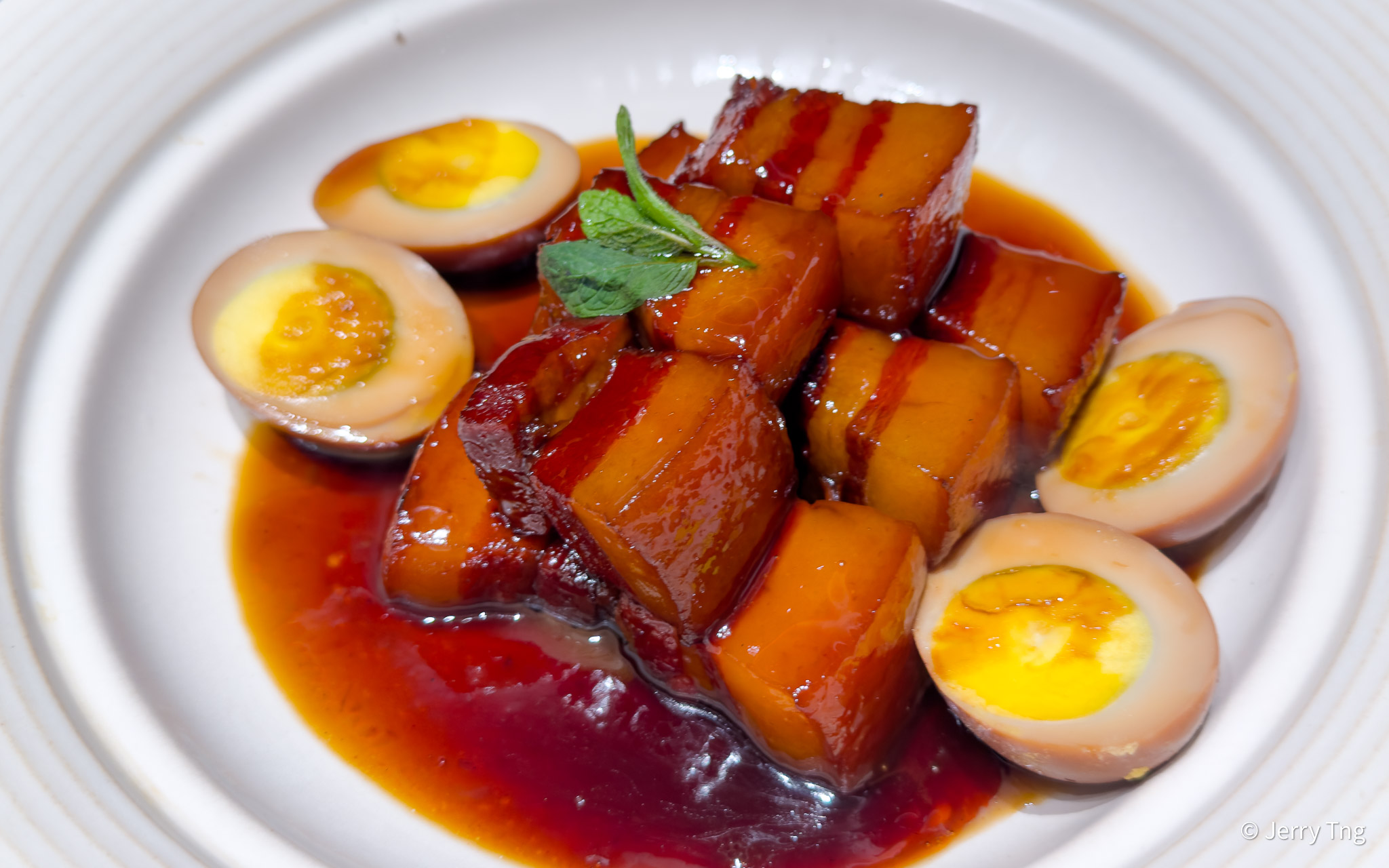
Braised Pork Belly with Kumquats 金桔红烧肉

Pork belly chunks are braised with soy sauce, rice wine, sugar and spices to create a complex taste: salty, sweet, aromatic and umami. Every restaurant has a secret recipe for their braised pork belly. Laokeren uses kumquats to give it additional fragrance and a bit of tanginess. The sauce is so good I was tempted to ask for a bowl of steamed white rice.
Braised Bamboo Shoots 油焖春笋

Braised bamboo shoots are a savoury, tender, and slightly sweet delicacy. The dish is prepared by simmering blanched bamboo shoots in a rich, caramelised soy sauce and sugar mixture until the liquid reduces into a glossy glaze.
Signature Lion’s Head 老仁客狮子头

Lion’s head 獅子頭 is a classic Huaiyang cuisine dish that features massive, tender pork meatballs that are stewed or braised alongside leafy vegetables (like bokchoy or napa cabbage). This version is cooked in clear stock made from chicken bones (Yangzhou version), instead of the braised sauce in the Shanghainese version. I like the Yangzhou version better as it is lightly and features the clear, clean tastes of the meatball. The right proportion of pork and fats melts in your mouth and the fragrance of the chicken broth follows.
Stir-fried Broad Beans 清炒蚕豆

Stir-fried broad beans are a classic springtime home-style dish from the Jiangnan region, known for their tender, bright green colour, soft, sweet, and savoury texture. The secret to its cooking lies in stir-frying quickly over high heat in hot oil, adding a touch of sugar to enhance the flavour, and sprinkling plenty of chopped scallions before serving to highlight the natural taste of the ingredients.
Home-cooked Reservoir Turtle 家烧水库甲鱼

Braised soft-shelled turtle from the reservoir is a classic hearty dish in the Jiangnan region. The soft-shelled turtle has firm meat and is rich in collagen. The “home-style braising” method emphasises “rich oil and dark soy sauce,” using the fat from the pork belly to enhance the aroma. It is served with freshly fried dough sticks dipped in the sauce, resulting in an excellent taste and flavour.
Shepherd’s Purse and Pork Wonton 荠菜鲜肉馄饨

Shepherd’s purse and pork wontons are a classic traditional Jiangnan noodle dish. Their essence lies in the thin wrapper, generous filling, and the fragrant vegetables and fresh meat. To make them, simply mince a mixture of lean and fatty pork, mix it with blanched and chopped shepherd’s purse, add eggs, salt, pepper, and other seasonings, wrap the mixture in wonton wrappers, cook until done, and serve with a clear broth.


The dumplings were beautiful end to a wonderful meal. Serving wontons at the end of a banquet as a traditional, savoury soup is a concluding palate-cleansing course before dessert. And the dessert usually is an anticlimax.

We did not order any warm desserts, so we were presented with a plate of cut fruits when we asked for the bill.

It was a well executed Shanghainese restaurant- four words, 中规中矩 “Everything by the book” – there wasn’t any surprises, nor any letdowns.
Mishi Laorenke Shanghainese Restaurant 觅食老仁客 本帮菜
上海长宁区安顺路83号名都公寓1楼
Visited Apr 2026
0 comments on “Mishi Laorenke 觅食老仁客 @ Shanghai”