
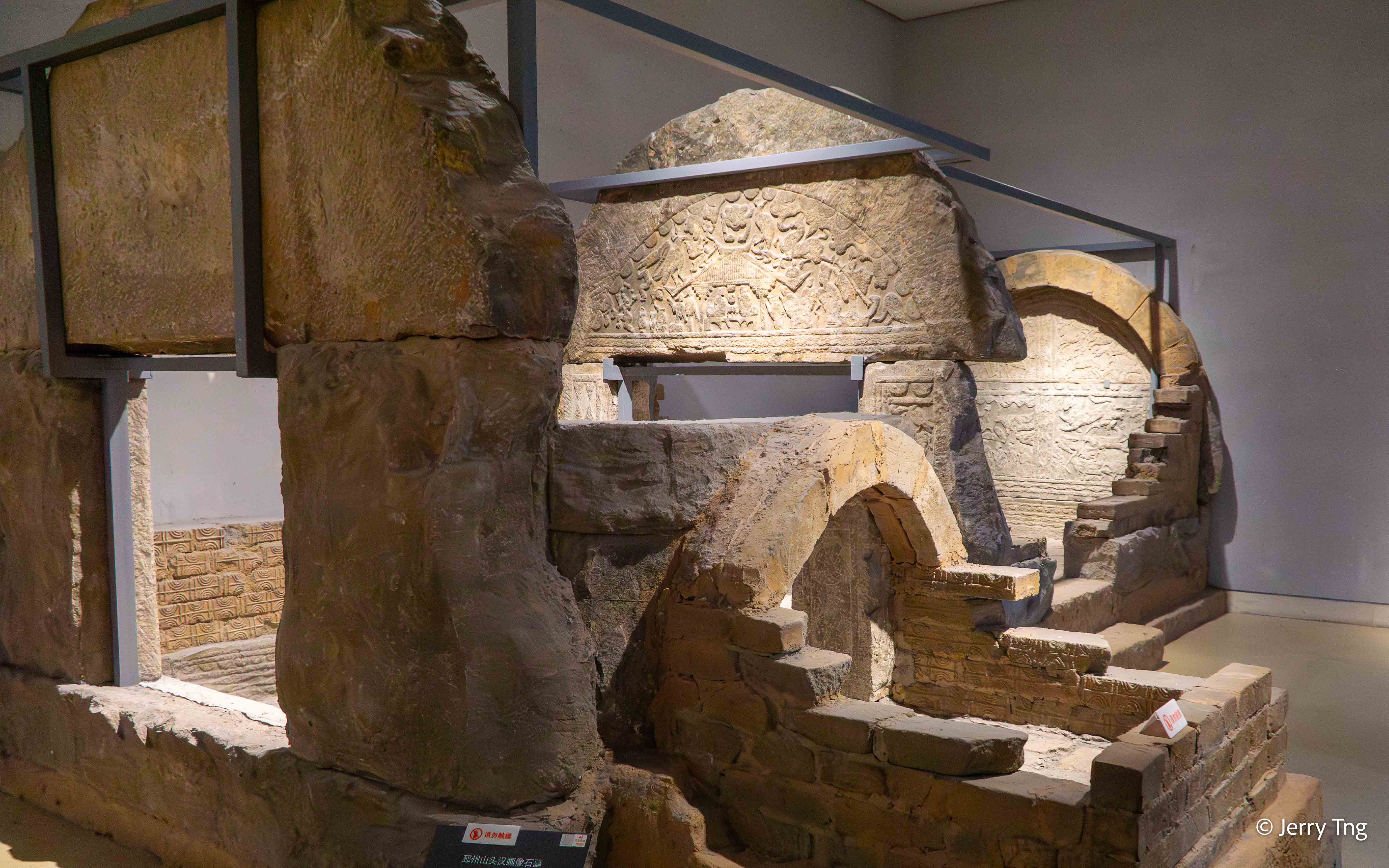
Nanjing Museum is the second largest museum in China (after the Palace Museum of Beijing) in terms of the numbers of artefacts and relics in its collection. Many magnificent and sometimes mind-blowing artefacts are displayed in the vast space of the six galleries and 23 halls of the museums that spans 130,000 sqm. Here’s a list of what I think are the highlights when I visited in Nov 2025


The museum spans six different galleries (buildings) and over 23 exhibitions of different themes. It is really confusing to navigate around the compound as everything is linked on the lower floor which is called the first floor (yes, the ground level is not the first floor, but the second floor) and the exhibits are scattered around. This list is based on the gallery/exhibition they are in, and may change according to the museum plans. Check before heading to the exhibits.
Treasures of Nanjing Museum

The Glorious Period: Porcelain Artworks in Kangxi, Yongzheng and Qianlong Reigns 盛世华彩 (Special Exhibits Gallery)
Light blue and white cup with patterns of chickens with Yongzheng mark (Set) 淡描青花鸡缸杯雍正款(组)

Porcelain | Yongzheng reign (r. 1723-1735), Qing dynasty (1644-1911) | Shenyang Palace Museum collection
瓷器 | 雍正年间(1723-1735年在位),清代(1644-1911年) | 沈阳故宫博物院藏
The renowned Chenghua doucai chicken cup is an artistic treasure among porcelains. However, many imitations from other dynasties also exist. The Tao Shuo records, “The Chenghua kiln is most famous for its wucai (five-color) wares, and among wine cups, the chicken cup is the most prized. During the reign of Emperor Shenzong, a pair of Chenghua cups was worth 100,000 taels of silver.” This demonstrates the value of the chicken cup. Therefore, imitations from the early Qing dynasty, especially those made during the Kangxi and Yongzheng periods, are considered the best. Some are exceptionally elegant with understated blue and white glazes, while others are simply plain cups without doucai enamels, appreciating their fresh and refined beauty.
This cup’s shape closely resembles a jar, small in size yet grand in form. The exterior is decorated with chicken motifs, hence the name “chicken cup.” The exterior is divided into two groups by peony and orchid motifs. One group depicts a rooster with its head held high, a hen and a chick pecking at a centipede, and two other chicks playing. The other group depicts a rooster crowing, a hen and three chicks pecking at a centipede. The scenes are vivid and full of charm.
According to the “Illustrated Records of Pottery Making”, light blue and white porcelain is drawn with a blue pigment called “chive edge”. The lines drawn do not blur under high temperature conditions. It is a fine example of Yongzheng imitation of Chenghua porcelain.1
Famille rose tray with patterns of peaches, bats and branches across the edge with Qianlong mark 乾隆款 粉彩过枝寿桃蝙蝠纹盘

Porcelain | Qianlong reign (r. 1736-1795), Qing dynasty (1644-1911) | Nanjing Museum collection
瓷器 | 乾隆年间(1736-1795年在位),清代(1644-1911年) | 南京博物院藏
This dish has a wide mouth, an arched belly, and a regular foot rim. The base is inscribed in underglaze blue with a six-character seal script mark reading “Made in the Qianlong Reign of the Great Qing Dynasty.” The shape is elegant and upright, decorated both inside and out with famille rose enamels. The center of the dish depicts a peach branch with five peaches scattered about, the colors rich and varied, the peaches vibrant and almost dripping, the branches strong and upright. Three bats with colorful wings are depicted in the center, their postures lively and graceful, echoing the two bats fluttering on the outer part of the dish, creating a charming and vivid scene. Peaches symbolise longevity, and bats are a homophone for “fortune,” making the “five peaches” and “five bats” a typical “five blessings surrounding longevity” motif, signifying both good fortune and long life, and enduring prosperity. The overall composition is rich yet elegant, the famille rose enamels soft and lustrous, making it a fine example of auspicious themes among Qianlong imperial famille rose porcelain.2
Porcelain Cotton Album with poems composed by the emperor 钻刻墨彩御題诗棉花图册

The ink-painted and engraved album of imperial poems and cotton illustrations is composed of 14.5 x 10.5 cm porcelain plates, bound in an accordion style. The set consists of two volumes, with the inside front and back covers mounted on gold-flecked paper, and the front and back bound together with rosewood. The first two porcelain plates on the album’s cover bear Emperor Kangxi’s “Ode to the Cotton Tree.” The subsequent 32 plates depict 16 lifelike cotton illustrations.


Porcelain | Qianlong reign (r. 1736-1795), Qing dynasty (1644-1911) | Nanjing Museum collection
瓷器 | 乾隆年间(1736-1795年在位),清代(1644-1911年) | 南京博物院藏
All plates are covered in white glaze with a fine wavy pattern, and each illustration consists of two plates. The right plate systematically depicts the entire process of cotton cultivation, from planting to weaving into cloth, while the left plate contains detailed text on cotton planting techniques, accompanied by a seven-character quatrain personally inscribed by Emperor Qianlong. Unlike traditional paper or silk, the porcelain album is resistant to moisture and insect damage, and even after a century, the writing remains clear and the fabric feels as good as new.3
Famille rose Zun vase with Kuilong-shaped ears and patterns of 100 deer with Qianlong mark 粉彩百鹿纹夔耳尊乾隆款

Porcelain | Qianlong reign (r. 1736-1795), Qing dynasty (1644-1911) | Nanjing Museum collection
瓷器 | 乾隆年间(1736-1795年在位),清代(1644-1911年) | 南京博物院藏
This artefact was fired during the Qianlong period of the Qing Dynasty and was a decorative porcelain made specifically for the court. The deer-head vase (hundred-deer vase) shape first appeared during the Kangxi period and was more common during the Yongzheng and Qianlong periods. During the Qianlong period, the production of famille rose porcelain became more widespread, and large pieces increased. The hundred-deer vase was a representative piece of white-ground famille rose porcelain at that time.
The name of the hundred-deer vase is related to the historical tradition of the “Mulan Autumn Hunt” in the Qing Dynasty. The Mulan Autumn Hunt was a large-scale hunting activity held by the Qing court every autumn in the Mulan Hunting Ground. From 1681 to 1820, a total of 105 Mulan Autumn Hunts were held in the 140 years from Kangxi to Jiaqing. Its decoration was later based on the “Hundred Deer Picture” by painters in Jingdezhen, integrating the royal ceremony with auspicious meanings.
The official kiln porcelain of the Qianlong period was at its highest level in the early part of the Qianlong reign, which was inseparable from the management of the porcelain supervisor Tang Ying. In 1728, Tang Ying was ordered to go to the Jingdezhen Imperial Kiln Factory to assist in the management of ceramics. He was later promoted to supervisor of ceramics, and the official kiln under his management was called “Tang Kiln”. Tang Ying died in 1756, after which the firing level of Jingdezhen official kiln porcelain began to decline. Judging from its exquisite quality, this piece is very likely to have been fired by Tang Kiln.4
While there are many examples of this vase produced, this one is identical to the one in National Palace Museum of Taipei5, making this one of the vase that when through the Southern migration of artefacts.
The Splendour Of Carved And Mother-of-Pearl Lacquerware 镂云裁月 (Special Exhibits Gallery)
This exhibition features carefully selected Ming and Qing dynasty lacquerware and East Asian lacquerware from the Nanjing Museum collection, focusing on carved lacquer and mother-of-pearl inlay techniques. It showcases the artistic expression and cultural connotations of Chinese lacquerware, and its influence on lacquerware worldwide.
Yixing clay (zisha) carved red lacquer octagonal teapot with figures and stories 紫砂胎剔红人物故事图八角壶

Lacquerware, Yixing clay | Qing dynasty (1644-1911) | Nanjing Museum collection
漆器、紫砂器 |清(公元1644年-1911年)|南京博物馆藏
The teapot is made of purple clay and lacquered in vermilion. The body and lid are decorated with a continuous “swastika” pattern as the background, symbolizing good fortune and longevity. The body of the teapot features openwork panels depicting figures from stories, with lifelike images. The teapot is crafted with a carved lacquer base, primarily made of wood, but also incorporating metals such as gold, silver, copper, and tin. Teapots with a purple clay base and carved lacquer base are relatively rare, making this a valuable material for the study of the carved lacquer technique.
Carved red lacquer box with wave and seahorse pattern 剔红波涛海马纹盖盒

Lacquerware | Qianlong Period (r. 1736–1795), Qing dynasty (1644-1911) | Nanjing Museum collection
漆器 |清乾隆(公元1736–1795年)|南京博物馆藏
The square box is lacquered in vermilion on the outside, with its body fully carved with waves and seascapes. The waves are intricately carved, surging and overlapping, converging at the center of the lid. Seahorses in various poses adorn the four corners. The bottom and interior are lacquered in black, with the inscription “Made in the Qianlong Reign of the Great Qing Dynasty” and “Zema Treasure Box” in regular script, respectively, carved and filled with gold at the top and bottom of the interior. Therefore, this box is also known as the Zema Treasure Box. The overall decorative pattern is well-balanced, with clearly defined layers of waves and seahorses, and lifelike depictions of their mane and scales.
Qing Dynasty lacquerware carving emphasized meticulous detail, resulting in dense and intricate patterns. The background and border designs emphasized continuous wealth and prosperity, exhibiting a magnificent, opulent, and ostentatious artistic style. The strokes of the knife conveyed an unparalleled sense of richness, especially during the Qianlong period.
Due to his personal fondness for lacquerware, Qianlong demanded that the lacquer layer be thick and the patterns exquisite. Against this backdrop, lacquerware production increased significantly, the carving technique reached its zenith, and the decorative themes became much richer and more diverse. At this time, the production of carved lacquerware had shifted from Beijing, the center of the Ming Dynasty, to the Jiangnan region, with Suzhou and Yangzhou becoming the main production areas. The Suzhou History Records states that “lacquerware production includes matte and glossy finishes, as well as exquisite carving of red, black, and colored lacquer.” The Records of the Workshops of the Yangxin Hall records that in the third year of the Qianlong Emperor’s reign, an imperial edict was issued ordering the Suzhou Textile Bureau to produce carved lacquerware, and subsequent edicts were continuously issued to Suzhou for this purpose. The Records state: “On the fifth day of the fifth month of the eighteenth year of Qianlong’s reign… Eunuch Hu Shijie delivered a carved lacquer round box with sea beast motifs, a cotton pad, and a wooden base. The imperial edict stated: ‘Order the south to make two identical carved lacquer round boxes.’ On the 17th day of the twelfth month of the nineteenth year, Assistant Minister Bai Shixiu transported two carved lacquer round boxes from the Suzhou Textile Bureau in Anning… and presented them to Eunuch Hu Shijie.” Emperor Qianlong greatly admired Suzhou lacquerware and even wrote an imperial poem: “The craftsmanship of Suzhou lacquerware is unparalleled; imitations may even surpass the originals. The lacquerware is made without wood or tin, and the finished product requires no carving or polishing.”7

Lacquerware | Ming dynasty (1368-1644) | Nanjing Museum collection
漆器 |明(公元1368年-1644年)|南京博物馆藏
In the Ming Dynasty, a lacquerware craftsman named Huang Cheng 黃成, based on experiences of his own and generations of craftsmen, wrote the first book on lacquer art.8 The book “Records of Lacquering” 《髹飾錄》was later annotated by another famous Ming era lacquer craftsman Yang Ming 杨明, which make it China’s only complete published work on lacquer art found to date. Ironically, the only copy to be found is now an “Important Cultural Treasure” 「國家重要文化財」 in Tokyo National Museum.
Black Lacquer Screen with Mother-of-Pearl Inlay of Pine, Rocks, and Peacock Design 黑漆嵌螺钿松石孔雀图屏风

Lacquerware | Qing dynasty (1644-1911) | Nanjing Museum collection
漆器|清(公元1644年-1911年)|南京博物馆藏
The screen is made of wood with a black lacquer base, framed with gold-lacquered mother-of-pearl inlaid grape patterns, and features a pine, rock, and peacock design on the front. The warm luster of the gold lacquer complements the brilliance of the mother-of-pearl, creating rich visual layers under different lighting angles. The peacock’s feathers are rendered with greater three-dimensionality through the layering of mother-of-pearl. The pine trees and flowers, decorated with delicate gold lacquer, evoke a sense of natural growth and vitality, perfectly complementing the colorful mother-of-pearl accents.
The use of screens began in the Western Zhou Dynasty, initially called “zhan.” They came in various forms, including folding screens, standing screens, and insert screens. From the Ming and Qing Dynasties onwards, not only folding screens were used, but also various decorative screens such as hanging screens emerged. Chinese screen culture gradually spread to East Asian regions such as Korea and Japan starting from the Tang Dynasty. Screens were also an important vehicle for the “Chinoiserie” art movement in Western Europe during the 18th and 19th centuries. This screen, formerly in the Qing imperial collection, was likely made by a Japanese craftsman and presented as a gift, or produced by the “Western Lacquer Workshop” of the Qing imperial workshops. The screen’s craftsmanship is characterized by a combination of gold lacquer maki-e and mother-of-pearl inlay, a new technique that gradually evolved in Japan after learning from and drawing inspiration from Chinese lacquerware techniques such as gold leaf painting and mother-of-pearl inlay. This technique retains the essence of traditional Chinese lacquerware craftsmanship while incorporating the aesthetic sensibilities of Japanese artisans in its details.9
Carved lacquer dish with cloud decor 剔犀如意云纹圆盘

Lacquerware | Ming dynasty (1368-1644) | Nanjing Museum collection
漆器 |明(公元1368年-1644年)|南京博物馆藏
The plate is made of wood, with a round mouth and shallow belly, supported by a ring foot. The bottom of the plate is lacquered in black, and the center is decorated with symmetrical ruyi cloud patterns, with the cloud heads connected one after another. This plate is made using the “carved lacquer” technique, specifically the “carved lacquer with black stripes” type described in the “Record of Lacquering” on the right and the “black stripes with red lines” type on the left. At the slanted cuts where the red lacquer was carved, the cross-section clearly reveals strips of black lacquer. The lacquer on the round plate is a bright and pure red, with a thick layer of lacquer. The carving technique is robust yet graceful, and the polishing is fine and smooth, concealing the sharpness. The overall decoration is fluid and natural, swirling and vivid, resembling carved clouds.

Lacquerware | 20th century | Nanjing Museum collection. 漆器|二十世纪|南京博物院藏
During the Southern Song Dynasty, carved lacquerware was introduced to Japan by Japanese monks and merchants, and quickly gained popularity among the Japanese upper class. In the Yuan Dynasty, Japan, Korea, and Ryukyu regarded carved lacquerware as an artistic treasure, with the carved red lacquerware of Zhang Cheng and Yang Mao being unparalleled. Japan highly valued and bestowed the title “Yang Cheng of Carved Red Lacquer” upon its best carved red lacquerware craftsmen, thus forming the famous Japanese lacquerware technique “Kamakura Carving.”
Black lacquer inlaid mother-of-pearl figure and story-shaped plum blossom table 黑漆嵌螺钿人物故事图梅花型几

Lacquerware | Ming dynasty (1368-1644) | Nanjing Museum collection
漆器 |明(公元1368年-1644年)|南京博物馆藏
The wooden base of the lacquered table is entirely covered in black lacquer and inlaid with mother-of-pearl. The plum blossom-shaped tabletop is decorated with mother-of-pearl inlay depicting pavilions, towers, and figures from various stories. A band around the waist is adorned with auspicious cloud and crane motifs, extending down to the apron and the rolled beaded feet, all inlaid with mother-of-pearl floral patterns. The figures and pavilions are clearly layered, their forms vivid and lifelike; the mother-of-pearl details are exquisitely detailed, and the cloud and crane motifs symbolize auspiciousness, adding to the object’s refined elegance. The floral inlays are delicate and lifelike, their vibrant colours contrasting beautifully with the black lacquer, enhancing its magnificent elegance. The overall design is dignified yet graceful, showcasing the pinnacle and unique charm of Ming dynasty mother-of-pearl inlay craftsmanship.10

Lacquerware | 20th century | Nanjing Museum collection. 漆器|二十世纪|南京博物院藏
The “Catalogue of Public Items of the Engaku-ji Temple in Kamakura” includes dozens of lacquerware pieces from the Tang to Song-Yuan periods of China. In the first, fourth, and fifth years of the Yongle reign of the Ming Dynasty, the Ming court repeatedly presented over a hundred pieces of carved red lacquerware to Ashikaga Yoshimitsu, the then Shogun of the Muromachi Shogunate, which were later inherited by the Japanese rulers. This period of carved lacquerware craftsmanship had a profound influence on the development of Japanese lacquerware, and even today, Japanese carved lacquerware works still contain numerous Chinese elements.11
Accuracy and Splendor: Splendid Clocks and Watches from Nanjing Museum’s Collections 精准与华美

The use of timekeeping devices in China enjoys a long history. As early as over 2,000 years ago, Chinese ancestors started to use devices such as gnomons, sun dials, and clepsydras to measure time. Around the end of Ming Dynasty and beginning of the Qing Dynasty, modern mechanical clocks invented by Europeans were brought to China by missionaries. In 1601, Italian Jesuit priest Matteo Ricci brought two ringing clocks to the Wanli Emperor, creating a huge sensation in the Forbidden City.

Furniture | Qianlong Period (r. 1736–1795), Qing dynasty (1644-1911) | Nanjing Museum collection
家具|清乾隆(公元1736–1795年)|南京博物院藏
In the 17th century, Emperor Kangxi collected many western scientific instruments and clocks due to his great admiration for European technologies. To gain support, Missionaries from Europe at the time often use clocks as gifts to Chinese Emperors or ministers to win their support. These clocks became the medium for Chinese people to learn about western culture. The Qing government then set a clock-making factory in Beijing while people in other cities such as Guangzhou and Suzhou started to make clocks either imitating the European models or creating their own designs.

Gilded bronze clock carried by a deer 铜镀金鹿驮钟
Furniture | (L) Qianlong Period (r. 1736–1795), (R) Qing dynasty (1644-1911) | Nanjing Museum collection
家具|(左)清乾隆(公元1736–1795年)、(右)清(公元1644-1911年)|南京博物院藏
Clocks are among the most unique and precious collections of Nanjing Museum with their combined value in practical usage and artistic appreciation. The 50 selected clocks to be displayed in this exhibition are all of high historical, technological and artistic value. They were manufactured during the time period from the 18th century to early 20th century. Some of them were made by master clock makers in countries such as the UK, France, Germany, and Switzerland while some were from the Qing imperial Clock-making Factory or civilian factories in Guangzhou; yet others feature a combination of both Chinese and Western designs.

Furniture | Qianlong Period (r. 1736–1795), Qing dynasty (1644-1911) | Nanjing Museum collection
家具|清乾隆(公元1736–1795年)|南京博物院藏
While each exhibits the special style from the culture it belonged, they all share some features such as the luxurious decoration, the delicate fabrication, and the advanced functions, all of which represent the highest standard of clock making during their times.12
Furnishings of the Qing Court 陈设清宫
Nanjing Museum, the successor of the National Museum of China in the Republic Period (1912-1949), has a remarkable collection of court art. The collection was originally from the Qing imperial palace, Fengtian Palace (Shenyang Imperial Palace), and Rehe Palace (Chengde Imperial Summer Palace), and finally settled in the museum after traveling 10 years in Yunnan and Sichuan Provinces during the Second World War. It contains artefacts of various categories and numerous styles.
Gold seal of the Imperial Prince Heshuo 御赐“和硕智亲王宝”金印

Gold | Qing Dynasty (1644-1911), Jiaqing Period (r.1796-1821)|Nanjing Museum collection
金器|清 嘉庆(公元1796—1821年)|南京博物院藏
Lasted for 300 years, the Qing was the last dynasty of imperial China, and the prelude for the transformation of Chinese society from autocratic to modern. The flourishing age from Kangxi Reign to Qianlong Reign was the most glamorous part at the end of Chinese feudal period. The Qing Dynasty went through the splendour in the 18th century and the recession in the 19th century. It witnessed uprisings of social revolution and turbulence over time, leaving behind a memorable painting scroll of history rich in colours and tastes.

Bronzeware | Qing dynasty (1644-1911) | Nanjing Museum collection 铜器|清(1644-1911年)|南京博物院藏
Though the Qing Dynasty has faded in history, its court life, featured with unique historical characteristics, is still compelling to today’s people. The ceremonial regulation, religious belief, luxurious furnishings, elegant scholar artifacts and delicate daily utensils of the dynasty are preserved. They are not only the result of Chinese classification regulation, political system, ideology, technology, academy and arts that has been cultivated for thousands of years, but also the representation of the rich Chinese traditional culture.

Bronzeware | Qing dynasty (1644-1911) | Nanjing Museum collection
铜器|清(1644-1911年)|南京博物院藏
The extremity of the perfection shows through the variety of types and materials, elegant shapes and sophisticated skills. The precious objects reflect the superior dignity of imperial power, the luxurious manner of the royal family and the exquisite aesthetic taste.
Carved lacquered throne 雕漆宝座

Lacquerware | Qing dynasty (1644-1911) | Nanjing Museum collection
漆器|清(1644-1911年)|南京博物院藏
About Nanjing Museum

Nanjing Museum, one of China’s three major museums, was founded in 1933 and originally established as the National Central Museum. It houses over 400,000 cultural relics, spanning from the Paleolithic Age to modern times. Highlights include the Han Dynasty jade burial suit and Ming Dynasty underglaze red porcelain, offering a comprehensive glimpse into China’s historical and cultural heritage. Especially notable is the museum’s enormous collections of Ming and Qing imperial porcelain, which is among the largest in the world.


The Nanjing Museum has several main exhibition halls:
- The Historical Exhibition Hall shows the history of Jiangsu Province from prehistoric times to the Qing dynasty. It includes Neolithic pottery and tools, Shang and Zhou bronze vessels, Han lacquerware and jade burial suits, Tang sancai ceramics, and porcelain from the Ming and Qing dynasties.
- The Art Exhibition Hall displays Chinese painting, calligraphy, sculpture, jade, bronze, and ceramics, showing how artistic styles developed over time.
- The Republic of China Hall covers the period from 1912 to 1949, when Nanjing was the capital. It includes documents, photographs, clothing, and everyday objects from that time.
- The Intangible Cultural Heritage Hall presents traditional crafts and performing arts from Jiangsu Province, including Nanjing Cloud Brocade and paper-cutting.
- The Digital Hall uses multimedia and interactive technology to explain history and culture.
- The Special Exhibition Hall hosts temporary exhibitions on specific themes or new discoveries.
Nanjing Museum 南京博物院
No. 321 Zhongshan East Road, Xuanwu District, Nanjing
All photos taken at Nanjing Museum Nov 2025, unless otherwise noted.
Nanjing Museum Collection

National Treasure – Picture of the Seven Sages of the Bamboo Grove (Southern Dynasties)
They were spiritual symbols of the mandarins, taking a laissez-faire approach to life, the Hippies of the 3rd century China.

National Treasure- Celadon Glazed Porcelain Zun With Design Of A Monster (Western Jin)
It looks like a child’s Play-doh creation, but it has been guarding its master’s tomb for the past 1300 years

Treasures – Liu Fei’s Jade Suit (Western Han)
勸君莫惜金縷衣,勸君惜取少年時。 Do not waste your golden robes, but cherish your youth. 《金縷衣》 杜秋娘
Something went wrong. Please refresh the page and/or try again.
Footnotes :
- 大名鼎鼎的明成化鬥彩雞缸杯是瓷器中的藝術珍品,但除此之外,還有很多他朝仿制的雞缸杯,《陶說》記載:“成窯以五彩為最,酒杯以雞缸為最,神宗時尚食御前,成杯一雙,值錢十萬。” 可見雞缸杯的價值所在。所以在清初,尤以康熙、雍正時所仿最佳,有青花淡雅者非凡,即以素杯成器,不施鬥彩,賞其清新雅逸也。
此杯的造型酷似缸,小器大樣,外壁繪雞紋,故名雞缸杯。外壁以牡丹湖石和蘭草湖石將畫面分成兩組,一組繪雄雞昂首傲視,一雌雞與一小雞在啄食一蜈蚣,另有兩只小雞玩逐。另一組繪一雄雞引頸啼鳴,一雌雞與三小雞啄食一蜈蚣,畫面形象生動,情趣盎然。
《陶冶圖記》記載:淡描青花是用一種名為“韭菜邊”的青料勾繪,繪制的線條在高溫條件下不暈散,為雍正仿成窯精品。https://www.facebook.com/mapleqiu0222/posts/清雍正淡描青花雞缸杯組南京博物院大名鼎鼎的明成化鬥彩雞缸杯是瓷器中的藝術珍品但除此之外還有很多他朝仿制的雞缸杯陶說記載成窯以五彩為最酒杯以雞缸為最神宗時尚食御前/647812861435218/
↩︎ - 此盤敞口,弧腹,圈足規整,底部青花書「大清乾隆年制」六字篆書款。器形秀雅端正,內外以粉彩裝飾。盤心繪桃枝壹束,五枚壽桃錯落分布,設色層次豐富,濃淡相宜,桃果嬌豔欲滴,枝幹蒼勁挺拔。其間三只蝙蝠彩翼紛呈,姿態靈動,與外腹翩然飛舞的兩只蝙蝠內外呼應,畫面阿娜生動。蟠桃象征長壽,“蝠”諧“福”音,所繪“五桃”“五蝠”乃典型“五福捧壽”題材,寓意福壽雙全、吉慶恒昌。整體構圖富麗而不失秀雅,粉彩發色柔媚清潤,是乾隆粉彩禦瓷中吉祥題材的上佳之作。https://ncollector.com/zh-TC/museum/79
↩︎ - 墨彩钻刻御题诗棉花图册是由14.5×10.5厘米的瓷板组合而成,采用经折式装帧,一套二本,封二、封三由金笺裱附,面和底由红木相夹。瓷册首页的两块瓷板上书写着康熙所作的《木棉赋》,随后的32块瓷板组合描绘了16幅栩栩如生的棉花图,瓷板均罩白釉,釉面呈细波浪纹,每幅图由两块瓷板组成;右板系统绘制出棉花从种植到纺织成布的全流程场景,左板则详细记录着棉花种植技术相关的文字并配以乾隆亲题的七言绝句;瓷册相较于传统的纸帛不惧潮蚀虫蛀,即使跨越百年依然字迹清晰、触手如新。https://baike.baidu.com/item/墨彩钻刻御题诗棉花图册/67093320
↩︎ - 该文物烧制于清乾隆时期,是专为宫廷制作的陈设用瓷 [4-5]。鹿头尊(百鹿尊)器型最早出现在康熙时期,以雍正、乾隆时期多见 [6]。乾隆时期粉彩制作更为广泛,大件器物增多,百鹿尊便是当时白地粉彩的代表性器物 [2]。百鹿尊的得名与清代的“木兰秋狝”历史传统有关,木兰秋狝是清廷每年秋季在木兰围场举行的大规模狩猎活动。从1681年到1820年,康熙至嘉庆的140年间,共举行了木兰秋狝105次之多 [4-5]。其纹饰后来景德镇的画师以《百鹿图》为蓝本,将皇家大典与美好寓意融为一体 [8]。乾隆朝官窑瓷器在乾隆执政中前期水平最高,这与督陶官唐英的管理密不可分。唐英于1728年奉命前往景德镇御窑厂佐理陶务,后来升任督陶官,其管理下的官窑被称为“唐窑”。唐英于1756年病逝,之后景德镇官窑瓷器的烧制水平开始衰退。从其精美的程度分析,该尊极有可能是唐窑所烧制的 [4-5]。https://baike.baidu.com/item/清乾隆款粉彩双凤耳百鹿尊/15880099
↩︎ - 洋彩百鹿雙耳尊
Zun vessel with handles and “Hundred deers” decoration in yangcai painted enamels
https://digitalarchive.npm.gov.tw/Collection/Detail/19000?dep=U
↩︎ - 壶为紫砂胎上髹朱漆,壶身与壶盖以四方连续“万字不到头“锦纹为底纹,寓意吉祥连绵,万寿无疆。壶身开光人物故事图,人物形象栩栩如生。雕漆制胎,以木胎为主,兼有金银、铜、锡等金属胎,紫砂胎制剔红漆器胎者较为罕见,是研究剔红工艺的珍贵实物资料。
The teapot is made of purple clay and lacquered in vermilion. The body and lid are decorated with a continuous “swastika” pattern as the background, symbolizing good fortune and longevity. The body of the teapot features openwork panels depicting figures from stories, with lifelike images. The teapot is crafted with a carved lacquer base, primarily made of wood, but also incorporating metals such as gold, silver, copper, and tin. Teapots with a purple clay base and carved lacquer base are relatively rare, making this a valuable material for the study of the carved lacquer technique.
↩︎ - 方形盒外髹朱漆,盒身满剔波涛海水纹,海浪雕镂层叠涌动,浪花交汇于盒盖中心,四角饰姿态各异的海马。盒底及盒内髹黑漆,盒内上下分别刀刻填金“大清乾隆年制”“泽马宝盒”楷书款,故此盒亦称为泽马宝盒。盒身整体纹饰布局疏密有致,波涛海浪层次交错分明,海马毛发鳞甲逼真生动。
清代雕漆工艺极重雕刻,刻必精细,纹饰紧密繁复,地景与边纹讲究“富贵不断头”,艺术风格华丽璀璨、奢华张扬,刀笔起落间说不尽的富贵,尤其以乾隆时期为典型代表。
乾隆因其个人对雕漆的嗜爱,要求雕漆“漆层要厚,花纹要精”。在此背景下,雕漆产量大幅增加,雕刻工艺达到鼎盛状态,纹饰题材也更为丰富多样。此时,雕漆的制作已经由明代以北京为中心转移到江南,苏州、扬州等地成为雕漆制作的主要地区。《苏州史志》记载“漆作,有退光,明光,又剔红、剔黑、彩漆兼精”。《养心殿造办处各作成做活计清档》记载乾隆三年始开始降旨苏州织造府制作雕漆,并在此后不断下旨苏州制作雕漆漆器。《清档》载:“乾隆十八年五月初五…太监胡世杰交雕漆海兽圆盒一件,棉垫木座。传旨:着南边照一模一样做雕漆圆盒二件,钦此。”于十九年十二月+七日,员外郎白世秀,将苏州织造安宁运到雕漆圆盒二件…..持进交太监胡世杰呈讫。”乾隆对苏州漆器赞赏有加并有御题诗:“吴人髹工巧莫比,仿为或比旧还过,脱胎那用木和锡,成器奚劳琢与磨。”
↩︎ - Tsai Wen-ting/tr. by Jonathan Barnard. “In Search of Lacquer’s Lustrous Past“, June 1998. https://www.taiwan-panorama.com/en/Articles/Details?Guid=c2662bd9-b7a0-4452-995c-b3afd3a66482&CatId=8
↩︎ - 黑漆嵌螺钿松石孔雀图屏风
屏风为木胎,黑漆为底,边框饰金漆螺钿葡萄纹,正面为松石孔雀图。金漆光泽温润,与螺钿的绚丽交相辉映,屏风在不同光线角度下呈现出丰富的视觉层次。孔雀的羽毛通过螺钿的堆叠,更具立体感。松树与花草的装饰,则通过金漆的细腻堆砌,营造出一种自然生长的生机感,与彩色螺钿的点缀相得益彰。
屏风的使用在西周时期就已开始,最早称为“展”。有围屏、座屏、插屏等形制之分,明清开始不仅使用围屏,又衍生出挂屏等装饰特性的各类屏风。中国的屏风文化从唐代开始逐渐向韩国、日本等东亚地区传播。屏风也是18至19世纪西方欧洲“中国风 艺术思潮的重要载体。
此件屏风为清宫旧藏,应为日本匠人制作后进献或为清宫造办处“洋漆作”制作。屏风工艺特点为金漆莳绘和螺钿结合,是日本学习借鉴中国描金、螺钿等漆器工艺后逐渐衍变出来的新工艺,此工艺既保留了中国传统漆器工艺的精髓,又在细节处理上融入了日本本士的审美意趣。
↩︎ - 漆几內木胎,通体施黑漆,遍饰螺钾。梅花形几面以螺钿嵌亭台楼阁人物故事图,束腰一周环饰如意云鹤纹,束腰下至牙子及卷珠足处,满嵌螺钿花卉纹。人物亭阁层次分明,造型生动传神;螺钿细节精妙入微,云鹤纹饰寓意祥瑞,平添器物文韵。花卉嵌饰细腻逼真,斑斓色泽与黑漆相映,愈显华美典雅。整体造型端稳而不失灵秀,尽显明代嵌螺钿工艺所臻之极境与独到意趣。
↩︎ - 南宋时期,雕漆漆器经日本僧人及商人传入日本,并很快受到日本上流社会的推崇。元代,日本、高丽、琉球等地区视雕漆漆器为艺术瑰宝,元代张成和杨茂的剔红漆器冠绝一时。日本十分推崇向本国剔红做得最好的工匠赐予“堆朱杨成”的称呼,在此基础上形成了日本著名的漆器工艺“镰仓雕”。镰仓圆觉寺《佛日庵公物目录》收录了中国唐至宋元时期的漆器数十件。明代永乐元年、四年、五年明廷多次赠送给当时的室町幕府将军足利义满雕漆剔红漆器百余件,后为日本统治者所继承。这一时期雕漆工艺对日本漆器工艺的发展产生了深远影响,时至今日,日本的雕漆作品中仍然有大量的中国元素。
↩︎ - 精准与华美——南京博物院藏钟表精品展
中国计时器的使用有着悠久的历史。早在2000多年以前,我们的祖先就已经开始使用圭表、日晷和漏壶等计时器。明末清初,随着欧洲传教士的到来,由欧洲人发明的现代机械钟表被带到了中国。1601年,意大利传教士利玛窦向明神宗万历皇帝进献了两座自鸣钟,在当时的宫廷内引起了轰动。至十七世纪,清康熙帝倾慕欧洲的科学技术,收集了许多西洋的科学仪器和各类时钟。当时,来华的欧洲传教士都把西洋钟表当作礼物献给中国皇帝或王公大臣以求得支持,西洋钟表在当时已经成为中国人认识西方文化的一个重要媒介。受此影响,清政府设置了做钟处,广州、苏州等地亦纷纷模仿西洋钟或创新制造机械钟表。
钟表是南京博物院丰富藏品中特殊与珍贵的种类,是极致的实用品,也是高贵的艺术品。此次展出的五十件中外机械钟表具有很高的历史、科技和艺术价值。制作年代从十八世纪至二十世纪初,其中既有英国、法国、德国、瑞士等名家之作,也有清宫做钟处和广州的精品,还有一些中西合璧的产物。尽管各自的文化背景决定了它们以不同的造型出现,但装饰华贵,制作精美,功能复杂是其共性,代表了当时钟表制造的最高水准。
↩︎
0 comments on “Treasures of Nanjing Museum – Special Exhibitions Gallery”