
It’s summer and I wanted to experience the noryoyuka (納涼床) at Pontocho. I went rather early to avoid the dinner crowd, but as it was raining the entire day, none of the platforms was opened. So I started looking for a restaurant that was stills serving the other sign of summer – ayu (sweetfish).

Pontocho (先斗町) is a narrow, highly atmospheric pedestrian alley in central Kyoto, famous for its traditional wooden buildings, nightlife, and riverside dining. Dining at a “noryo-yuka” (in Kyoto) or a “kawadoko” (at Kibune) where you can enjoy meals in the cool breeze blowing across the water is a perfect way to enjoy Kyoto’s hot summers.


Shun Cuisine Hinaka is located in Pontocho, an area lined with restaurants along the Kamo River near Shijo-Kawaramachi; you reach it by walking down a narrow alleyway between buildings. Although 1 arrived right when they opened, the place filled up quickly. In fact they had to accommodate me because they had a full booking that night. But I assured them I will be done before the party came.


It’s the kind of place that makes you want to keep drinking, very easy vibes and accommodation got lone diners like me, offering a variety of seasonal delicacies—including Kyoto staples like yuba (tofu skin) and hamo (pike eel)—prepared in diverse ways. But I wasn’t there for hamo.

This is something I look forward to every summer. Salt-grilled sweetfish is a simple delicacy featuring a river fish that epitomises early summer. Although modern aquaculture means that ayu is now available throughout the year, but they are mainly eaten during summer in Japan. Strangely, the fish innards become clean during this time of the year. Before eating, gently press the entire body with your chopsticks to loosen the bones. You can eat the whole thing—head, bones, and innards included.

Young sweetfish tempura is a delicacy of early summer, prized for its subtle bitterness and crispy texture. You can enjoy the entire fish—head, bones, and all. I was lucky that it was still available so late into summer. This is also one of my favourite Japanese food.


Soft-boiled eggs (onsen tamago) and shutō (salted, fermented fish viscera) make a superb pairing, where the mellow richness of the egg yolk perfectly complements the intense umami and saltiness of the fermented fish innards. This combination is highly popular not only as a snack to accompany sake but also as a topping for rice. I was surprised it was served cold, but it was still very nice served cold.


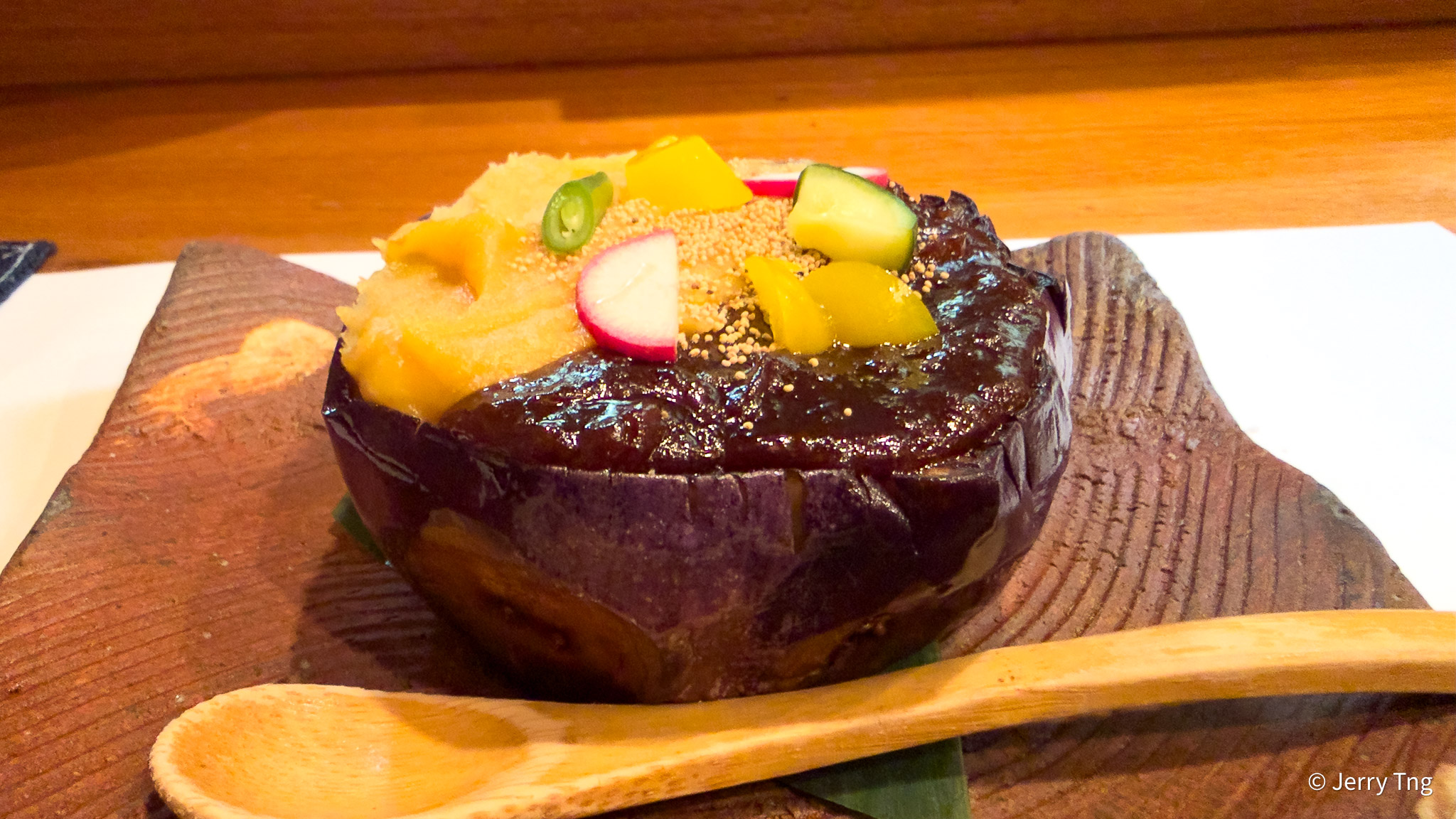
This is a shallow-fried half kamo-nasu with sweetened miso paste (aka dengaku) on it. Kamo-nasu is a fat rounded eggplant which is a popular summer vegetable originated in Kamigamo and Nishikamo area in Kyoto. This eggplant is famous for its fleshy texture and juiciness. Kamo nasu dengaku is a dish that makes the most of this special eggplant. This dish is served from early July, and often served at traditional Japanese restaurants during Gion-festival in July.

Subuta (酢豚) is a popular, Japanese-style sweet and sour pork featuring crispy pieces of pork and crunchy vegetables glazed in a savoury, tangy tomato-based sauce. The main difference between Japanese subuta and Chinese Gu Lao Rou (咕咾肉) lies in the flavour balance, the specific ingredients used, and the cooking technique. The pork for the Japanese version is still tender crisp, but the Chinese version has a really crispy crust. And the Chinese version is much more tangy with more vinegar and plum sauce.

Tai no kabutoyaki is a traditional Japanese dish of a whole, salt-grilled sea bream head, served with a lemon wedge, grated radish (daikon oroshi), pickled ginger root (hajikami), and seasoned green beans. It is a popular, high-impact item served in izakayas and restaurants, often highlighting a “mottainai” (waste-not) philosophy by utilising the entire fish, especially the tender, flavourful meat found around the cheeks and eyes. I usually would ask for this if tekka maki was not available as my final course.

A little surprise – when I asked for a highball, the chef/owner recommended that I try this special Kyoto whiskey; it had aromas of sweet vanilla, dried fruit, and a faint hint of spice or smokiness. I enjoyed it so much that I asked for a double shot on the rocks. THat’s why I said this place will keep you drinking. Reservation recommended.
Shun Ko Hinaka 旬肴 ひなか
214-1, Nabeyacho, Nakagyo, Kyoto, Kyoto, Japan
京都府京都市中京区先斗町通四条上る鍋屋町214-1 朝日先斗ビル 1階奥
Tel : +81 (075) 231 5525
Visited Sep 2026
PS: Here’s what I was missing.
0 comments on “Hinaka ひなか @ Kyoto”