
Part 2 – Funeral Beliefs and Practices
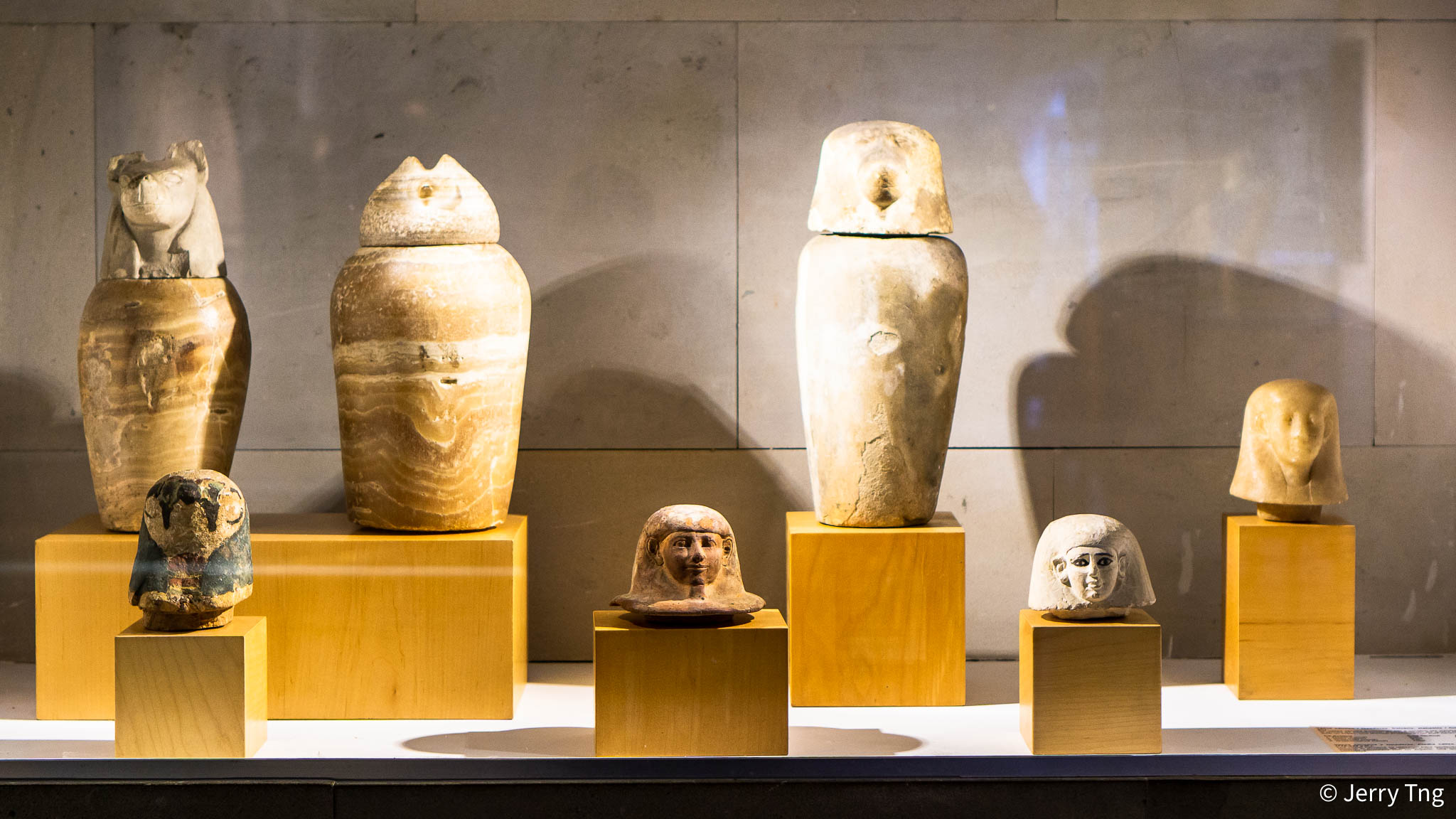
This interesting space contains the main protagonists in the myth of Osiris, the mummy of the Lady of Kemet, canopic jars and some mummified animals.


The Egyptians considered death on Earth a temporary interruption, since human beings could live forever. This privilege, which initially applied only to the most important members of society, was gradually extended to everyone in the country.


From a ritual perspective, mummification was the process that most influenced the possibility of eternal life. Similarly, the individual had to have a tomb or home for eternity that would hold their mummy, sufficient equipment for their subsistence and an area of worship.


However, all of these preparations were for nothing if the soul of the deceased did not receive a favourable judgement from a tribunal presided over by Osiris, the lord of the dead. This judgement assessed the rectitude and virtue of the person. If the decision was favourable, access to immortality was guaranteed. If not, the deceased was guaranteed to die.
Funeral Facilities
Within funeral chambers, sarcophagi, canopic jars and amulets remained in direct contact with the mummy. Around them, there could be figures of divinities, ushabtis or funeral models.


Egyptian tombs can be considered veritable permanent homes for the deceased. The form and size of pyramids, mastabas, rock tombs, etc. varied as a function of the status of their owners and of the evolution of structures over time. One characteristic that is shared by virtually all funeral facilities is the existence of two areas that are perfectly differentiated from a functional and topographic perspective: the area containing funeral facilities and the area for worship.


The mummy is the most important item in the funeral facilities area. It was protected by sarcophagi made using different materials and in different shapes. The possessions that accompanied the deceased included amulets of all types to guarantee the well-being of the deceased in the afterlife.


Canopic jars, ushabtis, representations of funerary divinities, models of events on Earth, food, etc. are the objects most commonly found in the sepulchral equipment of pharaonic tombs.
Wall relief of Mummification Scene
Painted limestone. It was part of the burial chamber of a tomb.Ptolemaic Period (304-30 B.C.)
Wall of a vault chamber integrated by ten original slabs and eight restituted ones. It preserves punctual remains of painted stucco (feet of the mummy, Isis’s garment, low part of the garment of the goddess Neftis…).

The mummified body of the owner of the tomb is in the middle of the picture; he lies on a funeral lion-shape bed on. The goddesses Isis and Nephthys, whose role is essential in the preparation of the mummy, appear in adoration gesture to the head and to the feet of the bed, respectively. The ba (spirit) of the deceased flies over the mummy (in which he can enter and go out) holding with the claws the symbol shen (eternity). Under the bed are the four canopic jars, containers intended to protect the entrails of the deceased.
0 comments on “Barcelona’s Egyptian Museum”