
Part 3 – Daily Lives of Ancient Egypt

(5) Moulds for the manufacture of spherical pieces and floral elements. Steatite. New Kingdom (1550-1070 BC).
Jewellery


Amulets, collars, breastplates and rings made from gold and precious stones… beautiful, luxurious creations whose magical powers must have benefited the persons wearing them.


Egyptian civilization is notable for its many material creations left to posterity. Labourers, artisans and artists used all of their expertise to create architectural constructions and objects that now arouse widespread interest and admiration. In creative activities such as jewellery making and stonework the quality of Egyptian products was without equal, with these products the clearest indication of their sophisticated culture and mastery of the different techniques used.


With the magical nature of jewellery, the design of which was inspired by divine symbols and entities, the Egyptians hoped to improve or correctly resolve issues relating to life on Earth and the afterlife.
Stone and Earthenware
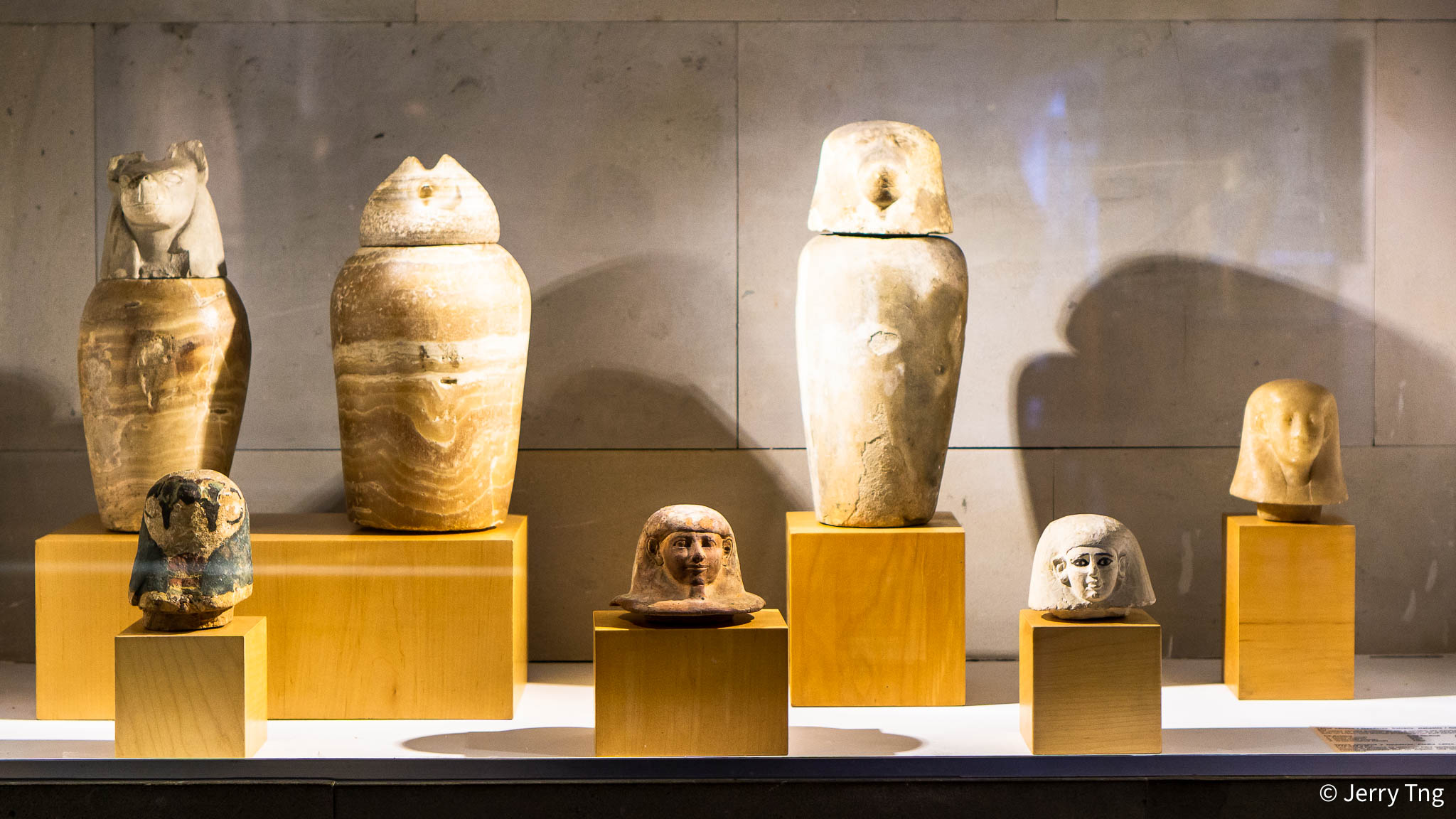
The Egyptians made tableware mainly from mud, stone and metal. The tableware embodies a very wide range of forms and functions, and was used in contexts relating to everyday life and funerals.

Alabaster. 1st-2nd Dynasties (2920-2575 B.C.).
Alabaster and greywacke. Nagada III-5th Dynasty (2575-2323 B.C.)
Granodiorite. 1St-3rd Dynasties (2920-2575 B.C.).
Offering platter. Alabaster. 2nd Dynasty (2770-2649 BC).
Jars for ointments. 5th-6th Dynasties (2465-2150 BC).
Alabastron bowl and vase. Alabaster. Late Period (715-332 BC).
In the Predynastic Period work in stone and ceramics reached a technical and aesthetic peak scarcely to be surpassed in the Pharaonic era. Stonework figured as the more deluxe tableware, with ceramics relegated to a secondary position. It was with these creations, especially in the hardest stones, that the Egyptians learned and practised the working techniques that they would then apply on a grand scale and with unparalleled mastery in their sculptural and architectural achievements.
Cosmetics And Eroticism
Vessels for ointments, pots of kohol, pallets for preparing cosmetics, etc. are some of the items that demonstrate the attention and care the Egyptians took of their bodies.


The attention and care the Egyptians paid to their bodies is clear from the large number of objects and products related to cosmetics that they used. This sense of aesthetics, which was essentially aimed at increasing the attractiveness of men and women, was not totally devoid of a certain sense of eroticism.


The erotic-sexual representations depicted and texts written are not common in Egyptian art and literature, but rather a direct form of mass art. The most explicit examples have no place in what is considered official art, where allusions to this subject were made through graphic metaphors or very subtle plays on words.
0 comments on “Barcelona’s Egyptian Museum”