
Part 4 – Gods Of Egypt
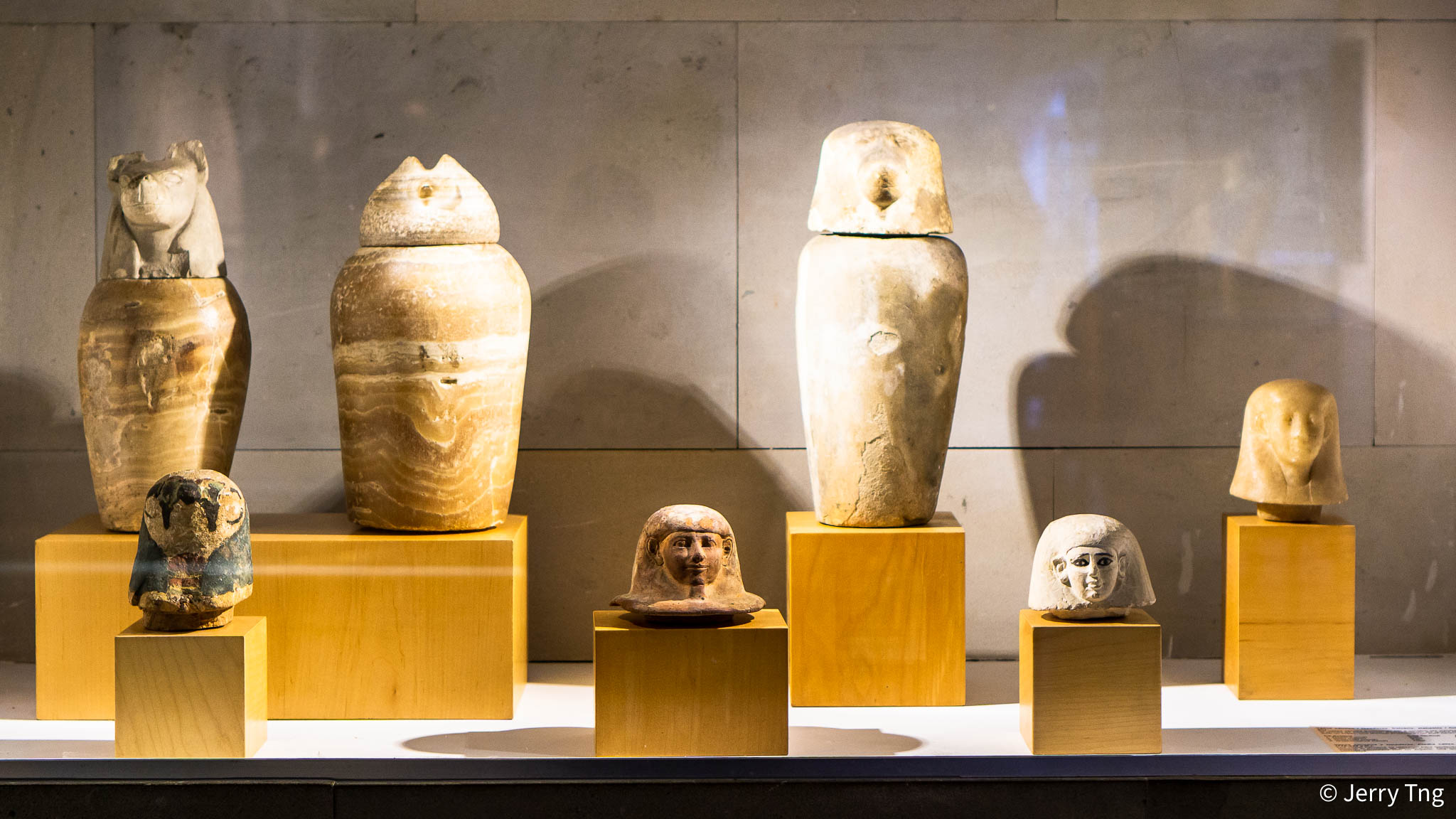
A broad sample of divinities, grouped together according to holy trinities or production technique or presented individually for their aesthetic and technical quality, complete the journey through the Egyptian Museum of Barcelona.


Thousands of gods were worshipped in Egypt under the pharaohs. These cannot be structured in an all-encompassing genealogy, since theological systems grouped together a small number of divinities. The most common formula was the triad. Triads consisted of a main god, his wife and their child.


However, the Egyptians also configured complex theologies onto which they transposed their concept of the cosmos and of creation. The most notable of these include those prepared by priests in Heliopolis, Hermopolis, Memphis and Tebes.


One of the most characteristic facets of the religious worship of the ancient Egyptians was their worship of certain animals, which is clearly reflected in their art.


These divinities were always related to some process of observation of nature, transforming these beings into the incarnation of God. Thus, the hippopotamus, with its large stomach, was associated with pregnant women, while the falcon, with its powerful flight that took it close to the Sun, was worshipped as a celestial and solar being.
Worship In Temples
In ancient Egypt temples were conceived as the home of the gods, the most suitable place for worship. Temples contained wall reliefs from temples, steles, votive figures and liturgical instruments.


The Egyptian temple was conceived as the home of the gods, a suitable place for worship. Through worship humans had to maintain the cosmic order, showing their appreciation for this order allowing them to inhabit the Earth. Originally, the pharaoh was the only being who could be considered akin to God but the laboriousness of rituals (which had to be performed daily) and the large number of temples in Egypt led to these tasks being delegated to priests. God had to be fed several times a day and was washed, dressed and purified, and chants and litanies were proferred by priests.
0 comments on “Barcelona’s Egyptian Museum”