

The geographical location and the harsh climates make Mongolians tough and adaptable to all kinds of conditions their surrounding throws at them. And the way they live is unique.
Hall 6 of National Museum of Mongolia displayed artefacts showing the features of Mongolian traditional farming, Mongolian gers, livestock tools, hunting tools, household tools and exhibits related to traditional nomadic farming are located in the hall. Mongolians are nomadic people who have been herding livestock. Along with animal husbandry, Mongolians have been engaged in auxiliary types of agriculture, such as hunting, planting crops and developing home production.
Table of Contents
Traditional Dwelling of Mongolia – The Ger

The Mongolian ger is a round structure of walls, poles and a peaked roof covered with canvas and felt, and tightened with ropes. It is light enough for nomads to carry; flexible enough to fold and pack; and sturdy enough to be dismantled and reassembled.

For its peculiar dwelling of nomadic herders, Mongolia has been called “Esgii Tuurgatan” meaning “felt dwellers” for the longest time. The ger, or yurt, consists of two kinds, Tureg and Mongolian which differs considerably from each other.


This traditionally developed into Mongolian ger which has roof, rafter and section of walls. The ger has many advantages, very light, easy to construct and taken down, and the stove easily warms up the ger in the cold season.
The Kazakh living in the Altai mountain range live in Tureg ger and few reindeer people (Tsaatan people) dwell in the tent. The Buriat and Khamnigan people of northern region live in wooden houses. During hunting and travelling people usually carry tent for temporary dwelling.
Customs Inside A Ger

The right side of the ger is designed for guests to come in and sit, while the left side is for the woman in a family with kitchen facilities. The northern centre of the ger is for the man of the family. It is also where the most important items of the family are kept: like religious items, family photos etc. At the centre of the ger is where the fire/oven is. Mongolians consider fire as the base of a family, so it is one of the most important sections of the ger. Visitors come in and leave in clockwise direction.


There are some actions forbidden to do in ger such as whistling; walking, giving or receiving things in between the columns; standing on the base of the door; stepping over tea and food on the floor etc. These are believed to bring bad luck.
Writing Ger of Dashdorjiin Natsagdorj
Traditional ger with furnitures | 19th-Mid 20th Century | National Museum of Mongolia

The writing ger has a small compact space with roof poles which connected to the crown wheel, four walls and a window opposite of the entrance. Together with the ger, thick stitched felt rug, an altar, a drawer, a desk, a scripture, and stationery are one sets. The writing ger is one of a kind of Mongolia ger monuments, having hosted some of most prominent illuminati.

Esteemed poet, writer and patriot Dashdorjiin Natsagdorj (1903-1937) lived in this writing ger in Dariganga. When Geleg Guushi, reverent monk of Bandida Gegeen Süme (Beizimiao 貝子廟) in Inner Mongolia, came to Dariganga in the 1940s, composer Danzangiin Dugarsuren (1925-) gave him the ger which he inherited.
About Dashdorjiin Natsagdorj (1903-1937)
Dashdorjiin Natsagdorj (1903-1937) was a Mongolian poet and writer. He was also the founder of the Mongolian Writer’s Union and is considered one of the founding fathers of modern Mongolian – one of the pioneers of modern Mongol literature. He is the author of one of the most famous Mongolian poems – ‘Minii Nutag – My Homeland’ (1933) which celebrates the natural beauty of Mongolia.

Natsagdorj wrote poems, short stories, and dramas, and has been described as an exponent of “socialist realism” and Mongolia’s “first classic of the socialist period”. His best known work is Three Fateful Hills (Uchirtai gurvan tolgoi; 1934), an opera about the 1921 revolution which is still popular and performed today. Presented in verse strongly reminiscent of folk poetry, it has the common revolutionary theme of a young couple’s love thwarted by tyrannical lords. Its tragic ending was rewritten after Natsagdorj’s death to accord with revolutionary optimism.
High stately mountains Khentei, Khangai and Soyon,
Forests and thick-wooded ridges-the beauty of the North,
The Great Gobi desert-the spaces of Menen, Sharga and Nomin,
And the oceans of sand deserts that dominate the South;
This, this is my native land,
The lovely country – My Mongolia.The crystal rivers of sacred Kherlen, Onon and Tuul,
Brooks, streams and springs that bring health to all my people,
The blue lakes of Khovsgol, Uvs and Buir-deep and wide,
Rivers and lakes where people and cattle quench their thirst;
This, this is my native land,
The lovely country – My Mongolia.The most beautiful rivers of Orkhon, Selenge and Khukhui,
Mountains and passes-the source of metals and stone,
Ancient structures and ruins of towns and fortresses,
Roads and highways running to distant countries;
This, this is my native land,
The lovely country – My Mongolia.The high crowns of snow-capped mountains shining from star,
The endless virgin landscape under the clear blue sky,
The noble summits seen standing in the distance,
And the unbounded fields where one’s soul at last finds peace;
This, this is my native land,
The lovely country – My Mongolia.The vast land of Khalkha among the deserts and highlands,
Land where we rode along and across from the green days of our youth,
Towering mountain chains where deer and wolf are hunted,
And the finest valleys where splendid horses run;
This, this is my native land,
The lovely country – My Mongolia.The land of pure grasses waving in the breeze,
The land of open steppes full of fantastic mirages,
Firm rocks and out-of-reach places where Good men used to meet,
And the ancient ovoos-the cairns to gods and ancestors;
This, this is my native land,
The lovely country – My Mongolia.Land of pasture heavy with grass thin and pure,
Country where all may ride and drive at will,
Country where people live freely in all seasons of the year,
And the land of fertile soil, the five grains that grow,
This, this is my native land,
The lovely country – My Mongolia.The finest mountains-the cradles where our ancestors lie,
Where we grew up and flourished,
The land where five kinds of animals wander in the plains,
And the land saturated with the soul generations of Mongols;
This, this is my native land,
The lovely country – My Mongolia.Land where all is covered with snow and ice in winter,
And the grasses twinkle like glass and crystal,
Land where all is a carpet of flowers in summer,
And full of songbirds from the distant lands of the South;
This, this is my native land,
The lovely country – My Mongolia.The rich land between the Altai and Khingan mountains,
The land where my father and mother lived and blessed for us in their passing,
The land peacefully growing under the golden Sun,
And sparkling forever under the silver Moon;
This, this is my native land,
The lovely country – My Mongolia.Land of my ancestors from the time of the Hun and Sung,
Glorious land where might of the Blue Mongols was felt,
Land that has fitted us since the morning of time,
And the land overspread by Red Banner of New Mongolia;
This, this is my native land,
The lovely country – My Mongolia.Homeland, known from birth and growing up, is land that we dearly love,
‘Minii Nutag – My Home’ by Dashdorjiin Natsagdorj (1933)
With every invader we turned back at the very gates,
Let us increase the might of our new-born people,
And on our merits build a newer world,
This, this is my native land,
The lovely country – My Mongolia.
Composition by D. Dugarsuren – Overture “The Revolution of 1921”
Nomadic Lifestyle
National Museum of Mongolia has a rich collection of saddles, reins and other unique and masterful pieces of equine gear.

For centuries handcraft masters of different regions and localities had been competing with each other making best and distinct saddles and reins which have led to evolving of various craftsmanship styles and forms known by names of localities or local brands in modern terms. Most well-known are Batnorov, Dariganga, Dalaichoinhor, Khuree, Noyon Sevrei and Western Mongolian style of craftsmanship.
Decorative Silver Crupper
Leather, silver | 19th-20th century | National Museum of Mongolia

Mongolian saddle, reins, crupper, breastplate and whips are truly pieces of elaborate and unique art with silver embossed decorative pieces showing both great respect of Mongolians towards horse and social status and wealth of the owner, and is regarded as the attributes of a successful masculine culture.
Fashionable Saddle of Nobleman
Gilded gold, iron, velvet | 20th century | National Museum of Mongolia

Saddle and reins used by Mongolians carry information about the ethnic belonging and historical culture, and skills and talent of the craftsmen that made them.
High Rank Lama’s Saddle
Silver, velvet, silk, felt, wood, leather, iron | 19th-20th century | National Museum of Mongolia
Saddle
Felt, wood, leather, iron | 19th-20th century | National Museum of Mongolia


Following the spread of Tibetan Buddhism to Mongolia during the 17th century, religious gear and accessories used by monks acquired distinctive styles with particular meanings. These included saddles and bridles to be used by saints and high ranking monks, with special workmanship and techniques applied to convey religious meanings and symbols.
Horse Scraper and Brush
Wood, bamboo, horsehair | 19th-20th century | National Museum of Mongolia
Whips
Wood, leather | 20th century | National Museum of Mongolia

Gears and Costumes for the Naadam Games
Miscellaneous | 19th-20th century | National Museum of Mongolia

Mongolian Naadam is inseparably connected to the nomadic civilisation of the Mongols, who have long practiced pastoralism on Central Asia’s vast steppe. Naadam is a national festival celebrated every year from 11 to 13 July across Mongolia that focuses on three traditional games: horseracing, wrestling and archery.
The three types of sports are directly linked with the lifestyles and living conditions of the Mongols and their transmission is traditionally undertaken through home-schooling by family members, although formalised training regimens have recently developed for wrestling and archery. The rituals and customs of Naadam also accentuate respect for nature and the environment.
Mongolians follow special rituals and practices during the festival, such as wearing unique costumes and using distinctive tools and sporting items. Festival participants revere the sportsmen, sportswomen, and children who compete, and winners are rewarded titles for their achievements. Ritual praise songs and poems are dedicated to the contestants in the events. Everyone is allowed and encouraged to participate in Naadam, thus nurturing community involvement and togetherness.
Living in a Ger

Wooden Containers for Keeping Milk Products, Leather Containers
Wood, copper, brass; Leather | 20th century | National Museum of Mongolia

Dipper, Ladle and Buckets for Milk Products
Wood, leather, copper | 19th-20th century | National Museum of Mongolia

Copper Teapots, Mortar and Pestle for Tea Bricks
Copper, brass; Wood | 19th-20th century | National Museum of Mongolia

Wooden Dombo, Tevsh, Dish
Wood | 20th century | National Museum of Mongolia

Dombo is a traditional Mongolian teapot for making milk tea called suutei tsai. Tevsh is a dish for serving meat.
Farming for the Nomads
Only roughly 1 percent of Mongolia’s land area is used to grow crops. Production is concentrated in the wetter northern parts of the country, particularly in the broad lower valleys of the Orkhon and Selenge rivers.

Because of the long cold winters, only a single annual crop is possible. About three-fourths of the cropland is sown with grains—primarily spring wheat but with some barley and oats—and the rest with potatoes, fodder crops, and such vegetables as cabbage and carrots. Yields are relatively low and vary greatly from year to year. In most provinces, hay is produced for feeding livestock in winter, and emergency stockpiles are maintained.
Mechanical Winnowing Machine
Wood | 19th century | National Museum of Mongolia

During the socialist period, production of grains and vegetables was centred on the larger state farms, which also kept some livestock. These farms were disbanded in the 1990s and largely replaced by machinery-owning agricultural companies for grain production and private farmers for growing vegetables for the main urban areas.
Khodoodon Gur (Fishing Trap)
Willow | 20th century | National Museum of Mongolia

Fish (and largely seafood) is not a staple of the Mongolian diet. Only a small quantity of freshwater fish is landed annually. There is no aquaculture in Mongolia.
Traditional Crafts

Much of Mongolia’s manufacturing still centres around processing domestic raw materials. Products include foods (meat, beverages, dairy products, and flour); clothing made from cashmere, wool, hides, skins, and furs; and wood products such as ger frames and furniture.
Mechanical Weaving Machine
Wood | 20th century | National Museum of Mongolia

About National Museum of Mongolia

National Museum of Mongolia is an ideal place for those who are eager to discover the origins of Mongolian history, culture and tradition. It showcases over 6,000 pieces artefacts dated from pre-historic time to present-day Mongolia.
History of the Museum
1924 : Central Museum

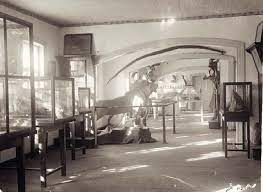

Mongolia’s first museum opened to the public in 1924, but that was the precursor to Natural History Museum (which was confusingly called National Museum). The collections started at that time were for a natural museum, but that building no longer exists.
1956 : State Central Museum

In the socialist period, history, natural environment, palaeontology and Mongolian art collections were moved into a renamed State Central Museum built in 1956.
1991 : National Museum of Mongolian History

Between the late 1980s and early 1990s, Mongolia began to transform toward democratic policies and an open-market economy. This led to the redevelopment of museum management and reopening of some earlier museums. In 1991, the National Museum of Mongolian History was established by merging the collections of two museums: the State Central Museum and Museum of Revolution.
In 2008, the National Museum of Mongolian History was elevated to the status of the National Museum of Mongolia. The present building was built in 1971, originally as the Museum of Revolution.
List of Exhibits

The museum consists of three storeys and 9 permanent and 1 temporary exhibition halls.
- First hall: Ancient Mongolia
- Second Hall: Xiongnu Empire and Ancient Kingdoms
- Third Hall: Traditional Clothing and Ornaments
- Fourth Hall: Mongolian Empire
- Fifth Hall: Traditional Culture
- Sixth Hall: Traditional Farming
- Seventh Hall: 17th-early 20th century
- Eighth Hall: Socialist Mongolia
- Ninth Hall: Democratic Mongolia
Opening Hours
- Summer (15 May – 15 Sep) 7.00am – 9.00pm
- Winter (16 Sep – 15 May) 9:00am – 6.00pm
- Closed on Mondays
Visited May 2023
0 comments on “National Museum of Mongolia – Traditional Dwelling and Livelihood”