
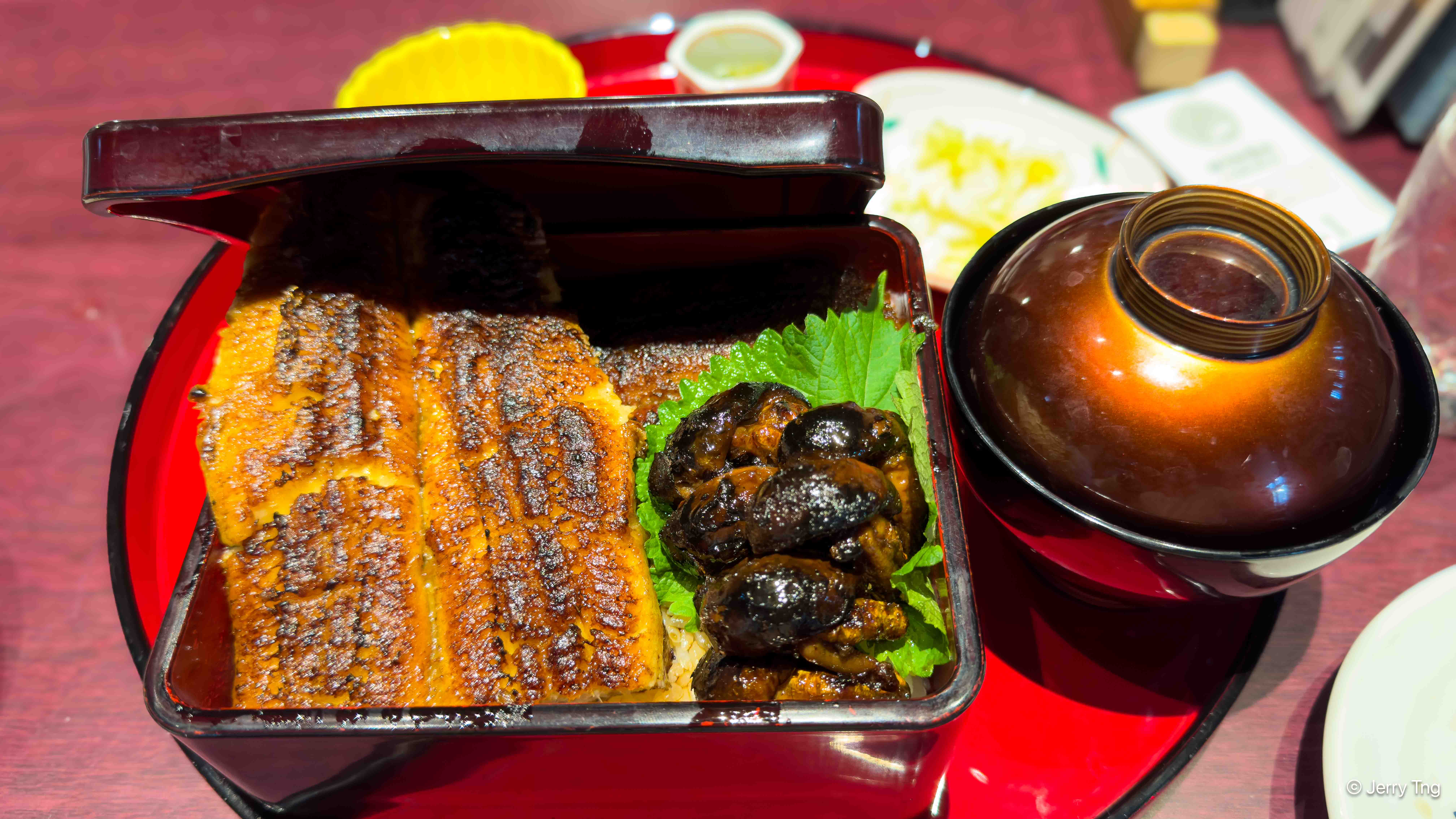
It is a sweltering midsummer week, the hottest days in Japan. うなぎ Unagi, more specifically 蒲焼 kabayaki-style unagi, is in order.

While the fish is available year round, the Japanese prefer having this delicacy in summer, specifically on Midsummer’s Day, or the Japanese Day of the Ox as it is believed that it helps to ward off the summer heat. And it falls on 24 Jul and 5 Aug this year (2024).

The earliest mention of the association of cooked eel with summer heat is in the Man’yōshū anthology of Japanese poetry (8th century). In Otomono Yakamochi‘s poem, it is explained that in order not to lose weight due to the summer heat, cooked eel will be beneficial for health.
To Iwamaro
– “Eat Eels”; 8th century Japanese poem from “Man’yōshū ” by Otomono Yakamochi
I say this:
If you’ve slimmed down in summer
There’s one thing that works:
Catch and eat eels!

Aichi Prefecture (capital is Nagoya) is one of the unagi meccas of Japan, with multiple restaurants boasting over a century of experience and history of preparing the delicacy. And Sumiyaki Unafuji did what many took a century to achieve – a Michelin Bib Gourmand recognition (for their Yurakucho Branch in Tokyo) after 25 years in business.

The chain restaurant was established in 1995 (平成7年). The founder Mizuno Snr 水野 (pictured above with his son), a former animal feed seller, quit his job at age 50 and started the first shop here after a long research and apprenticeship in other unagi restaurants.

The franchise has become known for its use of the ultra-fatty “blue eel” subspecies 青うなぎ, providing a high-quality cut and flavour that normal unagi restaurants just can’t match. The unagi is butterflied live in the store behind a window. If you cannot bear to see a creature ending its life for your meal, don’t look. It’s quite gruesome the process is.

The fresh water eel is skewered is grilled over charcoal. The flesh is cooked over a charcoal fire that exceeds 1,000°C, sealing in the fatty flavour with a beautiful, crispy crust.

Uzaku うざく can also be translated as “annoying” but there’s nothing annoying about this free-flow appetiser. Once you finish ordering, this appetiser is served. Typical a cold serve of sliced cucumber in vinegar during summer to be eaten with the unagi, this has been replaced with a cabbage and cucumber salad that is really refreshing.

Besides unagi, they also served the seasonal anago (conger eel). I had conger eel served to me in different ways throughout this summer in Japan. This time, the eel is battered and tempura fried. Eaten with salt, it is a sign of summer.

I ordered the house-special unaju 鰻重, 肝入り 特上うな重 premium eel bento with liver, which comes with a whole unagi kabayaki 鰻蒲焼 and a generous portion of the delicious eel liver that makes their restaurant so special.

In Kanto, the skewered eel is first grilled, plain, into what is known as shirayaki 白焼き, then steamed, before being flavoured and grilled again; it is the shirayaki version that inspired Chef Mizuno to go into the unagi business.

Unafuji is particular about splitting the eel open 「裂き」from the belly. This allows the eel’s liver to be removed in a firm and beautiful shape. The bento is topped with this plump eel liver うなぎの肝.

But the secret to Unafuji’s success is due in equal part to its kabayaki sauce. Chef Mizuno’s quest for the perfect sauce took him all over the country, where he carefully analysed the salt and sugar content of the very best unagi specialists in each prefecture. The result of this is the perfect ratio of savoury and sweet in Unafuji’s house sauce — a closely-guarded secret that he will take to the grave.

All set menu comes with hamaguri no suimono 蛤の吸い物 (clam soup) and tsukemono 漬物 (pickles). The soup has the traditional temarifu 手まり麩, wheat gluten balls with colourful stripes that often added to clear soups like this one more for aesthetic purpose than taste.

These days, there is a lot of controversy on the unagi trade, especially among chain restaurant that use imports from China that exceeded in antibiotics and growth enhancers level. Here, the eel used are all locally sourced. Overall, a very good tasting unagi restaurant even though it is a chain restaurant. The meal is comparatively cheaper than the traditional unagi-ya in Kyoto and Tokyo, but there’s no difference in quality of the eel served. Highly recommended.
Sumiyaki Unafuji Nagoya Station 炭燒 うな富士 名古屋駅太閤口店
〒453-0015 愛知県名古屋市中村区椿町15番10号名駅三交ビル1階
Tel : +81 (052) 452 7088
Visited Jul 24
0 comments on “Unafuji うな富士 @ Nagoya”