
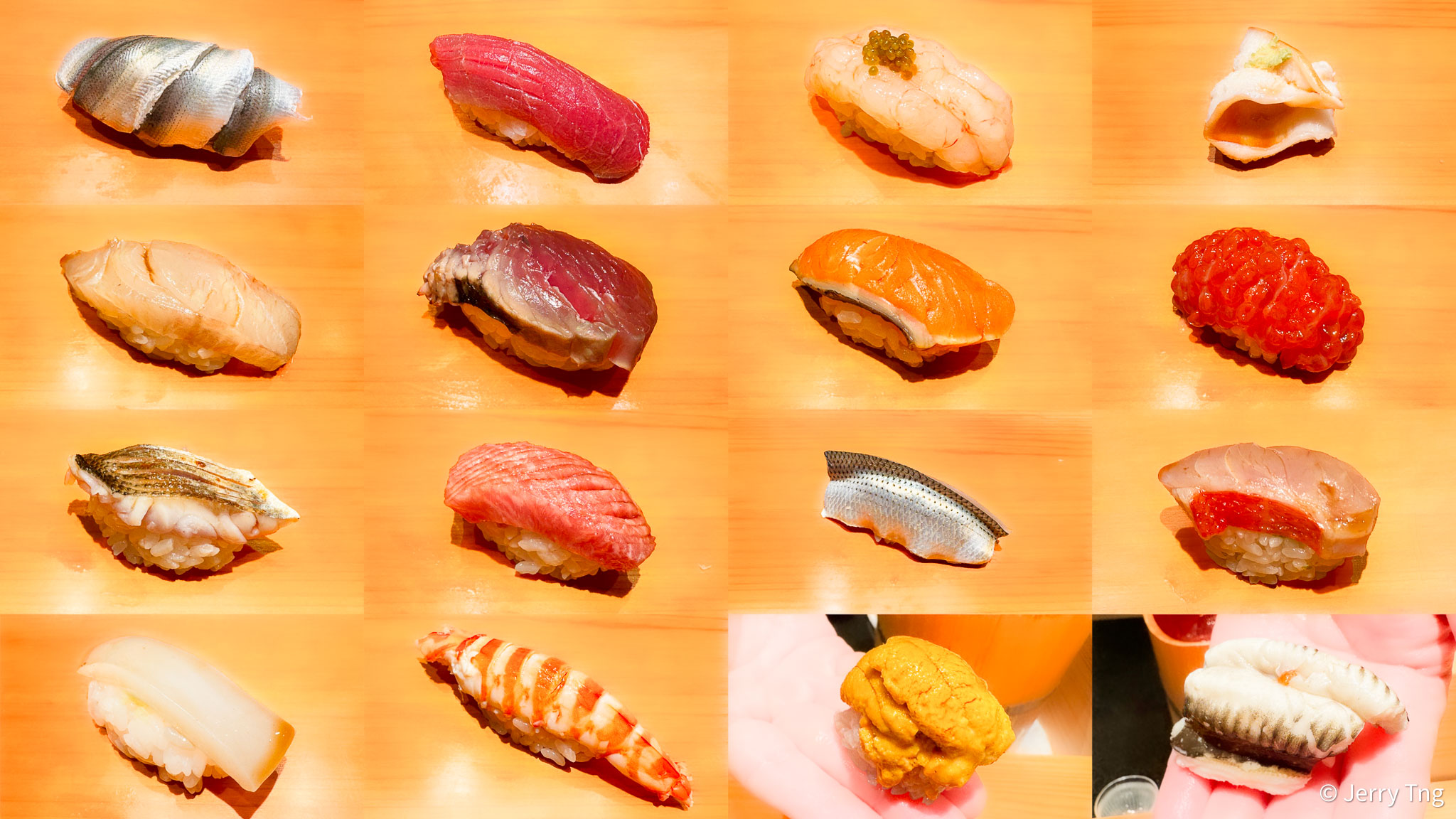
It’s so good that I visited Ashino twice in a month to celebrate a friend’s birthday.

For 10 years, Sushi Ashino has been honoured to share the art of Jukusei Sushi — a tradition of time, technique, and deep respect for ingredients. This year, they moved from their original location at Chijmes to begin a new chapter in their story at Mercure ICON Hotel at Club Street.

Perching on one of eight seats to watch Owner and Chef Taku Ashino at work is an utterly absorbing experience. Each piece of sushi placed on the Hinoki wood counter is a testament to Master Taku Ashino’s lifetime pursuit of perfection and his profound understanding of ingredients.

The meal started with Chef Ashino laying down cucumbers, in-house-aged baby ginger and salt made by his friend Sakamoto-san, who produces small batch salt from 2,000-year-old deep seawater in Izu Oshima island. Interestingly, when Sakamoto-san started making salt years ago, it was considered illegal but he had done so as he disapproved of the salt being sold everywhere.

At Ashino, the shari (sushi rice) is crafted with a blend of Koshihikari 越光 and Nahatsuboshiななつぼし rice from Hokkaido, chosen for their structure, gentle sweetness and firmness. The rice is washed in pure Mount Fuji water, celebrated for its mineral content, and cooked in a Nambu Tetsubin iron kettle for even heating and optimal moisture retention. It is then seasoned with a blend of Shiragiku (白菊) and Aka-su (赤酢) vinegars—both integral to Edomae-style sushi for generations.

We went for the Sushi Omakase 鮨お任せ that came with 16 pieces of sushi chosen by the chef 鮨16貫, 2 special appetisers 季節のつまみ2種, a hand roll 手巻, tamago 王子, miso soup みそ汁, fruits 果物 and homemade ice cream 自家製アイスクリーム.
Summer 2025 – Sushi Omakase 鮨お任せ
Shinko 新子 (Young Gizzard Shad)

It was not part of the omakase but chef said I should not miss this. This was the last shinko 新子 (Young Gizzard Shad of the season. When shinko first arrives at market every year, fierce competition to obtain the small fish ensues, causing prices to skyrocket. It is one of the very tastiest treats of the early summer prized for its delicate flavour and texture.
Honmaguro 本マグロ (Bluefin Tuna)

Yamaguchi Prefecture 山口県 is known for its high-quality bluefin tuna fishing, particularly in the Oma region, where the tuna migrate and are caught using traditional methods. The tuna we were having tonight weighs 182 kg and is caught using the longline method.

Akami zuke 本鮪の漬 is a traditional Japanese dish of lean tuna (akami) that is marinated in a soy sauce-based mixture, often with mirin, to preserve its freshness and flavour. The tuna had been aged for 2 weeks before marinating it just before dinner service. Texturally it was incredibly smooth thanks to the marinade and aging. The resulting bite was simply fantastic, especially when paired with good shari.
Shima Ebi 縞海老 (Grey Prawn)

Shimaebi 縞海老 catches are small, and therefore it can be expensive. Its “shun” is during the spring time, especially during April and May. The juicy flesh provides a refreshing texture and sweet flavour that is comparable to amaebi and botanebi. It is usually kept alive until just before consuming, and so it was so rare to get this in Singapore.
Tachiuo タチウオ (Beltfish)

And again we were served the beltfish, aka tachiuo タチウオ or largehead hairtail, in a soup. The boney fish had been skilfully deboned and cooked with some junna ジュン菜 (water shields) for texture and hanabitake ハナビタケ (fireworks mushroom or more commonly, white wood ear).
Ishigakigai 石垣貝 (Castle Stone Clam)

Ishigakigai 石垣貝 (castle stone clam, aka Bering Sea cockle), available only during the summer months, is a shellfish that is commercially cultivated from Iwate Prefecture.

Crunchy in texture and rich in umami, the shellfish stiffens its muscles when it is slapped, indicating that it is alive and fresh. Sweetness of the ishigakigai came through wonderfully with the clam’s liver soy sauce.
Itoyoridai イトヨリダイ (Golden Threadfin Bream)

The itoyoridai イトヨリダイ had been aged for 10 days, firming up the texture of the flesh and concentrating the flavour of the fish. To elevate each piece, the shari is served at varying temperatures, perfectly matched to the fish it accompanies.
Katsuo Tataki 鰹たたき (Smoke Bonito)

Kochi’s most famous dish is katsuo tataki 鰹たたき, lightly broiled, sliced bonito (also know as skipjack tuna). The next piece of sushi was nicely smoked katsuo tataki as neta. The katsuo had been aged to intensify the flavours.
Toki-shirazu 時しらず (Summer-Caught Salmon)

Toki-shirazu 時しらず, translates to a salmon that ‘does not know time’, is the term for the specific type of chum salmon caught outside of its typical spawning season. A rare salmon from Hokkaido that does not sexually mature and instead lingers in the oceans getting fatty rather than going up rivers to spawn. Rare and delicious eat.
Tokiko 時子 (Young Salmon Roe)

Fresh sujiko 筋子 from the chum salmon is cured in-house and served on delicious and fragrant shari. Unlike ikura, which is the processed and separated salmon roe, sujiko is the whole skein of eggs. Kind of mushy and intense, it needed some getting use to.
Kamasu 魳 (Barracuda)

Not usually considered to be traditional Edomae sushi neta, it is a popular and tasty nigiri topping. Kamasu 魳 was served with some of its skin still on, lightly seared “aburi” style. A tasty, mild-flavoured fish that is deservingly popular.
Otoro Shimofuri 大卜口 霜降り (Fatty Tuna Belly)

Otoro Shimofuri 大卜口 霜降り refers to a specific, highly prized cut of bluefin tuna known for its intense marbling, resembling fine snow frost (shimofuri) patterns. Aged to perfection, this prized cut from the front belly of the bluefin tuna is the pinnacle of indulgence. Intensely marbled and rich in fat, aged otoro delivers a buttery-soft texture and a naturally sweet, melt-in-your-mouth finish.
Kohada 小肌 (Gizzard Shad)

This silver-skinned fish, called shinko when young and kohada as it matures, is a true test of a chef’s skill. Its preparation is delicate and deeply methodical. Each step, from filleting and salting to marinating in vinegar, demands care, patience, and intuition.
Awabi 鮑 (Abalone)

Not many shellfish are in season in the summer; awabi 鮑 is the exception. This shellfish has a lovely, sweet flavour of the sea, and a nice crunchy texture. Chef chose to serve it simmered in sake. Adding some of its wata (intestines and liver) – as pictured above – provides a creamy counterbalance to the crunchy texture, and adds another dimension of flavour.
Kinmedai 金目鯛 (Splendid Alfonsino)

Kinmedai 金目鯛 has a peculiar appearance; it is a bright red fish with very large eyes due to its preference for deep waters. It was line-caught and then shinkaijime. Shinkai-jime 神経締めis the traditional fish killing technique used in Japan to kill and paralyse the live fish without much stress in order to preserve the umami flavour while draining as much of the blood as possible. Aged and delicious
Kaminari Ika 雷烏賊 (Kisslip Cuttlefish)

Kaminari ika 雷烏賊 is known for its unique texture and slightly sweet flavour. Try leaving your squid in the refrigerator yourself, after a couple of days the squid will turn slimy. But over here, even after 12 days of aging, this squid still felt crunchy with incredible freshness. Served simply with a dusting of salt and nothing else.
Kuruma Ebi 車海老 (Japanese Tiger Prawn)

Kuruma Ebi 車海老 (Japanese Tiger Prawn) is almost always served boiled, in this case a la minute. The sweetness of the prawn was retained perfectly with the crunchiness of not overcooking it, as well as the doneness that presented the prawn in its most beautiful colours.
Murasaki Uni i ムラサキ雲丹 (Purple Sea Urchin)

Purple sea urchin, aka Murasaki uni i ムラサキ雲丹, is classified as white uni (shiro uni), as opposed to the more common Bafun uni that is red uni (aka uni). Shiro uni is typically a seasonal delicacy, with its peak season often occurring in the summer months.
Bafun Uni バフン雲丹 (Horse Dung Sea Urchin)

And next up Bafun uni バフン雲丹 and here’s the difference. Bafun uni tastes rich, briny and has a more intense, bold flavour with a custard-like texture, perfect for those who love deep umami and a creamier bite. Murasaki uni on the other hand, has a lighter, clean and slightly sweet taste, with a bit firmer mouthfeel with a delicate finish.
Anago 穴子 (Sea Eel)

Anago 穴子 is available year-round, but best in the summer time. The anago was simmered in shōyu and sake, and served warm with a dab of ume (plum) paste. The white meat was high in fat content and subtle savoury flavours. Texturally, it was very soft and melted in the mouth.
Katsuo Miso 味噌 カツオ (Bonito Miso)

Katsuo miso (bonito miso) is a type of side dish miso, a local dish in Kagoshima, which is a sweet and spicy seasoning of bonito flakes and miso. In particular, it is often made based on barley miso using bonito flakes from Makurazaki. It is popular for various uses, such as rice accompaniment. The katsuo miso was used in a temaki 手巻き (handroll). Savoury and full of umami.
Kihadamaguro キハダマグロ (Yellowfin Tuna)

I mentioned to Chef Ashino that I always end my sushi meal with tekkamaki. He remembered and served me maki as the last item before the misoshiru, but not honmaguro but kihadamaguro キハダマグロ (yellowfin tuna) but done in the zuke 漬 (marinated) style.

One final miso soup and we were done with our omakase. We skipped the final piece of “sushi”, the traditional tamagoyaki a la “Jiro Dreams of Sushi” with a spongecake-like texture with darkly browned top and bottom.

Dessert is always the Achilles’ heel of these sushi-ya. And I always stick to only the fruits. But I was in a happy mood.


This time I didn’t skip the homemade ice cream, which came in Shio Koji flavour and when you are halfway true, they would add a shot of sake for good measure.

While they do not have the recognition of the tyre company, I would say Sushi Ashino is one of the best sushi restaurants in Singapore, beating most of those mentioned in that food guide. I am no exaggerating, one meal here would turn your view of sushi completely upside down, recognising that freshness is not the only thing with sushi. I will come again very soon, I have been converted.
Sushi Ashino あし乃
8 Club St, #01-12/13 ICON Hotel, Singapore 069472
Tel : +65 6684 4567
Visited Jul 2025
#sushiashino #熟成 #江戸前 #鮨 #edomae #sushi #agedsushi #神経〆 #マダイ #ehime #愛媛 #愛媛の漁師 #藤本純一
0 comments on “Ashino Revisited”