
One of the itinerary for any foreign friends visiting Singapore is a Peranakan meal in one of the restaurants that have been operated by Peranakan families for generations.

Peranakan cuisine is soul food for the Straits-born Chinese, and requires a high level of patience and preparation in advance. In order for the meat and seafood to properly absorb the essential spices, they must be marinated for many hours before they can be added to the cooking process. Even the spices require manual pounding, as fresh spices are ideal for strong flavours. The bibik (auntie) cooking the dish will often use a mortar and pestle to pound and grind lemongrass, blue ginger and turmeric root that give Peranakan food its strong and distinct flavour.


As one of the oldest Peranakan restaurants in Singapore, Peranakan Inn exudes an unpretentious old-school charm where its food is the centrepiece. This is where it all started. In 1985, driven by his passion to share his family’s Peranakan recipes, Chef/Owner Bob Seah bought the century-old Peranakan shophouse in Katong and established the restaurant.

Over the years, the restaurant has hosted many past Singaporean leaders and old guards including President Wee Kim Wee, Goh Keng Swee, Eddie Barker and Lim Kim San. We used to have a Nonya bibik (Peranakan lady) that worked in our restaurant, and my taste for Nonya cooking was formed by her cooking. That was my yardstick as she was an excellent cook.
Our Lunch Menu
Sambal Prawn

Sambal means chilli in Malays and there’s a thousand and one way to make sambal prawns. And because there’s the Nyonya touch, it means that the sambal making process just got upgraded. The sambal has lemongrass, galangal (blue ginger) and tamarind blended into the chilli paste, in addition to other spices according to each family’s secret recipe. For the home cooks, you can always use the ready made sambal.
Kueh Pie Tee

Nothing can go wrong with the Peranakan appetiser called Kueh Pie Tee. They look as good as they taste. In each kueh pie tee cup was shredded turnips (jicama) sautéed with oyster sauce, fish sauce, garlic and dried shrimps, and garnished with a shrimp on the top.
Tahu Goreng

Tahu goreng which means “Fried Tofu”, is a dish commonly found in Singapore, Malaysia, and Indonesia. This version has a unique taste and texture; with a crunchy exterior and melt-in-your-mouth softness inside. The sauce is not your typical peanut sauce that is provided with satays; it is more robust, tangy (tamarind?) and clings to the fried tofu like a luscious coat. Served on a bed of boiled beansprouts which, thankfully, weren’t soggy.
Nonya Chap Chye

Hokkien for “mixed vegetables”, chap chye is a simple stir-fried vegetable dish with its roots in Fujian province. It’s surprising how the mild-looking dish has managed to hold its own among the spicy, sharper flavours of Nonya cuisine. The secret is in its liberal use of taucheo (bean paste) and prawn stock. Their version was a bit too sweet for my taste, but I guessed the older generation liked a bit of sweetness in their dishes.
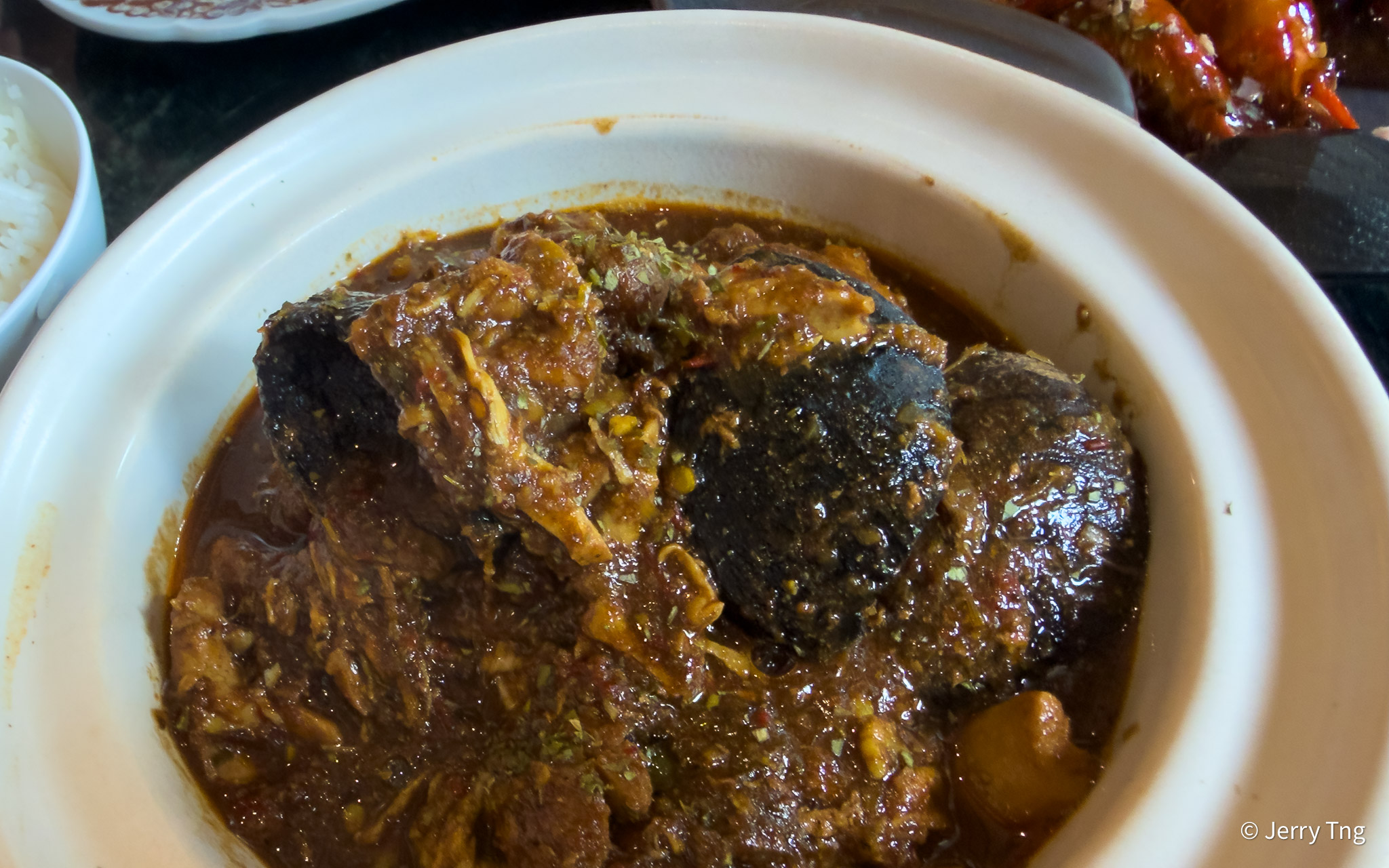
Ayam Buah Keluak

The icon of Peranakan food is a small black nut called buah keluak. The kepayang tree is native to this region and is one of Nature’s monsters. It is a poisonous tree with awkward looking fruits suggesting a stomach crammed with big seeds. The poison, hydrogen cyanide, occurs in all parts of the tree. The fermented seed is the source of ayam buah keluark’s (braised chicken in a spicy tamarind gravy) complex flavour – smooth and moreish with full-bodied notes similar to that of dark cocoa or truffle. Our founding Prime Minister and the his son (also a PM) are said to be aficionados of this dish.
Beef Rendang

Rendang is a spicy meat stew originating from the Minangkabau cuisine and adopted by Peranakans throughout archipelago as part of their taste palate. Rendang is most often described as slow-cooked meat in coconut milk and spices. The cooking technique flourished because of its role in preserving meat in a tropical climate. Cooking the meat until tender with almost all the liquid evaporated requires great care, keeping it from getting burnt. And every family has their own rendang recipe. I like this version, very flavourful, complex and the fried shallot was a nice touch, an idea I would steal for my homemade rendang next time.
Pulot Hitam

Pulut hitam (black glutinous rice pudding) is rice pudding like you’ve never had before. The South East Asian trifecta of coconut milk, palm sugar and pandan leaves hits the spot every time. Black glutinous rice is the main ingredient and starch of this unique recipe. It has a nuttier flavour, and the outer hull gives it a unique texture. Sweetened with palm sugar and highlighted with freshly squeezed old coconut milk, it always brings a smile when we share bowl in the family.
Chendol / Durian Chendol

Besides the Pulut Hitam, they also have another perennial favourite – the chendol. Chendol is an iced sweet dessert of Indonesian origin that contains droplets of pandan-flavoured green rice flour jelly, boiled red beans, with shaved ice drenched with coconut milk and palm sugar syrup. And as an option to make it sweeter and more robust, a generous topping of mousse made with durian was added. Now I am in food coma region.

I find the dishes here have been adapted over time to suit the shifting local palate, as well as the tourist crowd that are not accustomed to the strong and complex flavour profiles of traditional Nonya cooking. In other words, the flavours and spices have been toned-down.
Peranakan Inn & Lounge
210 East Coast Rd, Singapore 428909
Tel : 6440 6195
Visited May 2026
0 comments on “The Peranakan Inn @ Katong”