
This chain restaurant has a branch in Suzhou Singapore Industrial Park area and offers Suzhou-style cuisine. We went to Jinji Lake 金鸡湖 to watch the fountain and light show, so we had our dinner at the lakeside while we waited for sundown.

Daoshancun is a new kid on the block in terms of Suzhou cuisine. Chef/Owner Wang Fei started working in the kitchen since he was a teenager. His claim to fame was the squirrel fish, which his version was selected as one of the 250 Suzhou dishes that define the cuisine. Because of that, his restaurant was featured in a culinary program with CCTV. And the rest is history.

We arrived around 6pm for dinner. The main dining hall was already bustling with activities. But the peak hour is 7.30pm, when the lightshow comes on. We couldn’t wait that much longer as we were famished, so we took a seat by the window, hoping we will finish in term for the show.
Our Dinner Menu
Shredded Celtuce in Scallion Oil 葱油莴笋

We ordered an appetiser that made from shredded celtuce. Celtuce is shredded and lightly blanched and then flavoured with sesame oil and scallion infused oil. A light and refreshing appetiser to start the dinner.
Squirrel Mandarin Fish 松鼠桂鱼

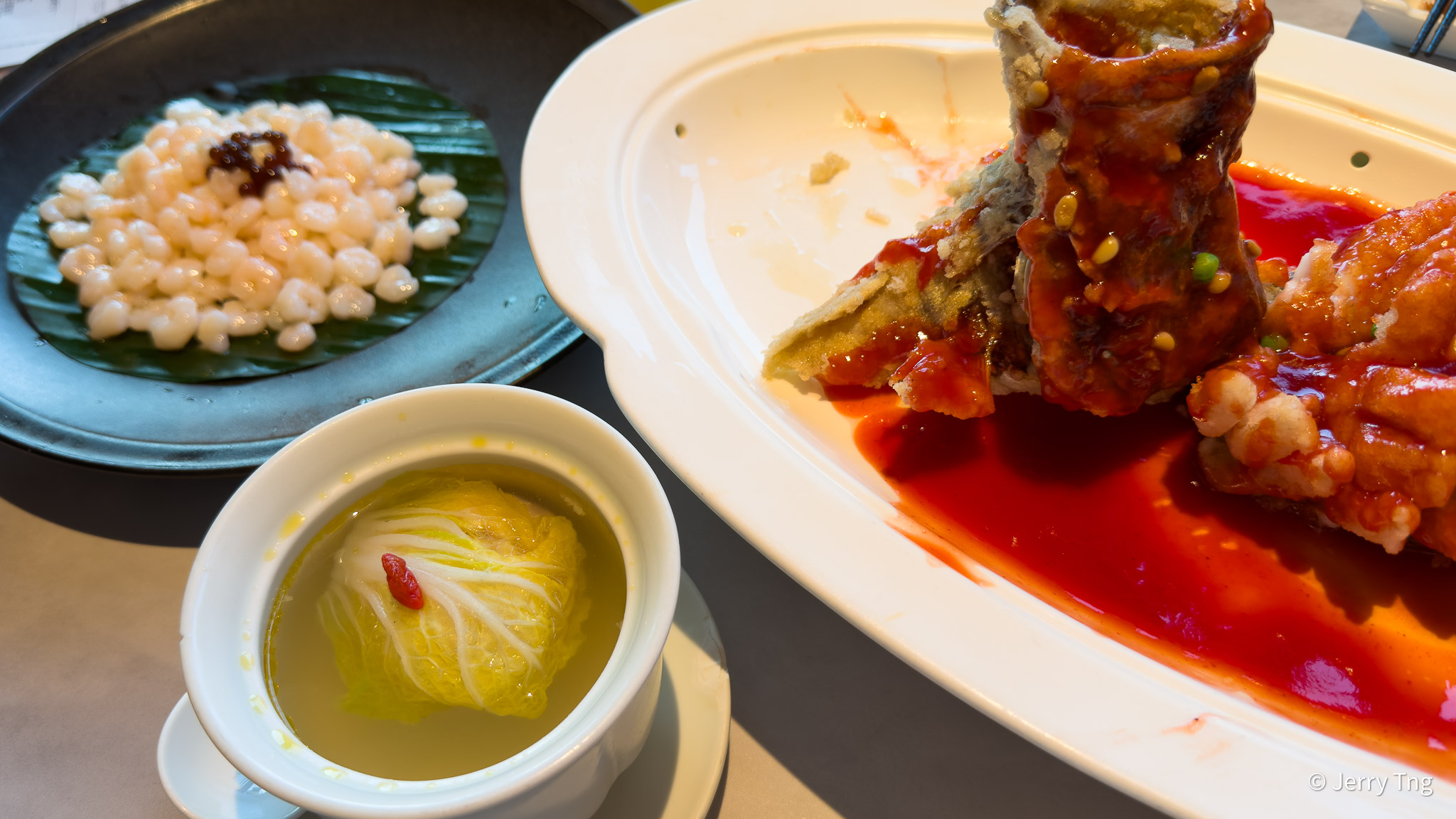
Squirrel Mandarin Fish 松鼠桂鱼 is a well-known dish in Jiangsu cuisine, originally from Suzhou. It is prepared by deboning and carving a mandarin fish into an ornamental shape similar to a squirrel, and then deep-frying it in batter before dousing it in sweet and sour sauce. Originally invented by the chefs of Songhelou, it has been taught to other chefs and variations on the same theme develop over time. This version has been featured in CCTV (China state television channel) and is considered one of the better ones. It used a fish that’s around 800g, and featured a less tangy sauce. Princess loved it.
Traditional Lion’s Head Meatball 古法手工蟹粉狮子头

Lion’s head” meatball 狮子头 was originally called “Sunflower Minced Meat” 葵花斩肉. It was believed that during the construction of the Grand Canal (which stretches from Beijing to Hangzhou) in the Sui Dynasty (589-618), Emperor Yang travelled to various points along it, including Yangzhou. There, he was reportedly enamoured by several sights, one of which was a valley of sunflowers 葵花岗. When he returned to his palace, he asked the chef to create dishes that would remind him of these sights. And “Sunflower Minced Meat” 葵花斩肉 was passed down over the long river of history, with a few variations in the Jiangzhe region.

This one is Huaiyang-style from Yangzhou where the dish originated. The meatball is made with hand-chopped 50/50 mix of lean and fatty pork with some tofu and crab meat to bind the meatball together. The ball is simmered in a stock made with chicken, duck and pork, and served with a ladle of the clear stock. I loved this version a lot; delicate and savoury, and yet complex in taste and texture.
Hand-peeled River Shrimps 手剥虾仁

This is another Songhelou classic that requires a lot of patience in the prep work for taking out the intestines and impurities from each shrimp so that the result would be a plate of crystal clear sautéed shrimps that is simply seasoned with salt and egg white. The taste comes naturally with the freshness of the shrimps. I like the modern twist of tangy vinegar beads that burst when you bit into them when you mix them with the shrimp (instead of dousing the shrimp with vinegar).
Escargot Stuffed with Minced Pork 法烹田螺塞肉

I had high expectations of this dish, as both Princess and I love escargot. The minced pork has been spiced with Provence herbs and mixed with snail meat. They are filled back into the escargot shell and simmered in an Oriental sauce instead of garlic butter. It was quite nice, although it was strange to have French herbs with soy sauce. Then I dug into one that had a large fragment of an egg shell in it. At first I thought it was a broken snail shell, but then I dug into another that has a smaller fragment. I had to return the rest.
Dry Noodles in Scallion Oil 葱油拌面

I love scallion oil noodles 葱油拌面, this would be my favourite carbo in China. Classic rendition of the classic Shanghai noodle dish developed by local families as a humble comfort food during times of scarcity, the dish gained popularity as a quick, cheap, and aromatic meal using simple ingredients—scallions, oil, and soy sauce—reflecting a “less is more” philosophy. The scallion-infused soy sauce was not overpowering, and the noodles were cooked al dente. Great finale to the satisfying meal.
Milk Custard 奶豆花

Because of the cock-up of the escargot, they gifted us a dessert. Milk Custard 奶豆花 is similar to 老伴豆花 in Singapore. The addition of boba balls (lemony sugar flavour) made this an interesting dessert.

It is a very popular store, and a queue had formed as we approached sundown. If you are seated at the outdoor section, you will be able to enjoy the fountain lightship while you dine. The food is good, and the price is reasonable. The service was top-notch when we were there, not because they gave us a free dessert and took the escargot off our final bill, but for the way they managed the cock-up. Will be back if I am ever back in Suzhou.
Daoshancun Suzhou Cuisine 稻山村·蘇州菜 (湖滨新天地店)
湖滨新天地星港街156号1楼107室
Visited Apr 2026
0 comments on “Daoshancun 稻山村 @ Suzhou”