
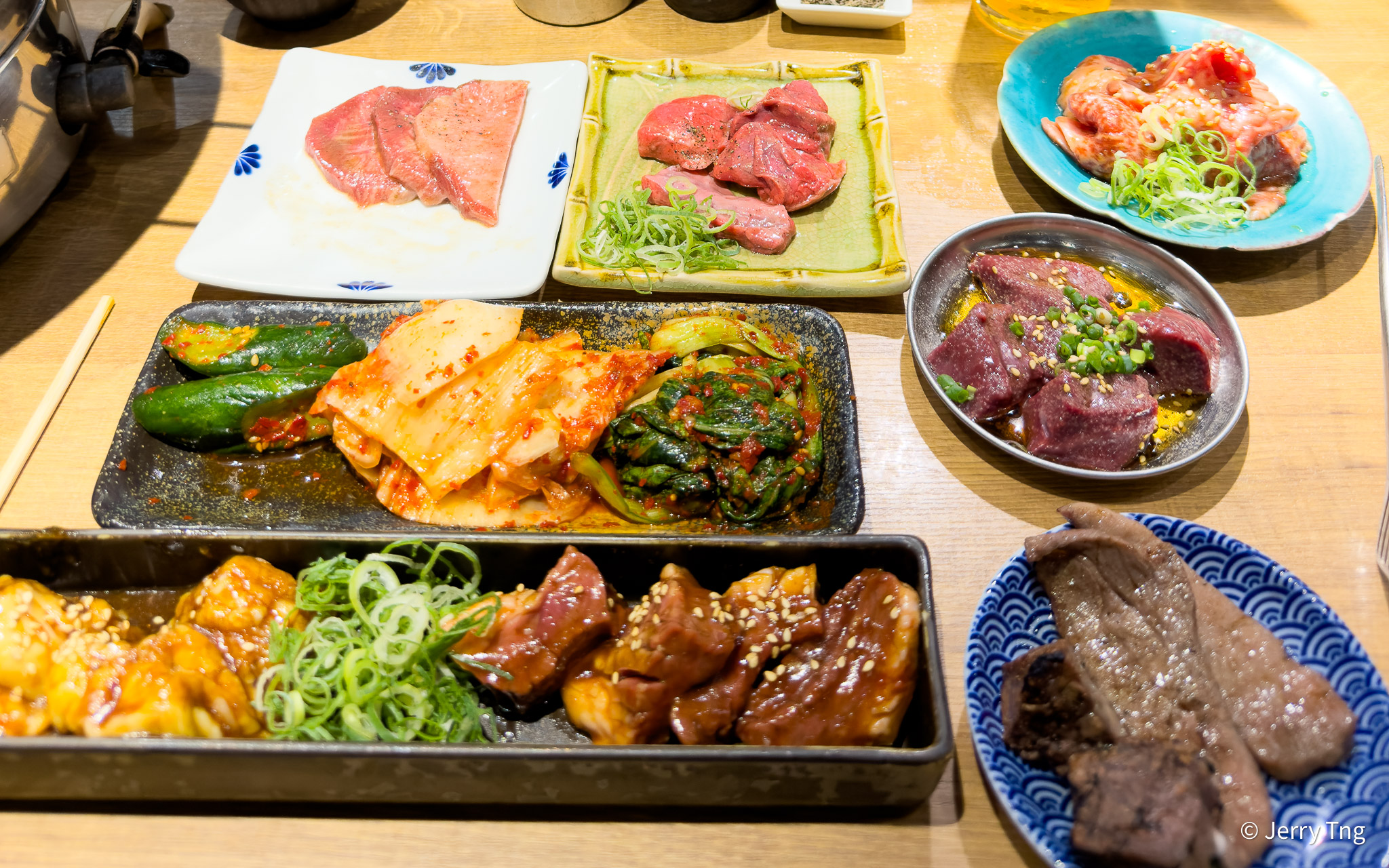
I walked past this place almost every night for the week in Osaka and was blown away by the fragrant of the burning offals. Only in Japan can you get a BBQ restaurant that is specialised in beef offals.

Nama Horumon Itataki is a yakiniku restaurant that specialised in beef offals called horumon (a play on the Greek word “hormone”, meaning “stimulation”, which was what the Japanese refer to offals in the past). The name is also similar to the Kansai dialect term hōrumon (放る物), which means “discarded goods”. This cuisine is also called horumonyaki but it was trademarked and therefore not used elsewhere except in Osaka by Kitazato Shigeo in 1940.


I placed an order of six different cuts of offals with my broken Japanese. Each horumon cut now has its ideal way of preparation, reflecting Japan’s cultural approach of respectfully making the most of ingredients, the Japanese philosophy of “Mottainai” (もったいない).


They have almost every internal organ of the cow on the menu. Each horumon cut offers a completely different texture—chewy, springy, or juicy with melting fat. So I had to make my choices carefully so that I can enjoy the entire spectrum of textures and flavours. In case you are thinking what’s missing, it’s the reproduction organs 😉

There’s a cover charge as well, but there’s no otoshi for the cover as it was for the unlimited supply of garlic and onions, as well as ice cubes. I will come to that later. I ordered an ice-cold draft beer and some kimchi to start with. The assortment came with three types of kimochi (キムチ, Japanese word for Korean kimchi) – 白菜キムチ (napa cabbage), 胡瓜キムチ (cucumber kimchi), and 日替りキムチ (daily special kimchi).


The first two cuts were fresh liver and salted beef tongue. Beef liver is full of iron and Vitamin B12 that helps to reduce stress. Many do not like that irony bloody taste, but I love it. And beef tongue has always been a favourite ingredient of mine, they cook very easily as they are slice thinly across.


So I had to watch the timing for these two ingredients carefully so as not to overcook them. Do not be fooled by the gas grill even there was no flame, it was really hot and the tongue and liver cooked very quickly.


Next up, the ingredients that are fatty and need more time on the grill. Maruchan (まるちゃん) is a colloquial term for beef small intestines. They are very fatty, sweet meaty taste. Tecchan (てっちゃん), or large intestine, on the other hand, has a soft and chewy texture and need more time to get the right texture. It should be marinated with a sweet sauce. And then there’s abushin (あぶしん) or cow’s heart. It is almost like a piece of lean meat but with a crunchy texture.


The intestines rendered a lot of fats when grilled, and that’s what made the grill flared and produced all those wonderful smoke. But it can be quite annoying for the rest of the room, so ice cubes (remember them?) were provided to help regulate the flares. By placing them on the grill, they melted into the fire and reduced the smoking. When a smart technique that I will try next time when I have a BBQ at home.

There’s another kimochi that was not served in the platter and that was yamaimo (Japanese yam) kimchi. I always like the crunchiness of yamaimo and it was really delicious and cut through the greasiness of the offals effectively.


The last offal for the evening was fuwa (ふわ) or beef lungs. Sometimes they are translated as sweetbread (which is pancreas) but usually cow’s pancreas are not served. This organ is spongy and has a very light taste. I love it as a soup and this was the first time I had it as a yakiniku ingredient.


Other than organs, they do offer a limited selection of beef cuts, sausages and chicken. There’s no pork on the menu. I ordered a portion wagyu karubi (和牛カルビ), which is boneless beef short ribs, prized for its rich marbling and fast-rendering fat over direct heat. This was in preparation for the finale of the evening.


The tradition of yakiniku is to finish the meal with a cold noodle. All the remaining meat and kimchi were added to the chewy noodles for a wholesome final course. The kimchi helped to reduce the greasiness of the meat and improved the appetite to finish the noodles.

The dinner came up to around ¥1,000 with drinks. The food was delicious, and it was mainly self-service. Perhaps I ordered too much for one person, but I don’t come to Japan that often these days so I got a bit greedy. Nevertheless, I will definitely recommend that you try this cuisine when you are there, and if you can get over the “yuck” factor of eating offals.
Nama Horumon Itataki 生ホルモン いただき (堺筋本町)
2 Chome-6-12 Kitakyuhojimachi, Chuo Ward, Osaka, 541-0057, Japan
大阪府大阪市中央区北久宝寺町2-6-13
Tel : +81662815578
Visited Aug 2026
0 comments on “Nama Horumon Itataki 生ホルモン いただき @ Osaka”